
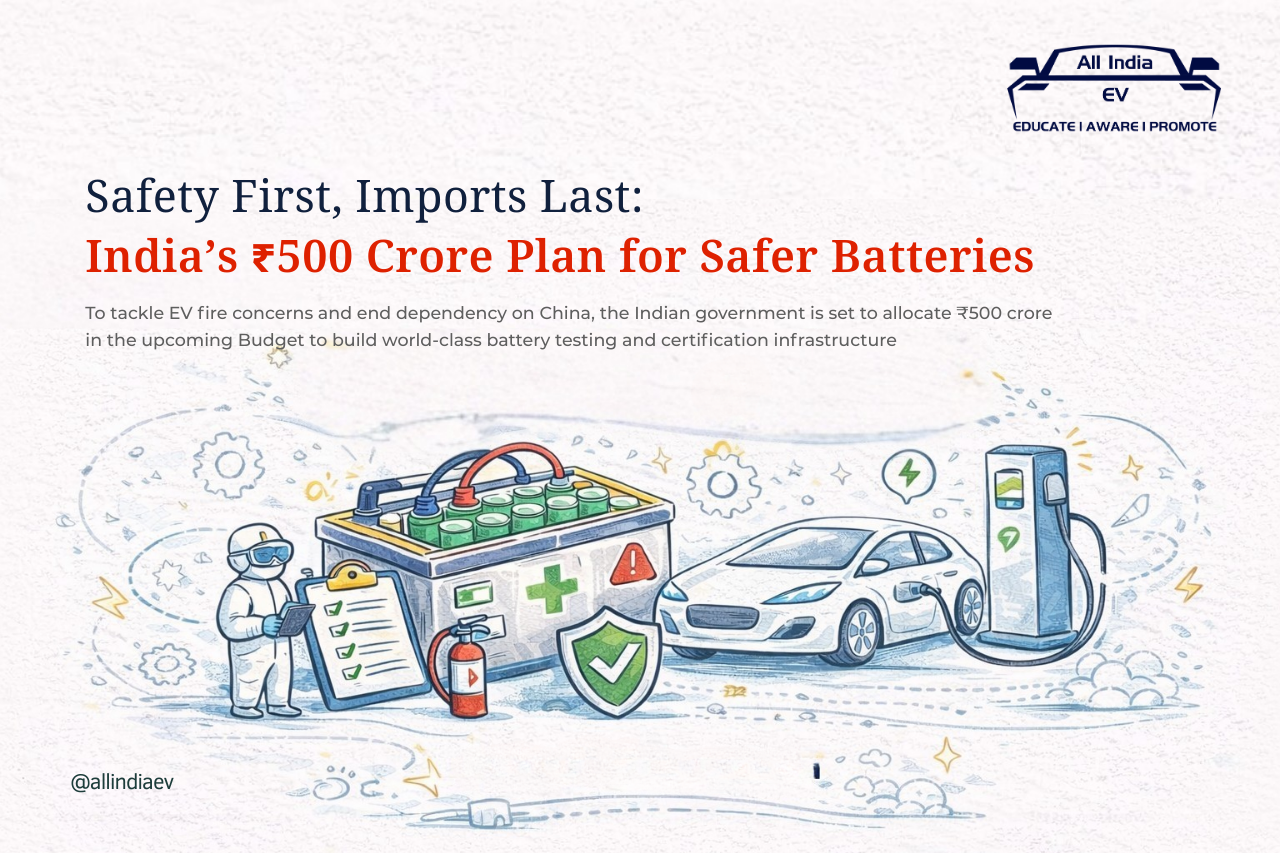

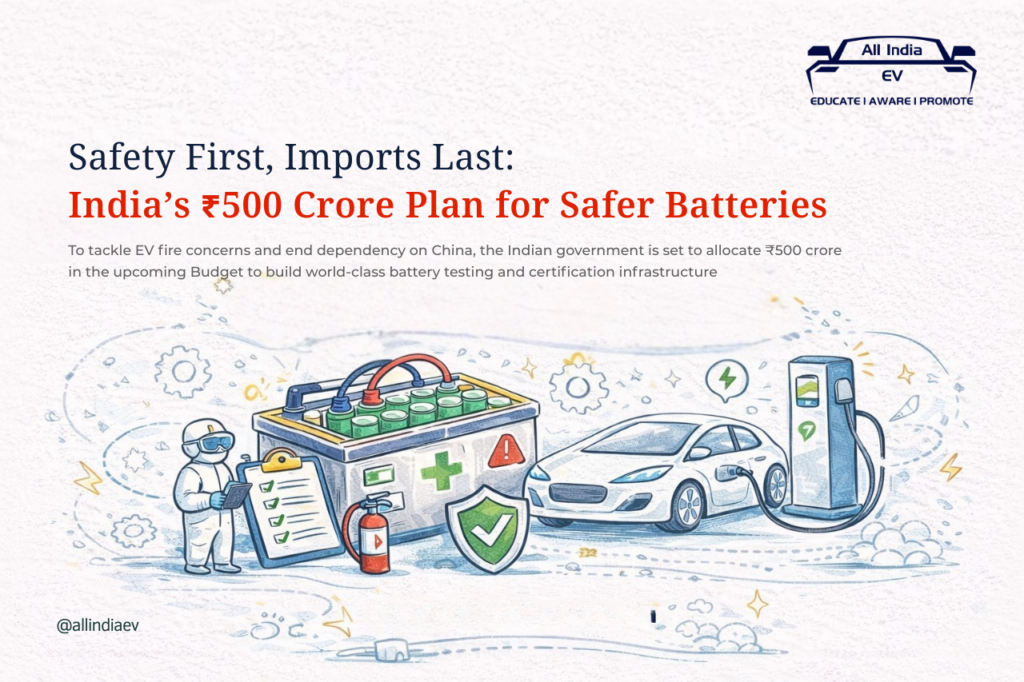
In policy circles, the proposed ₹500 crore allocation for national battery and BESS testing infrastructure in the FY 2027 Union Budget is being positioned as a response to overheating and fire incidents in EVs and energy storage systems. But reducing it to a “safety fix” understates the deeper systems challenges driving this initiative. And that’s precisely the risk: framing it as a reaction to headline incidents rather than as a structural intervention in India’s battery ecosystem.
Here’s the deeper analysis senior decision-makers should be thinking about beyond the surface noise:
Safety Is a Symptom, Not a Root Cause
Yes, EVs and BESS units have seen thermal events that dent public confidence. But these incidents are downstream symptoms of inadequate standards, fragmented testing regimes, and a supply chain built on external benchmarks that don’t reflect Indian operating conditions e.g., high ambient temperatures, varied duty cycles, and diverse use cases. Batteries certified under global standards (often designed for temperate climates) can perform very differently under prolonged heat stress typical in large parts of India.
True risk mitigation requires domestic validation frameworks calibrated to India’s environments and real-world usage not retrofitted foreign test scripts. That’s what a national infrastructure aims to enable.
Testing Infrastructure Is a Strategic Bottleneck in Tech Sovereignty
Most Indian battery assemblers and even some OEMs currently send their systems abroad (notably to China) for testing, adding cost, delay, and dependency. That’s a glaring inversion of what a resilient industrial ecosystem should look like.
Instead of merely alleviating EV fire anxiety, domestic testing facilities can:
- Shorten tech iteration cycles for local innovators and startups.
- Reduce lead times for new chemistries and pack architectures.
- Enhance interoperability and compliance across EV/charging/BESS segments.
Without them, India remains a consumer of test validation rather than a producer of verified battery technologies.
Strategic Supply Chain Decoupling Isn’t Happening on Its Own
The government narrative links this Budget push to reducing reliance on Chinese-dominated battery parts ecosystems. That’s a legitimate concern India’s current battery cell, BMS, and charger-component supply chains remain heavily import-dependent, especially on China.
More EV News

But allocating funds for testing alone is not a supply chain strategy; it’s an enabler. Real decoupling will require:
- Clear linkages between testing infrastructure and domestic cell, materials, and component manufacturing development.
- Incentive structures that align test lab capacity with industrial capacity (not just certification labs, but R&D pilots, scale-up lines, and quality benchmarking for local fabricators).
- Standards benchmarking that evolves with emerging chemistries (LFP, high-Ni, solid state, sodium-ion). And this requires an active standards and innovation ecosystem, not a static test bench.
Absent these linkages, India risks becoming an assembly hub with testing onshore but critical upstream inputs still offshore.
A National Testing Regime Can Anchor Capital and Market Confidence
Institutional investors, OEMs, and utilities alike are wary of the high capital intensity and long paybacks in battery manufacturing and storage. A credible domestic testing and certification ecosystem can de-risk investments by:
- Reducing market uncertainty about safety and performance.
- Enabling faster commercialisation of indigenous innovations.
- Providing a regulatory baseline that lenders and insurers can underwrite with greater confidence.
This is not hype it’s about capital formation and risk pricing in a sector where uncertainty drives spreads, slows project timelines, and deters participation.
Execution Questions that Matter More Than the Allocation Itself
As policymakers and industry leaders dissect the Budget, the real debate should shift from “how much” to how:
- Who governs the national labs a nodal ministry? A consortium of IITs, national labs, and industry?
- How will performance standards be calibrated and updated and who owns that process?
- What mechanisms will ensure that test infrastructure serves Indian innovators and not export-oriented multinationals first?
- Can India tie certification outcomes to procurement incentives, regulatory compliance, or capital support in EV and BESS markets?
If these questions aren’t addressed, ₹500 crore risks being a one-off spend, not a structural game-changer.
This is not merely about EV fires or incremental safety compliance. It’s about building a resilient battery ecosystem that can validate, iterate, and industrialise new technologies under Indian conditions. Testing infrastructure is necessary but it must be strategically integrated with supply chain development, standards evolution, and capital formation mechanisms to truly alter India’s position in the global battery value chain.
Only then will this Budget allocation be remembered as a pivot toward systemic capability rather than a reactive ledger entry.