
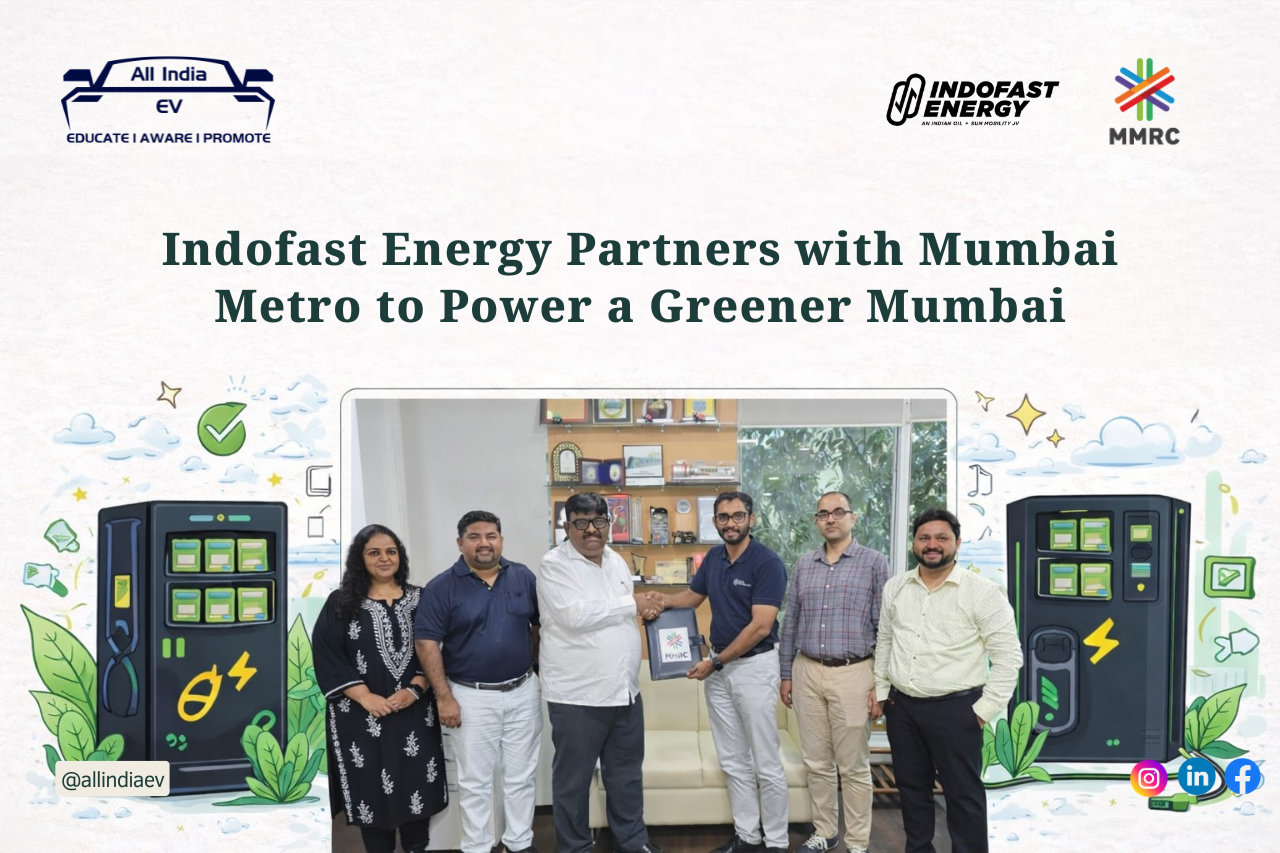

Strategic collaboration to integrate sustainable last-mile connectivity solutions with 23 battery swapping stations across Mumbai’s rapid transit network
Mumbai, 13 January 2026: Indofast Energy, India’s leading battery-swapping solutions provider, has announced a landmark partnership with Mumbai Metro Rail Corporation Limited (MMRCL) to establish an extensive network of 23 battery-swapping stations along the Mumbai Metro Aqua Line 3 corridor. This strategic collaboration marks a significant milestone in creating integrated sustainable urban mobility solutions by connecting mass rapid transit systems with efficient last-mile connectivity options for millions of daily commuters.
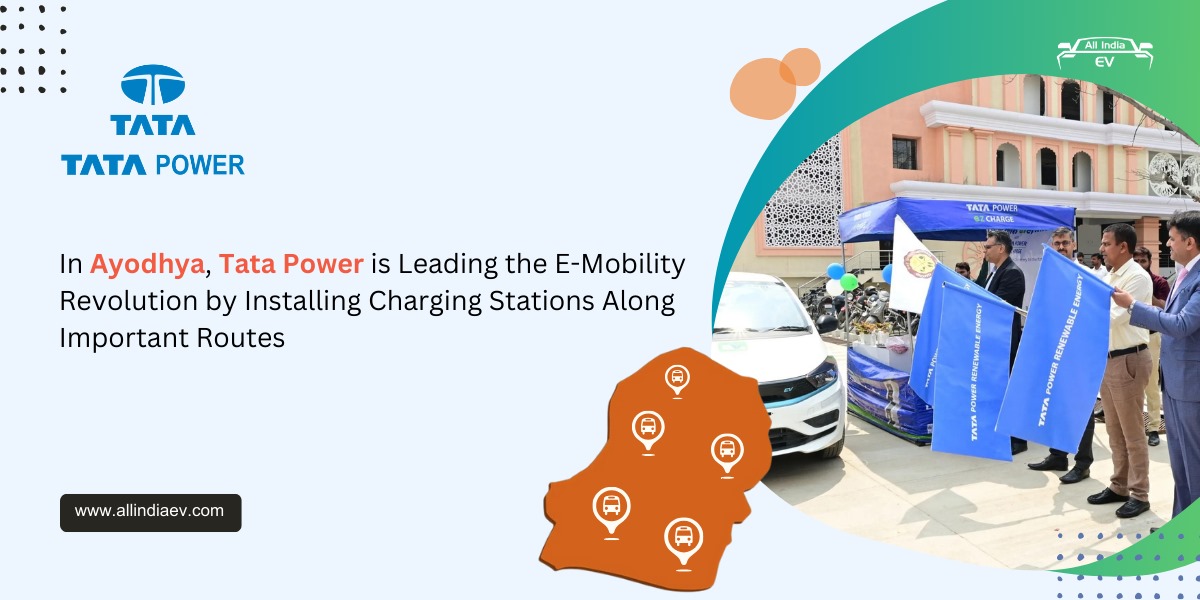
Under this partnership, Indofast Energy will deploy these swapping stations strategically across 8 key stations on the Aqua Line 3 route – Aarey JVLR, SEEPZ, MIDC, Santacruz Metro, Bandra Kurla Complex, Dharavi, Worli, and Acharya Atre Chowk. This infrastructure will serve electric two-wheelers, three-wheelers, and small commercial vehicles, enabling seamless interchange between metro services and electric vehicles for last-mile connectivity. This will particularly benefit delivery partners, ride-sharing drivers, and daily commuters, traveling along the Aqua Line 3 route, making it easier for those using this major north-south corridor to adopt electric vehicles for their complete journey needs.
Speaking on this partnership, Anant Badjatya, CEO of Indofast Energy, said, “Our collaboration with MMRCL represents a paradigm shift in urban mobility planning, where we’re integrating battery swapping infrastructure directly with Mumbai’s metro network—the lifeline of the city. By establishing swap stations at these critical transit nodes, we are not just solving the last-mile connectivity challenge but creating an ecosystem where choosing electric mobility becomes the most convenient and practical option for millions of Mumbaikars. This partnership reinforces our mission to make battery swapping the default choice for urban transportation, while accelerating EV adoption in one of India’s largest metropolitan areas.”
“This partnership with Indofast Energy is an important step toward building a well-connected transport network for Mumbai. Setting up battery swapping stations at our key metro stations will help more people switch to electric vehicles for their short trips, cutting both traffic and pollution. This fits well with Mumbai Metro’s goal of offering smooth and eco-friendly travel options, while also showing how public transport can support the shift to clean mobility across the city.”, said Mr. R. Ramana, Director (Planning), MMRCL.
Currently, Indofast Energy has 19 swap stations in Mumbai, including the company’s 1000th station at Lokmanya Tilak Terminus. The MMRCL partnership will significantly increase this footprint, creating one of the densest battery swapping networks in any Indian metro city. Each station will be equipped with Indofast Energy’s advanced automated swapping technology, capable of handling multiple vehicle types with the same battery platform – a unique capability that sets Indofast Energy apart globally. The deployment of these stations will provide EV users with quick and convenient battery swaps, effectively eliminating range anxiety and charging downtime, and promoting the wider adoption of electric vehicles for daily commutes and last-mile logistics. This collaboration strengthens Indofast Energy’s position as a key enabler of sustainable urban mobility, enhancing its strategic engagements with leading vehicle partners including Zypp, Omega Seiki Mobility, Shadowfax, Triev, Wickedride, Green Drive, Eveez, Hala Mobility, Rapido, Whizz, bluwheelz and Loadshare, along with key infrastructure partners such as IOCL, Indian Railways, BESCOM, and other metro rail corporations like Namma Metro and Hyderabad Metro. The company’s nationwide network of 1,125+ swap stations has already facilitated over 43 million battery swaps, enabling electric vehicles to cover ~1.17 billion kilometres while avoiding roughly 62,000 metric tonnes of tailpipe CO₂ emissions.