
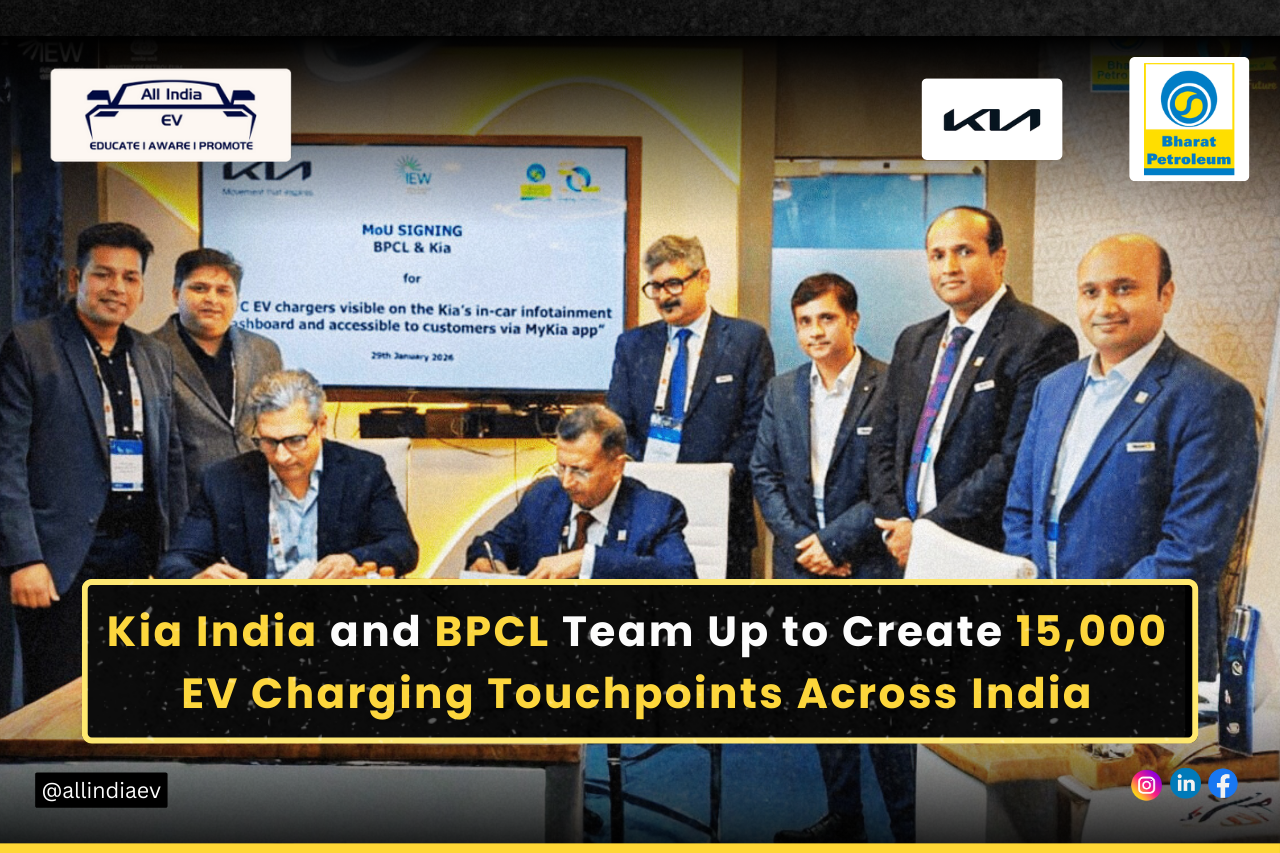

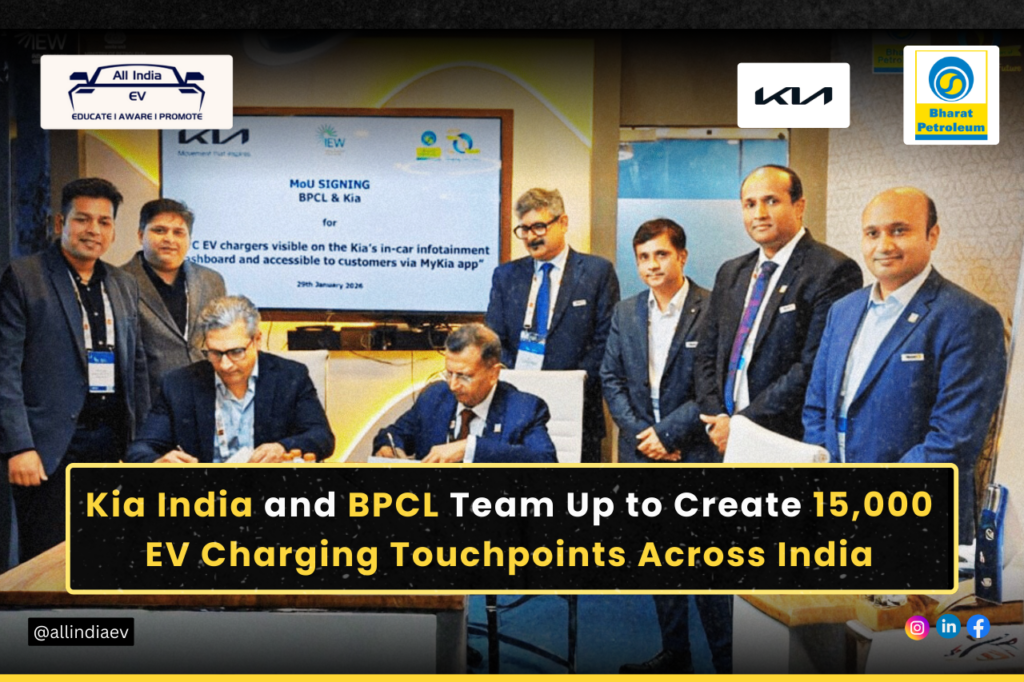
A national-scale rollout of interoperable public fast charging across OEM and fuel-retail footprints.
India’s EV adoption curve is now constrained less by vehicle supply and more by reliable, visible public charging. OEMs need predictable charging outcomes to sell EVs at scale; fuel retailers need new demand engines as liquid fuels plateau. This partnership is a pragmatic attempt to stitch distribution, land, power access, and user experience into one operating system before the network effects harden around a few platforms.
Deal Facts
- Partners: Kia India and Bharat Petroleum Corporation Limited (BPCL).
- Scope: Expansion of EV charging infrastructure aligned to Kia’s customer base and BPCL’s fuel retail network.
- Target footprint: Up to 15,000 charging points (aggregate target).
- Geography: Pan-India rollout leveraging BPCL fuel stations and allied locations.
- Timeline: Phased rollout; specific milestones Not disclosed (matters for execution accountability and capex pacing).
- Investment size: Not disclosed (critical to assess seriousness, ROI expectations, and pace of deployment).
- Ownership / JV structure: Not disclosed (whether this is a formal JV, co-branding, or commercial partnership affects control, governance, and unit economics).
- Technology stack: Charger types, power ratings, software platform, roaming standards Not disclosed (impacts throughput, uptime, and customer experience).
- What’s being built/delivered: Public EV charging points integrated into BPCL locations, with OEM-led customer access and experience layers.
What Each Partner Brings
Kia India
- Demand aggregation: A growing EV customer base and dealer network that can seed utilization from day one.
- Product integration: In-vehicle navigation, charging discovery, and potential bundled charging offers to shape user behavior.
BPCL
- Real estate + power access: Thousands of forecourt locations with grid connectivity, parking, and retail dwell time.
- Operations at scale: 24/7 site operations, payments familiarity, and safety protocols suited to high-footfall energy retail.
The Operating Model (how this could actually work in India)
In practice, this model works only if site selection and power provisioning are treated as first-order decisions. BPCL’s forecourts give instant national coverage, but not every site can host DC fast chargers without grid upgrades, transformer capacity, or land reconfiguration. A tiered rollout metro corridors first, then Tier 2/3 highways and urban clusters would maximize early utilization. Kia’s role is to funnel predictable demand through OEM-led discovery, routing, and charging offers that bias drivers toward BPCL-hosted chargers without locking them out of roaming.
Commercially, the flywheel depends on throughput per charger. Forecourt charging can monetize dwell time via convenience retail, but queue management, uptime SLAs, and standardized payments must be non-negotiable. If the platform supports open roaming and dynamic pricing, BPCL captures footfall while Kia de-risks range anxiety for buyers. The network only compounds if chargers are fast enough, reliably online, and discoverable across apps and in-car systems otherwise the 15,000-point headline becomes a vanity metric with low effective capacity.
Integration & Execution Risks
- Grid readiness risk: Many forecourts lack sufficient sanctioned load for high-power DC fast charging; upgrade timelines can bottleneck rollout.
- Unit economics ambiguity: With capex and revenue share Not disclosed, it’s unclear whether sites will be optimized for utilization or just coverage.
- Interoperability gaps: If roaming standards and open payments aren’t prioritized, utilization fragments across apps and OEM silos.
- Uptime and O&M: Public chargers fail on maintenance discipline; without clear SLAs and spares logistics, network reputation degrades quickly.
- Customer experience drift: Forecourts designed for liquid fuels may struggle with EV dwell-time UX (parking discipline, amenities, queueing).
Who Wins / Who Gets Squeezed
Who Wins
More EV News
- Urban EV buyers and fleets: Faster access to visible, highway-adjacent charging reduces range anxiety and accelerates purchase decisions.
- BPCL retail ecosystem: Higher dwell time and non-fuel retail conversion as charging brings predictable footfall.
Who Gets Squeezed
- Standalone small CPOs: Scale and real estate access tilt competitive advantage toward fuel retailers with national footprints.
- Low-power AC-only networks: If DC fast charging dominates prime locations, slow chargers risk becoming edge-case infrastructure.
Next 90 Days: What to Track
- [OEM] In-car charger discovery, routing accuracy, and any bundled charging benefits for Kia EV buyers.
- [CPO] Site commissioning rate vs. headline targets; percentage of sites with DC fast charging.
- [Supplier] Charger vendor selection, power ratings deployed, and uptime SLAs disclosed.
- [Fleet] Early fleet pilots (ride-hailing, last-mile) using BPCL sites for repeatable charging cycles.
- [Investor] Capex guidance or unit economics benchmarks (₹/charger, utilization breakeven).
- [Policy] State DISCOM approvals, load sanction timelines, and any fast-tracked grid upgrades at forecourts.
Conversation Starters
- Does anchoring chargers at fuel stations optimize for visibility at the cost of grid readiness and charging speed?
- Will OEM-led demand routing distort open competition among CPOs, or simply accelerate network utilization?
- At what utilization threshold do forecourt chargers become meaningfully profitable without subsidies?