

Panel Recommends Premium Bus Services, EV Incentives, Better Parking, and Stricter Fitness Tests to Cut Emissions and Ease Congestion
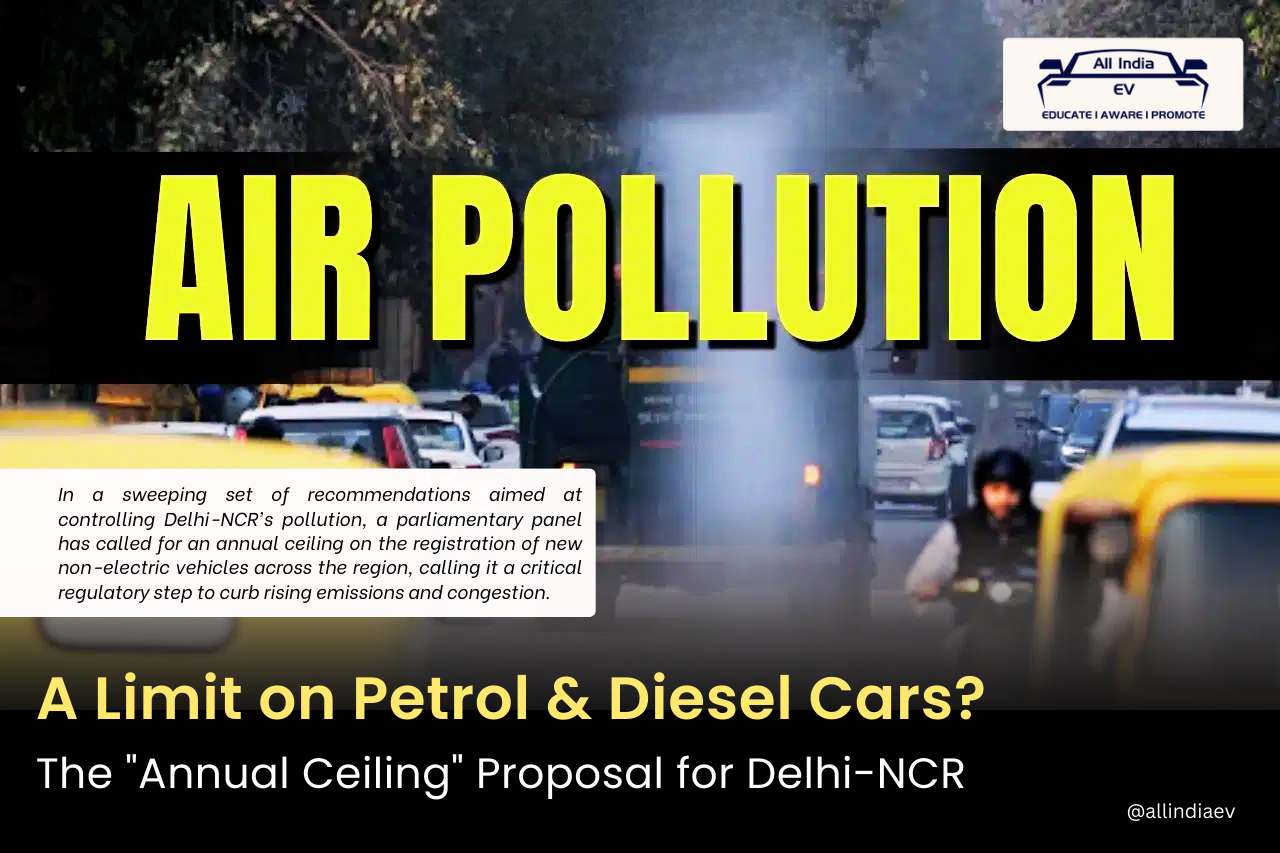
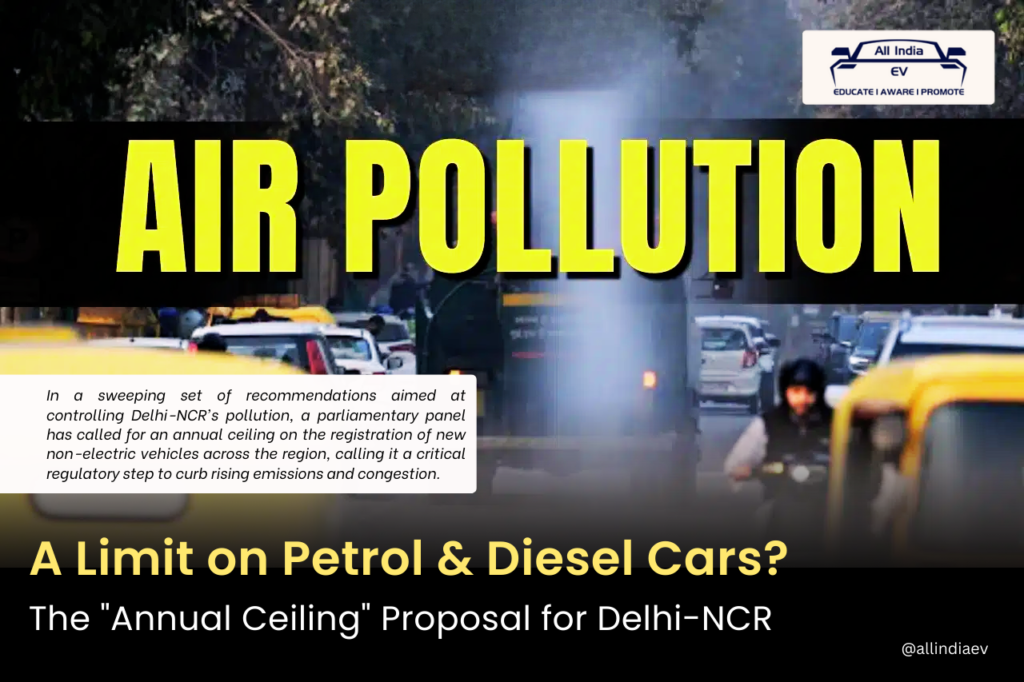
In a strong push towards cleaner mobility, a parliamentary panel has recommended placing an annual ceiling on the registration of new non-electric vehicles (non-EVs) in Delhi-NCR, calling it a crucial regulatory step to curb worsening air pollution and traffic congestion in the region.
In its report on air pollution in Delhi-NCR, the Parliamentary Standing Committee on Science and Technology, Environment and Climate Change, chaired by BJP MP Bhubaneswar Kalita, observed that despite multiple action plans over the years, the region continues to suffer from recurring episodes of hazardous air quality. The panel attributed this to weak implementation, fragmented policies, and a lack of sustained political resolve.
The committee stressed that structural and long-term reforms, rather than short-term winter-specific measures, are essential to reverse rising emissions. One of its most significant recommendations is the introduction of a regulatory cap on new petrol and diesel vehicle registrations, aimed at slowing the rapid growth of polluting vehicles on Delhi-NCR roads.
The panel noted that while incentives for cleaner transport exist, they must be supported by strong disincentives for fossil-fuel vehicles to drive a meaningful behavioural shift among consumers. It argued that without firm regulatory action, voluntary adoption of cleaner alternatives would remain limited.
To reduce dependence on private cars, the committee proposed the launch of a premium, scheduled bus service with higher comfort and reliability. Modelled on app-based cab aggregators, this service would offer digital booking, real-time tracking, and reserved seating, functioning as a shuttle-style system. According to the panel, such a service could attract car users, reduce congestion, and create an additional revenue stream for public transport authorities.
The report also called for focused incentives for zero-emission vehicles, including Battery Electric Vehicles (BEVs) and Fuel Cell Electric Vehicles (FCEVs). These incentives should include production-linked incentives, purchase subsidies, and tax benefits, while discouraging internal combustion engine vehicles through higher costs. Recommendations included free or subsidised public parking for EVs, significantly higher parking charges for petrol and diesel vehicles, and stricter regulatory controls, including the proposed cap on non-EV registrations.
More EV News
On the financial front, the panel urged the finance ministry to encourage public sector banks to offer “green car loans” at lower interest rates for EV buyers and asked the Reserve Bank of India to explore priority sector lending for EVs. Insurance companies were advised to introduce EV-specific insurance policies with reduced premiums. The committee also proposed income-tax deductions on EV loan repayments under both tax regimes and a special incentive scheme for government employees to adopt electric vehicles.
Addressing vehicle emissions, the panel flagged the inadequacy of the current Pollution Under Control (PUC) system and recommended the immediate rollout of remote sensing technology to identify high-emitting vehicles. It also suggested advancing mandatory fitness tests from 15 to 10 years, especially for SUVs, along with fiscal incentives for voluntary vehicle scrappage.
To strengthen public transport, the committee called for fast-tracking approvals for key RRTS corridors, including Delhi–Gurugram–SNB and Delhi–Panipat–Karnal, expediting pending Delhi Metro projects, and initiating early planning for Metro Phase 5.
Comment by Author:
The parliamentary panel’s recommendations mark a decisive shift from short-term fixes to structural reforms in tackling Delhi-NCR’s pollution crisis. By proposing a cap on new non-EV registrations alongside strong incentives for zero-emission vehicles and better public transport, the report signals that cleaner mobility will require firm regulation, not just voluntary adoption. If implemented with political will and coordination, these measures could become a turning point in reducing vehicular emissions and congestion in the region.