

Electric Mobility Takes Center Stage as Tata Sons Plans EV Manufacturing Expansion in Uttar Pradesh Under the State’s EV Subsidy Policy
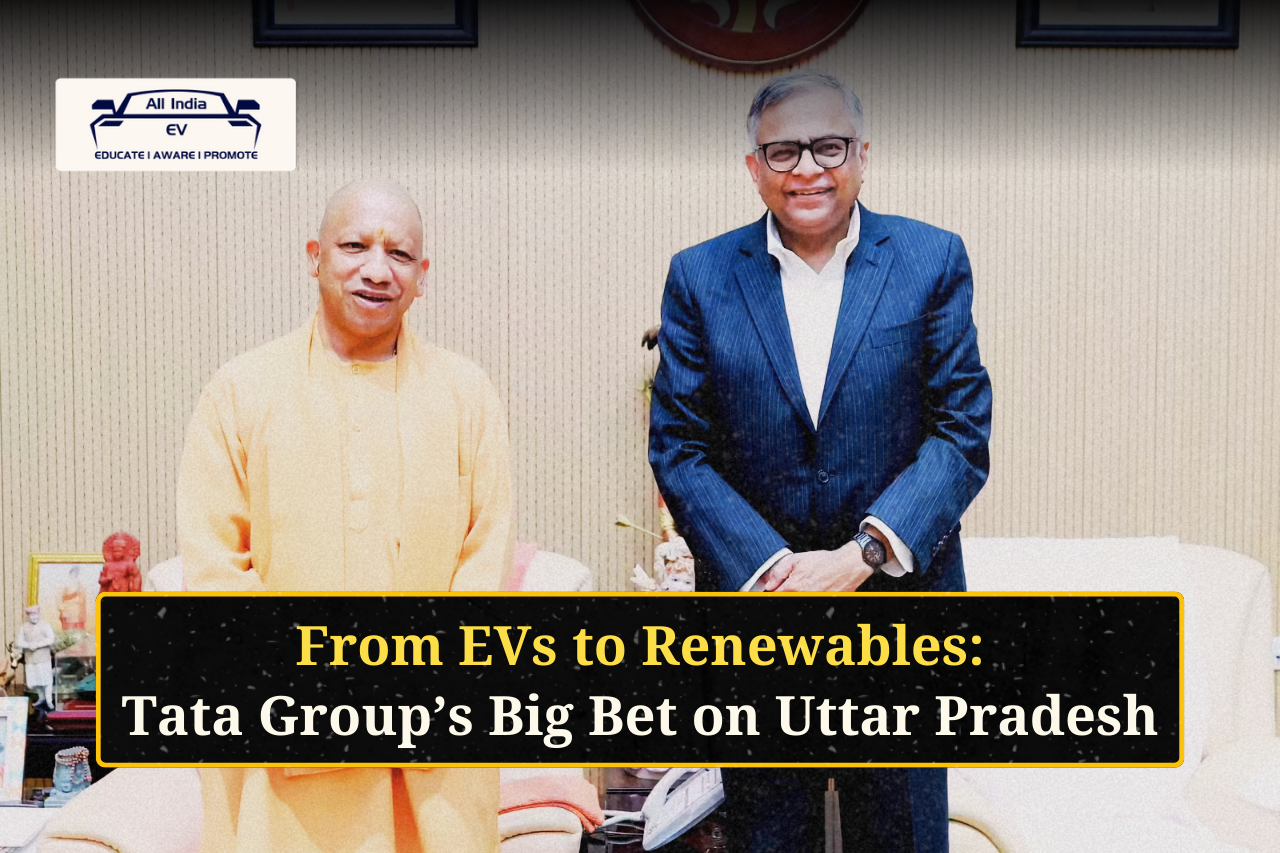
Uttar Pradesh’s ambition to emerge as a national hub for clean energy, electric mobility, and advanced manufacturing received a significant boost following high-level discussions between Chief Minister Yogi Adityanath and Tata Group leadership. The meeting reviewed ongoing and upcoming initiatives across power generation, renewable energy, EV manufacturing, infrastructure, and defence, underscoring the State’s integrated development strategy.
A major highlight of the discussions was Tata Group’s 1,900 MW Bara thermal power plant in Prayagraj, operating in a 360×3 configuration. The plant continues to play a critical role in meeting Uttar Pradesh’s base-load power demand, ensuring energy reliability for industries and urban centres while supporting the State’s economic growth.
Electric mobility emerged as a key focus area, with Tata Sons outlining plans to expand its vehicle manufacturing footprint in Uttar Pradesh in alignment with the State’s EV subsidy policy. The Group is exploring dedicated EV manufacturing capabilities, along with opportunities in new electric vehicle models, electric bus deployment, and development of a comprehensive EV ecosystem, positioning the State as a future EV manufacturing hub.
On the renewable energy front, Tata Group confirmed the development of two 50 MW solar power plants in Bundelkhand and Prayagraj, strengthening the State’s clean energy mix. Additionally, rooftop solar installations are being expanded across 50 of Uttar Pradesh’s 75 districts, promoting decentralised energy generation and improved grid resilience.
Infrastructure development also featured prominently, with Tata Group planning four to five new office buildings in Noida, scheduled for phased completion by December 2026, further reinforcing Noida’s status as a leading corporate hub.
The discussions also reaffirmed continued collaboration in defence manufacturing, supporting industrial diversification and technological capability. Overall, the engagement highlighted Uttar Pradesh’s commitment to simultaneously advancing clean energy, EV adoption, and industrial growth, strengthening its position in India’s evolving economic and EV landscape.
More EV News
Comment by Author:
The Tata Group–Uttar Pradesh engagement reflects a clear convergence of policy vision and industrial capability, positioning the State as a strategic driver of India’s clean energy and EV transition.
With parallel progress in power reliability, renewables, EV manufacturing, and infrastructure, Uttar Pradesh is steadily shaping an ecosystem that supports sustainable growth, industrial competitiveness, and long-term economic resilience.