
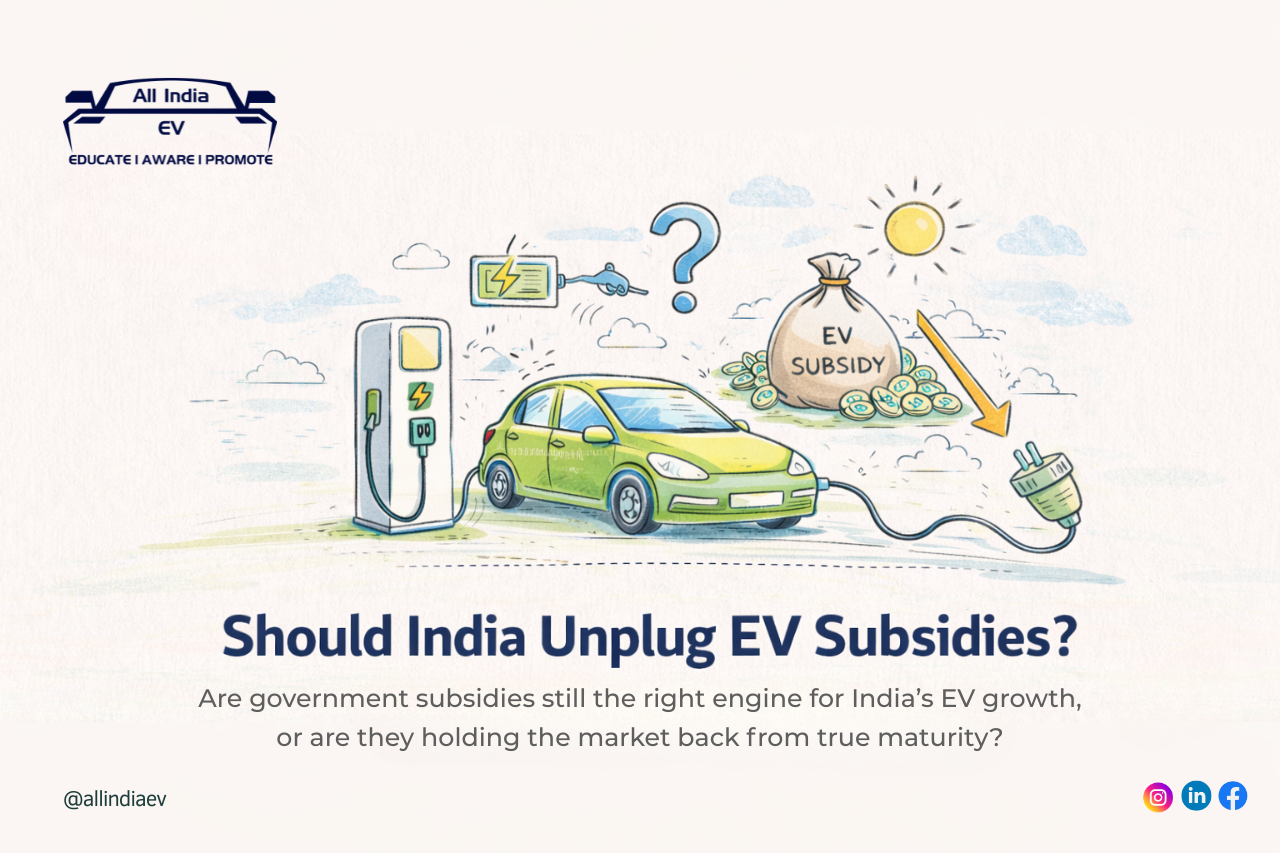

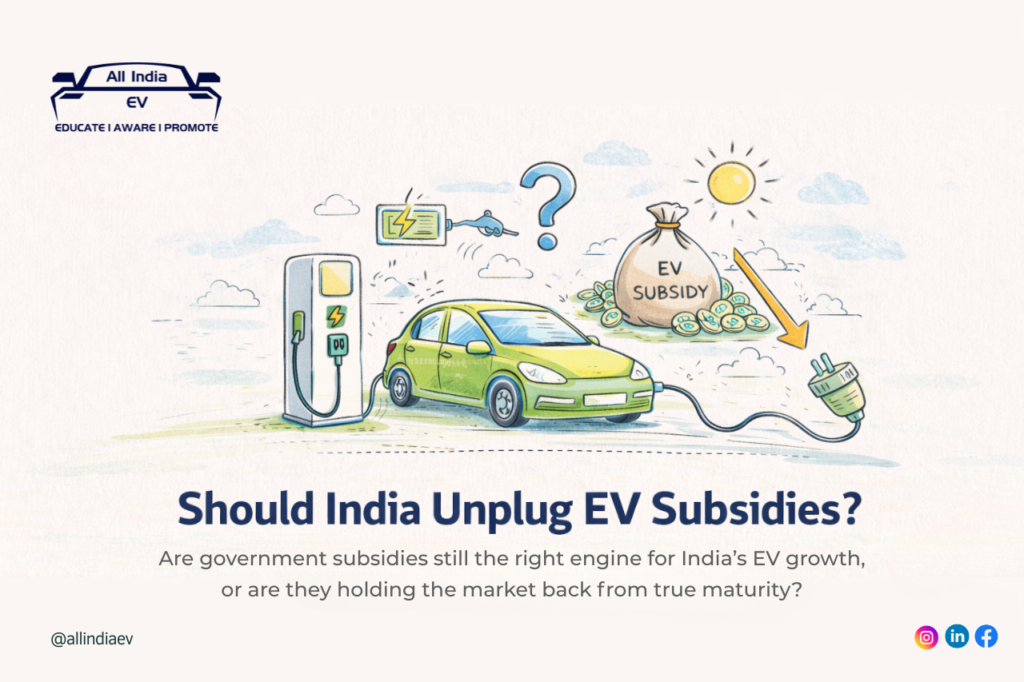
Despite a surge in electric vehicle sales, experts question whether subsidies and mandates are delivering real value or merely distorting the market.
India purchased around 1.8 lakh electric cars last year, marking a sharp 77 per cent rise over 2024. Yet EVs still accounted for only about 3.8 per cent of total passenger vehicle sales. After nearly a decade of government incentives, subsidies, and policy nudges, the limited market share suggests that buyers remain unconvinced about switching to electric.
Two challenges continue to dominate consumer hesitation. First is range anxiety combined with inadequate public charging infrastructure. Second is the high upfront cost of EVs and the lack of affordable options at the lower end of the market. These factors have slowed adoption and prevented India’s EV ecosystem from maturing at the pace seen in global peers.
This context also explains the concern among Indian automakers over the potential entry of low-cost Chinese electric vehicles via Europe under a future free trade agreement. However, an alternative view is gaining traction: allow EVs of all types and origins to enter the market freely and competitively.
Let Competition Build Infrastructure
Proponents of an open market argue that wider EV adoption driven by competitive pricing would naturally accelerate the development of charging and servicing infrastructure. That, in turn, would generate employment and benefit consumers. Countries such as Australia, which do not have a large domestic auto manufacturing base, still boast robust fueling and charging networks. Improved infrastructure would also support Indian automakers, provided they invest in research and development and upgrade technology much like China did over the past decade.
Questioning Mandates and Subsidies
More EV News
Critics say persisting with subsidies and mandates to force domestic EV adoption may be counterproductive. Telangana’s proposal to require schools to convert 25–50 per cent of their vehicle fleets to electric is cited as an example. Electric buses cost significantly more than diesel or CNG alternatives, and since school buses operate only a few hours a day, the air quality benefits would be marginal. A stronger case, experts argue, lies in electrifying city bus fleets that run throughout the day.
Subsidies themselves are under scrutiny. Delhi’s policy offering up to ₹1 lakh for 27,000 electric cars priced below ₹25 lakh raises concerns about equity. The primary beneficiaries are higher-income buyers, while the revenue cost is borne by the wider public. Critics argue these funds could be better deployed in essential civic needs such as clean water and sanitation.
A study by Harvard Law School found that EV subsidies often encourage affluent households to buy electric cars as secondary vehicles, exacerbating congestion and pollution. Other research suggests subsidies reduce pressure on manufacturers to cut EV prices. Without state support, automakers would be forced to innovate, lower costs, or cross-subsidise EVs by adjusting prices of internal combustion engine vehicles.
The emerging consensus among critics is clear: let the market drive adoption, and reserve public funds for broader public welfare.