

Karnataka to Install EV Charging Points Along Bengaluru–Belagavi NH-48 and Toll Plazas Statewide to Strengthen Highway EV Infrastructure
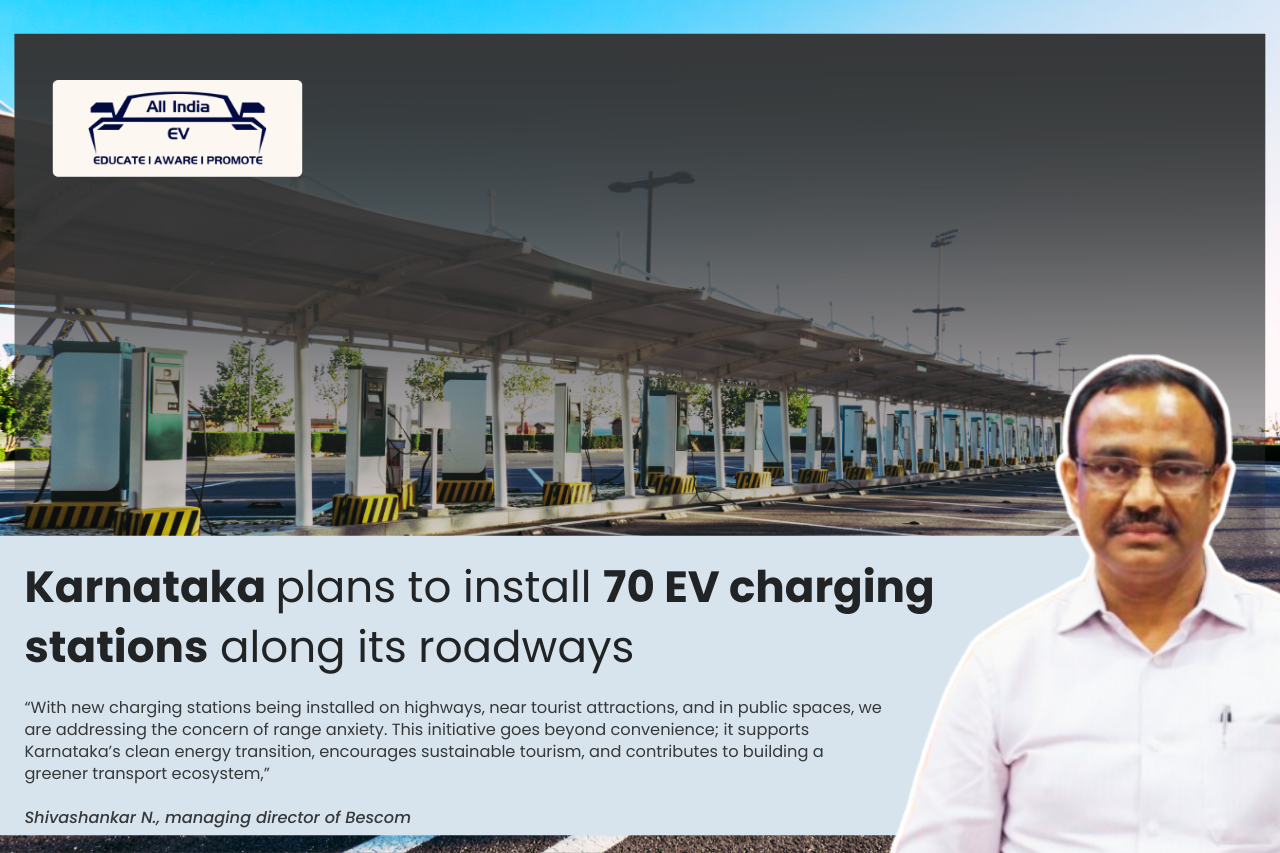
In a major boost to electric mobility, Karnataka’s Energy Department has announced plans to establish 70 new EV charging stations across national and state highways, making long-distance electric vehicle travel more convenient and sustainable throughout the state.
The initiative will be executed through Bangalore Electricity Supply Company (Bescom), the state-run utility that has been at the forefront of Karnataka’s e-mobility revolution. Officials confirmed that the charging points will be strategically installed along the Bengaluru–Belagavi National Highway (NH-48) and at various toll plazas to ensure continuous connectivity between key cities and industrial hubs.
Expanding Karnataka’s EV Corridor Network
This project aligns with the state’s broader vision to develop an extensive EV corridor network that connects urban, industrial, and tourism centers through accessible charging infrastructure.
Shivashankar N., Managing Director of Bescom, said the initiative aims to make long-distance EV travel a reality, addressing one of the biggest challenges for electric vehicle owners — range anxiety.
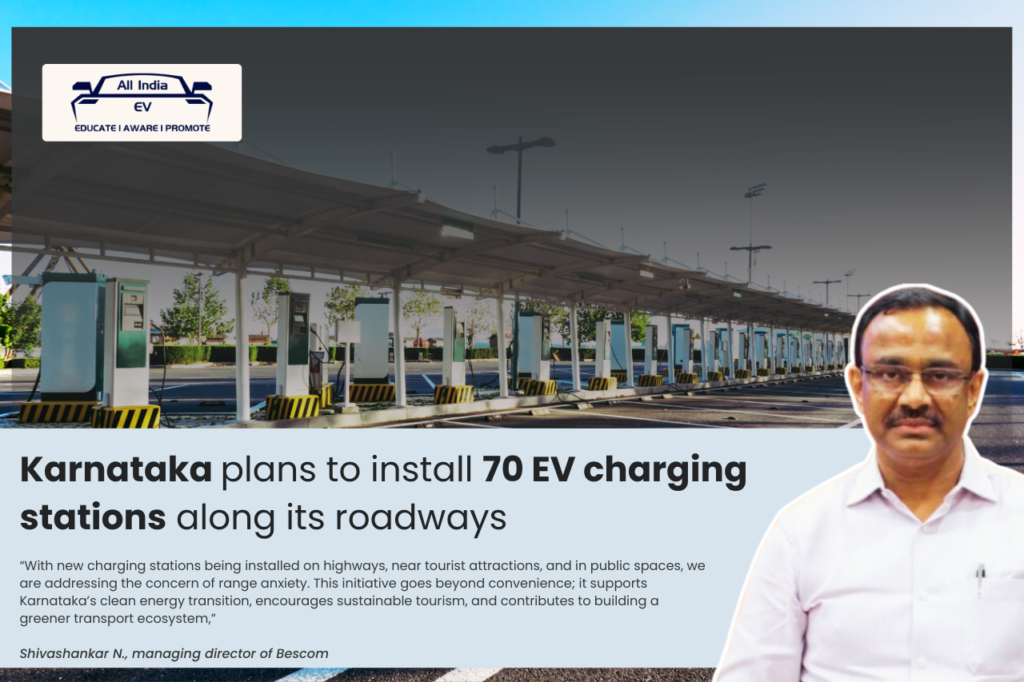
“With new charging stations being installed on highways, near tourist attractions, and in public spaces, we are addressing the concern of range anxiety. This initiative supports Karnataka’s clean energy transition, promotes sustainable tourism, and contributes to building a greener transport ecosystem,” he said.
Karnataka Leads in Public Charging Infrastructure
A senior Bescom official highlighted that Karnataka currently leads India in public EV charging infrastructure, with 5,960 operational stations — the highest among all states. The official added that the new toll-based network will bridge key connectivity gaps, making intercity EV travel more practical and efficient.
More EV News
Bescom has already made several pioneering contributions to the e-mobility sector, including:
- Launching India’s first solar-powered EV hub with second-life batteries near Kempegowda International Airport.
- Developing the ‘EV Mithra’ mobile app, which enables users to locate and access charging stations statewide.
- Maintaining one of the most affordable EV charging tariffs in India.
Pilot Phase and Implementation Plan
As part of the pilot phase, 30 EV charging stations will be installed at state highway toll plazas (pending approval from the Karnataka Road Development Corporation Board) and 40 stations along 10 national highways, subject to approval by the National Highways Authority of India (NHAI).
Once completed, the network will create a continuous electric corridor connecting major industrial regions, tourism circuits, and interstate trade routes — a crucial step in supporting the state’s 11% EV adoption rate, which already surpasses the national average of 9%.
EV Charging at Tourist Hotspots
Under the PM-E Drive initiative, the Karnataka government is also setting up EV charging points at popular tourist destinations, including Mayura Hotels managed by the Karnataka State Tourism Development Corporation (KSTDC), Jungle Lodges and Resorts, and temples managed by the Religious Endowment Department, which attract large numbers of visitors and pilgrims.
Roadmap and Future Corridors
According to Bescom sources, state highways identified for installation include Halebid–Anechukur, Birur–Davanagere, Bagalkot–Biligiri Ranganatha Betta, Padubidri–Chikalgud, Haveri–Sagar, and Jath–Jamboti. These corridors will not only enhance electric mobility access but also contribute to reducing emissions and dependence on fossil fuels.
Comment by Author
Karnataka continues to lead India’s EV revolution with a strong policy framework and proactive infrastructure development.
By integrating highway charging, tourism connectivity, and renewable energy solutions, the state is setting a benchmark for other regions. This initiative represents more than just improved accessibility — it reflects Karnataka’s commitment to sustainable, future-ready transport that supports both economic growth and environmental responsibility.