
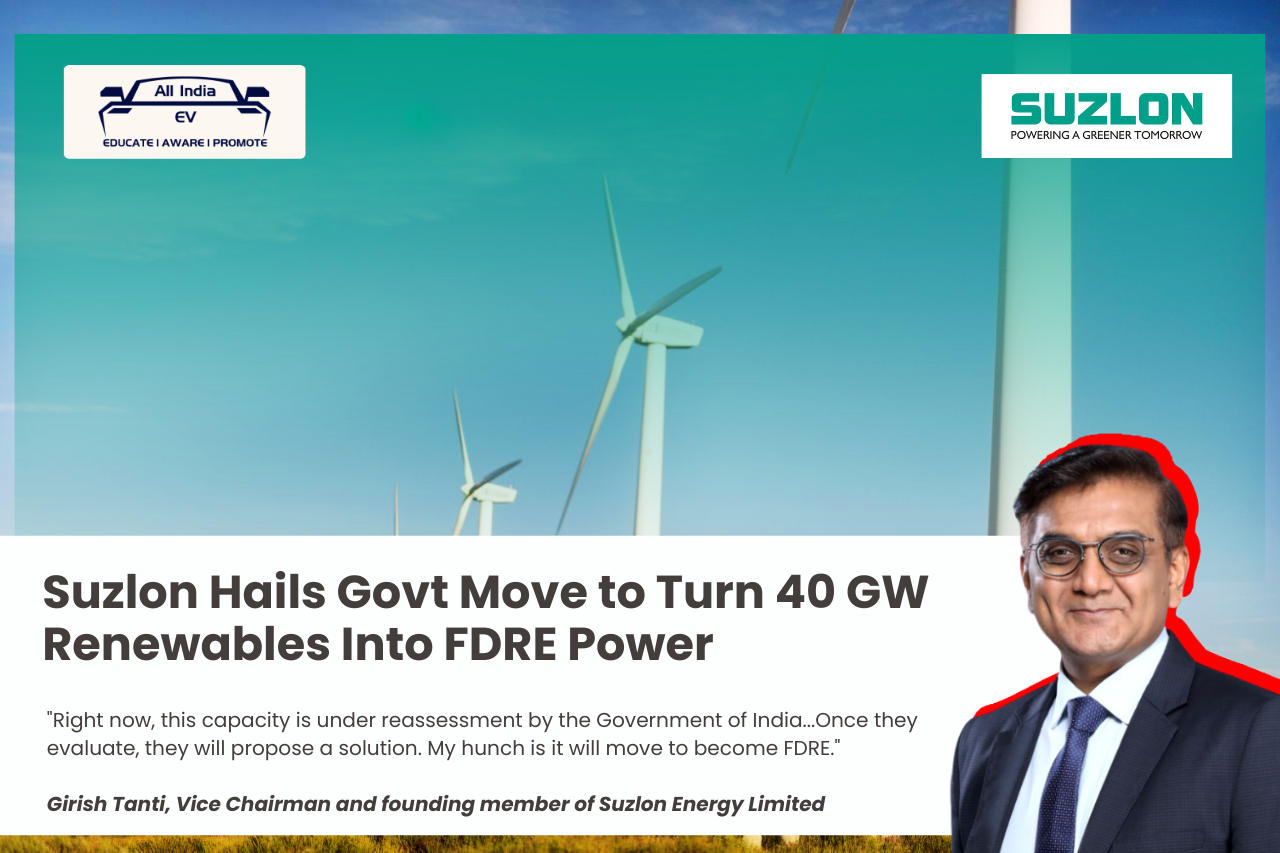

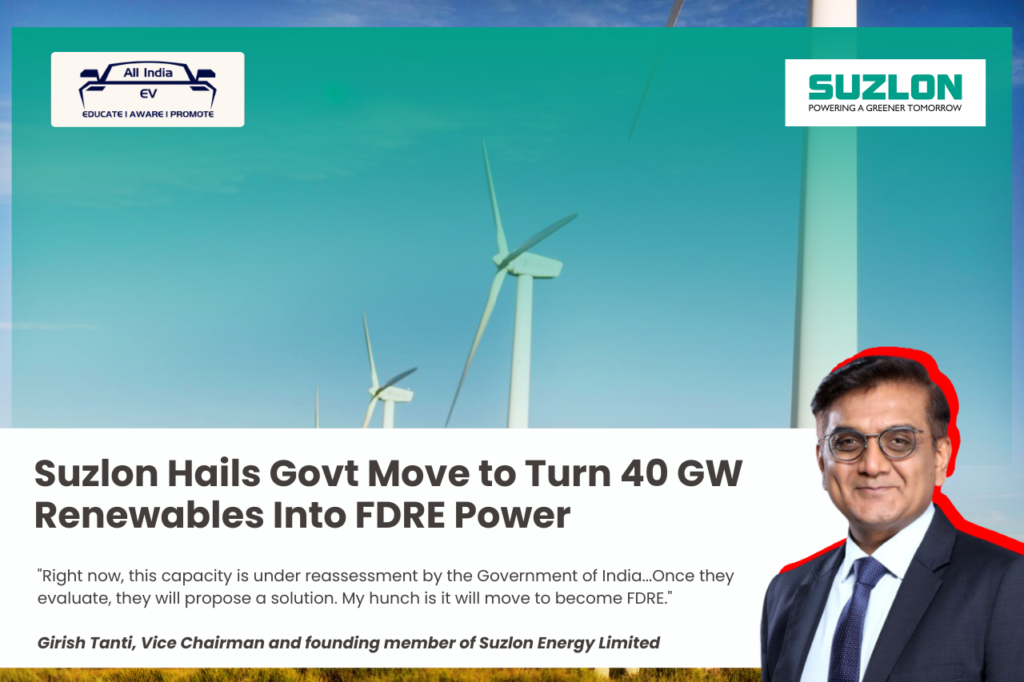
Suzlon Girish Tanti Says Over 40 GW Uncontracted RE May Shift to FDRE Model as Wind, Solar & Storage Deliver Round-the-Clock Clean Power Competitive With Coal
In a major development for India’s clean energy transition, Suzlon Group Vice Chairman Girish Tanti has indicated that the central government may soon convert over 40 GW of uncontracted renewable energy capacity into the FDRE (Firm and Dispatchable Renewable Energy) format — a model increasingly seen as the future of reliable green power supply.
The FDRE structure integrates wind, solar, and advanced Battery Energy Storage Systems (BESS) to deliver round-the-clock, dispatchable electricity, addressing intermittency concerns associated with traditional standalone solar and wind projects.
According to an official document, nearly 45.34 GW of renewable capacity currently lacks Power Purchase Agreements (PPAs). The government is working closely with stakeholders to identify feasible pathways for these awarded but unsigned capacities. Developers are also in discussions with state discoms, the primary buyers, to finalize PPA arrangements.
Meanwhile, major Renewable Energy Implementing Agencies (REIAs) — SECI, NTPC, NHPC, and SJVN — have proposed re-auctioning the tendered capacities, offering an alternative route to resolve the backlog.
Tanti believes the government’s review will ultimately push these projects into the FDRE category. “Once evaluated, I expect the government to move this entire capacity toward the FDRE model,” he said, highlighting its reliability and strategic importance.
His remarks come as India accelerates efforts to achieve its 500 GW non-fossil fuel capacity target.
More EV News

Tanti expressed strong confidence that consumers will prefer FDRE energy despite higher tariffs, given its superior reliability. Solar tariffs currently fall between ₹2.38–₹2.56 per unit, and wind tariffs between ₹3.70–₹3.90 per unit. In comparison, FDRE price discovery has been around ₹5.5 per unit.
“At ₹5.5 per unit, consumers receive 24×7 renewable power that is still cheaper than coal-based supply. We are now directly competing with coal on round-the-clock delivery,” Tanti added.
Industry sources note that several states have raised concerns regarding the intermittency of standalone solar and wind projects, adding more weight to the FDRE shift.
If implemented, this move could significantly strengthen India’s renewable energy ecosystem, ensuring cleaner, more stable, and more competitive power for the future.
Author’s Comment:
Converting over 40 GW of uncontracted renewable capacity into the FDRE format could be a transformative shift for India’s clean energy landscape. With its blend of wind, solar, and storage, FDRE offers the reliability that discoms and consumers have long demanded.
While tariffs may be higher, the promise of round-the-clock green power—now competing directly with coal—signals a bold step toward a more resilient and future-ready energy system.