


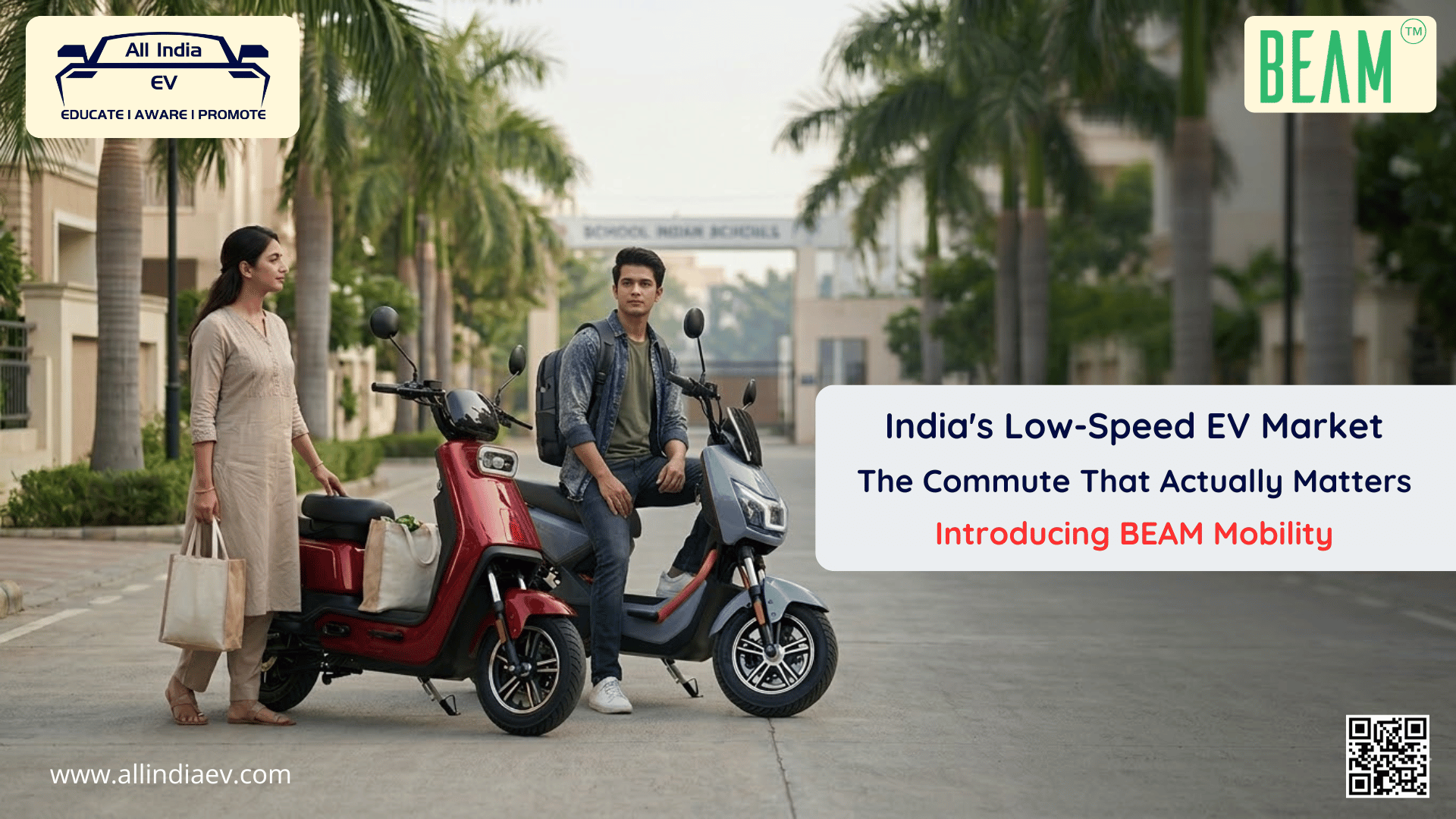
Why college students and young homemakers are quietly becoming the core demand layer for low-speed electric mobility.
Ask most people to picture the Indian EV revolution and they’ll describe something large: a highway, a charging corridor, a premium scooter with a 150-km range claim. That image is aspirational, but it misses where a large part of India’s real mobility demand sits. The low speed electric 2W segment is built for short daily trips, neighbourhood errands, campus commutes, and practical urban movement that rarely makes headlines but shapes everyday transport reality.
India moves in short trips. The mid-morning market errand. The college commute folded into a 3-km loop that barely touches a main road. The neighbourhood pickup that involves three stops and a bag of groceries before noon. These trips are almost entirely served, right now, by petrol, by borrowed vehicles, shared autos, or simply the friction of not having a vehicle at all.
That is the gap this editorial examines: the low-speed electric two-wheeler segment, where vehicles are licence-free, registration-exempt, built for distances under 25 km, and priced for households that count savings in hundreds of rupees a month. Two riders define this demand layer, the college student asserting mobility on her own terms, and the young homemaker whose daily movement is invisible in transport data but relentless in practice.
Both are underserved by the existing EV market. Both are precisely the people a well-designed low-speed electric scooter is built for. And both live within a 100-km radius, in tier-2 cities, large townships, peri-urban zones, where the infrastructure for high-speed vehicles is incomplete but the need for daily mobility is absolute.
What Low-Speed Actually Means
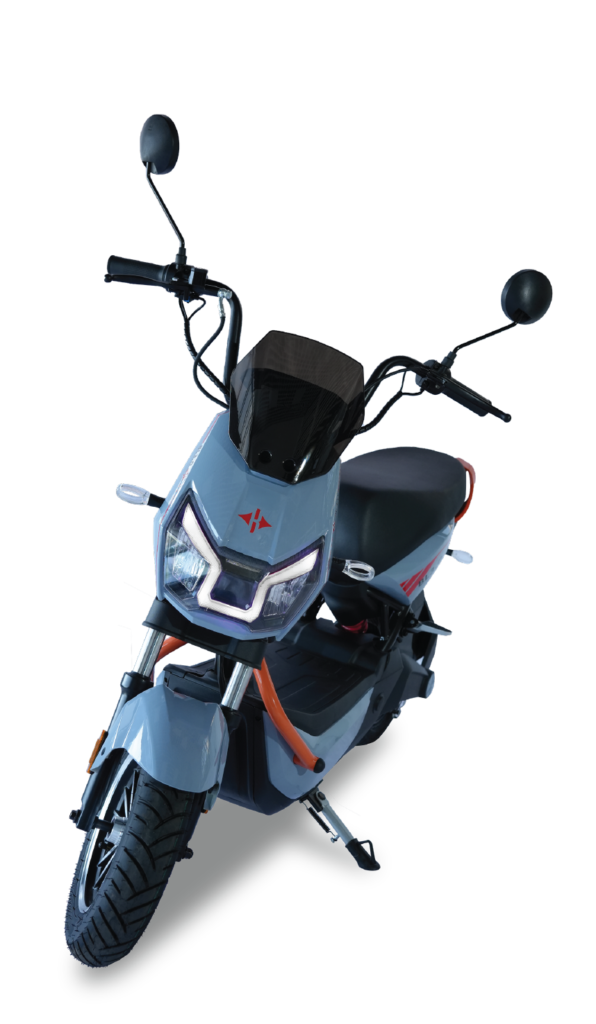
Low-speed electric two-wheelers are defined by a top speed capped at 25 km/h and motor output up to 250W. Under this threshold, these vehicles are treated as exempt from registration and licence requirements, a simplification that varies by state in exact application, but one that substantially reduces the friction of first-time ownership.
What this does in practice is remove the biggest barriers for new riders. A college student doesn’t need a licence to start. A homemaker who never got one doesn’t need to. These vehicles are purpose-built for short distances, not expressways. The range ceiling is a feature, not a limitation, when your daily loop is under 15 km. The speed cap is a comfort, not a constraint, when your route goes through neighbourhood lanes and colony roads.
More EV News
LOW-SPEED EV — QUICK REFERENCE
- Top speed: 25 km/h
- Motor: up to 250W
- Typically exempt from licence and registration requirements
- Optimised for daily urban and peri-urban trips under 15–25 km
- Target geography: ~100 km radius from major metros, tier-2 cities, townships, peri-urban zones
The ₹/km Case: Hard to Argue With
India’s EV sales have risen from roughly 50,000 units in 2016 to approximately 2.08 million in 2024. The two-wheeler segment leads this growth at around 1.15 million annual units. But the headline numbers hide a quieter reality at the base of the market: millions of households where the purchase decision is driven first by cost, daily travel is short, and convenience matters more than performance.
For these buyers, the case for low-speed EVs starts and ends with one metric: cost per kilometre. PRS Legislative Research analysis using Delhi assumptions puts petrol two-wheeler running cost at approximately ₹1.9/km, while electric two-wheelers can run at nearly ₹0.10/km to ₹0.85/km, depending on charging cost, battery efficiency, and usage pattern. That creates a meaningful operating cost gap.
For a rider covering 20 km a day, or ~600 km a month, the monthly saving comes to around ₹630 to ₹1,416. In practical terms, that is not a policy talking point. It is direct household-level cash flow relief, visible every month without needing a subsidy narrative to explain it.
RUNNING COST COMPARISON (APPROX.)
- Petrol 2W: ₹1.9 – ₹2.46 per km
- Electric 2W: ₹0.10 – ₹0.85 per km
- Monthly saving for 20 km/day rider: : ~₹630 to ~₹1,416
The Two Riders Who Drive This Market
The low-speed EV buyer is not one person. She is two distinct riders, each with a different trip pattern, a different relationship to independence, and a different set of barriers the existing market has failed to remove. Understanding both is the beginning of understanding the scale of the opportunity.
RIDER 01
The College Student — First Vehicle, First Freedom
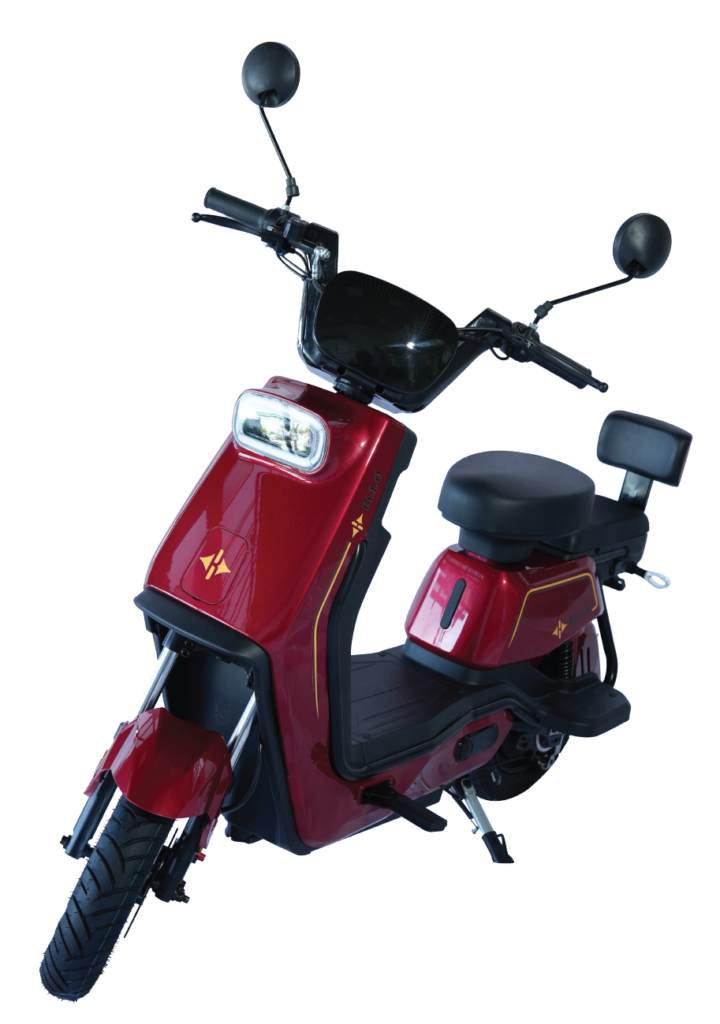
Age: 18–22 years
Geography: ~100 km radius
Daily distance: 6–12 km
Licence required: No
Her first vehicle is about freedom, not specifications. The campus commute is 4 km. The 25 km/h ceiling is irrelevant when the alternative is a shared auto or a parent’s schedule. The licence-exemption threshold matters for a rider aged 18 or 19 who is navigating adulthood and wants to start moving on her own terms, without the delay of a driving school, a test, and a licence appointment.
Add a tech-native generation that expects a vehicle to work like a phone, trackable, lockable, monitorable from an app, and the product brief writes itself. This rider does not read spec sheets. She compares monthly costs, reads reviews from people like her, and asks one fundamental question: will this make my life easier? A low-speed EV that charges for ₹8 overnight and covers 70 km on a full charge answers that question without a brochure.
The operating cost lands at a number she can run on pocket money or a part-time income. The overnight charge is as natural as plugging in a phone. The range, more than three times her daily loop, means she never counts kilometres. And in a tier-2 city where college campuses are spread across neighbourhoods connected by mid-speed roads, the 25 km/h vehicle handles the actual terrain without compromise.
In the 100-km catchment of a major city, there are dozens of colleges, hundreds of hostels, and tens of thousands of women students who currently depend on shared transport or family vehicles. This rider is not a niche. She is a segment.
RIDER 02
The Young Homemaker — Managing a Household, Not a Commute
Age: 27–35 years
Geography: ~100 km radius
Kids: ~5 years old
Daily distance: 8–15 km (multi-stop)
She is 31, her child is in nursery, and her day starts at 7 AM. By noon she has covered six destinations — school drop, market, pharmacy, neighbour, market again because something was forgotten, school pickup. Her total distance is under 12 km. Her total stops are more than any office commuter covers in a week. And she does all of it, right now, on a petrol scooter whose fuel cost is invisible in the household budget until it isn’t.
The low-speed EV restructures this entirely. The running cost drops to the price of a cup of tea per day. The vehicle is always ready, no warm-up, no fuel planning, no range anxiety on a short loop. It charges overnight while the household sleeps and wakes up at 100%. The basket, the child seat configuration, the manoeuvrability in colony lanes at 7:30 AM, these are the functional requirements she evaluates, not top speed or 0-to-60 performance.
For her, the lower speed is an underrated comfort. The lane to the school gate, the parking space outside the vegetable market, the gap between two autos on a colony road, none of these call for velocity. They call for control, predictability, and a machine that does not require active management while she is simultaneously managing a 5-year-old on the rear seat and a shopping bag on the footrest.
In tier-2 towns and peri-urban zones within 100 km of major cities, this rider is everywhere. She has a family vehicle. She often does not have access to it independently. A low-speed EV that is hers, purchased for her daily use, charged by her, managed through her phone, gives her something the market has never previously offered at this price point: her own vehicle.
India’s EV transition will not be completed on expressways. It will be completed on the road to the school gate and the sabzi market, and the vehicle for that road is already defined.
Meet BEAM Mobility: Built for This Commute
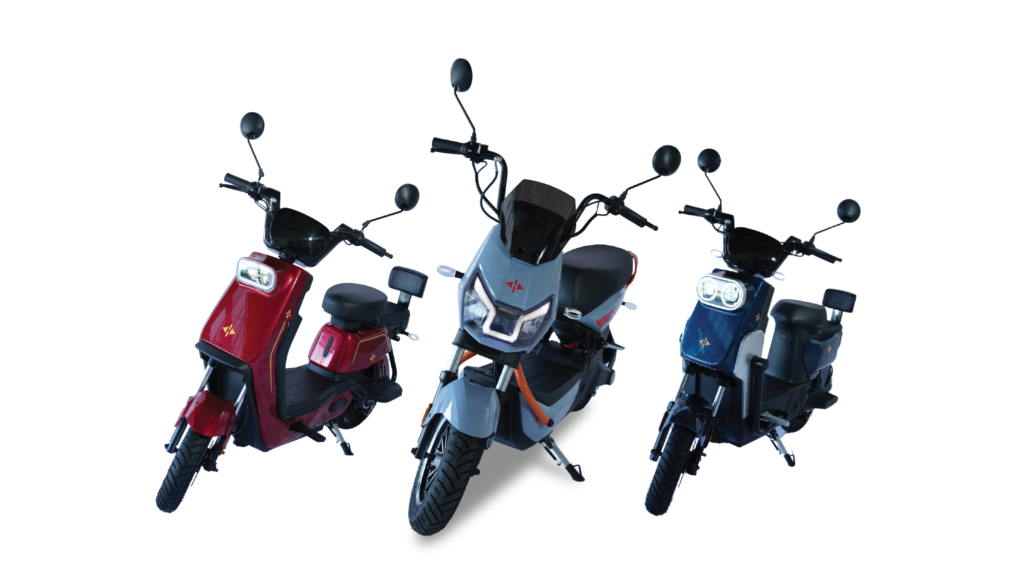
A Bengaluru-based EV brand that has read the same brief — and built the right answer.
Everything argued above, the licence-free threshold, the ~₹630 to ~₹1,416 monthly savings, the two riders who define this demand layer, points toward a specific kind of company. Not one competing on highway range or premium specs, but one that has engineered for the 6-km daily loop, the campus commute, the neighbourhood errand.
BEAM Mobility, founded in April 2024 and headquartered in Bengaluru, is precisely that company. BEAM’s low-speed BL series, the BL 1.O, BL 2.O, and BL 3.O ,is a direct answer to the market gap this editorial describes.
THE PRODUCT: WHERE BEAM GETS IT RIGHT
The BL series runs on a LiFePO4 (Lithium Iron Phosphate) 48V 30Ah battery, a deliberate departure from the lead-acid chemistry that has historically plagued the low-speed segment with unreliable cycle life and safety concerns. LiFePO4 is thermally stable, handles daily charge-discharge cycles gracefully over several years, and eliminates the fire-risk anxiety that has damaged trust in cheaper alternatives. For the homemaker parking it next to a gas cylinder, or the student plugging in at a hostel room, this is not a minor specification. It is the foundation of the trust this market has been asking for.
Range is rated at 70+ km on a full charge, more than three times the daily distance of either rider profiled above. Charging takes 3 to 3.5 hours on a standard home socket. There is no range anxiety in this use case. It charges overnight and works every morning.
The BEAM Connect app (iOS and Android) allows the rider to check battery state, arm or disarm the vehicle, receive theft alerts, and locate the scooter remotely, features that land differently for a student parking at a campus gate and a homemaker leaving it outside the market. The vehicle carries a 3-year battery warranty and an IP67 weather-resistance rating: two specifications that speak directly to the quality gap the low-speed segment has long struggled with.
QUICK PRODUCT SNAPSHOT
- Speed / Motor: 25 km/h | 250W
- Battery: LiFePO4 48V 30Ah
- Range: 70+ km per charge
- Charge Time: 3–3.5 hrs (home socket)
- Battery Warranty: 3 years
- Weather Rating: IP67
- App Features: Battery SOC, Arm/Disarm, Find My Vehicle, Near Unlock and Vehicle Ignition Status (on/off)
- CO₂ Reduction: ~0.5 tonnes / vehicle / year
The Right Bet, at the Right Time
BEAM launched in 2024 — a moment when the low-speed EV segment has the tailwinds of national EV policy, rising petrol prices, and a first generation of urban and peri-urban households that has already seen a family member ride electric. The scepticism that defined the category five years ago has softened. What the market now needs is not evangelism but execution: a product that shows up reliably, a warranty that holds, a service network that exists, and a savings calculator that lets the arithmetic speak for itself.
BEAM has built all of these. The brand’s savings calculator at beammobility.in allows a prospective buyer to enter her region, daily distance, and local fuel and electricity rates to see a personalised monthly saving figure.
BEAM Saving Calculator: https://beammobility.in/savings-calculator/
It is a small feature with an outsized signal: a company that trusts its product to make the case, without a salesperson in the room.
The two riders described in this editorial — the college student and the young homemaker — together represent a demand pool that is larger, more consistent, and more geographically distributed than the premium EV segment that captures most of the industry’s attention. They are within 100 km of every major Indian city. They ride short distances every day. They are price-sensitive and value-driven. And they have been waiting, without knowing it, for a product that was actually built for them.
BEAM Mobility has built that product. The question now is how quickly it reaches the riders who need it most.
Catch up on All India EV’s related coverage on India’s evolving commercial EV subsidies and battery swapping policies at All India EV