
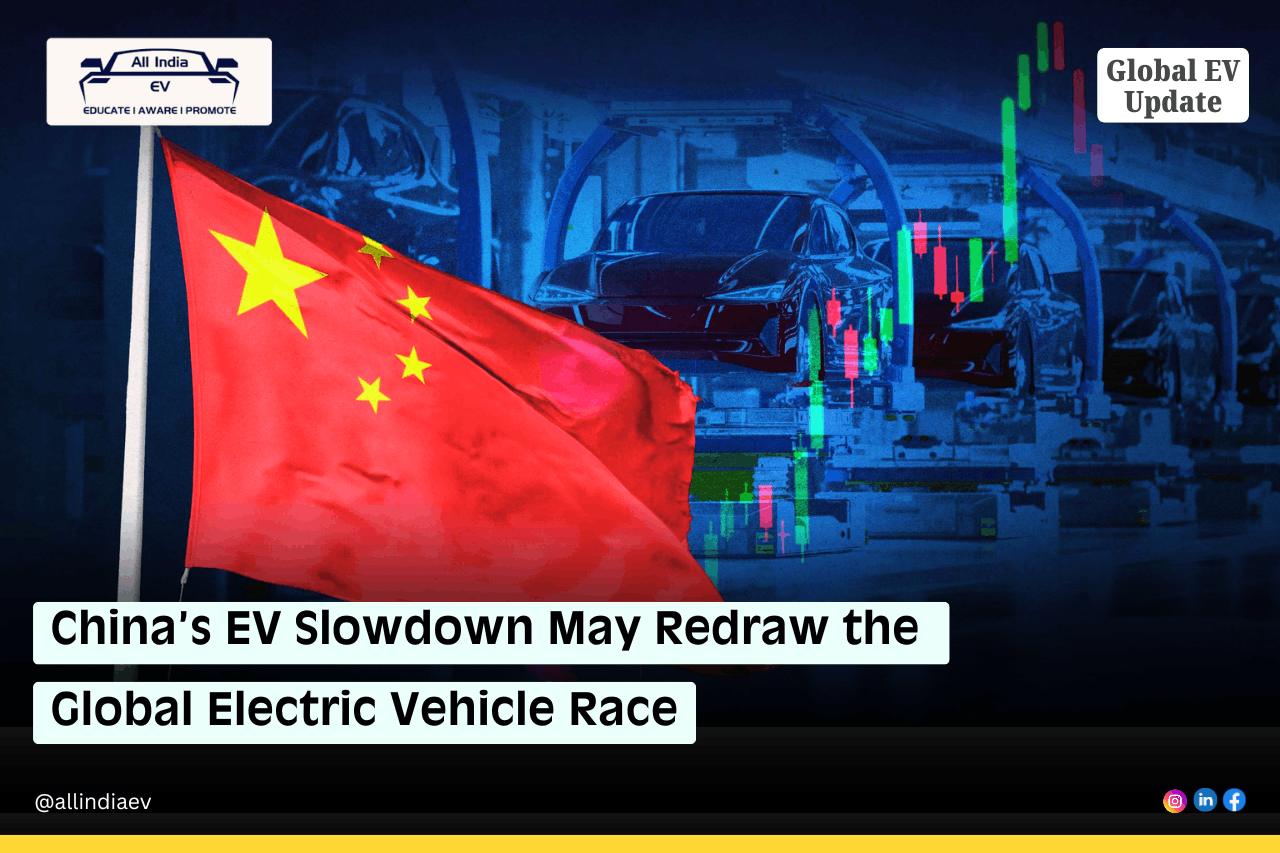

What: China’s EV slowdown is beginning to reshape the global electric vehicle industry, with weaker domestic demand, fading subsidies, and rising price pressure forcing automakers to rethink expansion strategies.
The Number: China’s car sales reportedly declined 19.5% in January 2026, while several major EV manufacturers are facing shrinking margins and excess inventory.
The Impact: The slowdown could accelerate industry consolidation, increase Chinese EV exports globally, and intensify pricing pressure across Europe, Southeast Asia, and emerging EV markets.

The Core News
China’s EV slowdown could trigger the industry’s biggest global reset as the world’s largest electric vehicle market enters a structurally different phase after years of aggressive expansion. The Chinese EV sector grew rapidly through heavy state incentives, low-cost manufacturing, and intense price competition. However, weakening consumer confidence, subsidy tapering, and oversupply are now exposing profitability risks across the market.
Industry analysts increasingly believe the market is moving away from volume-led growth toward a survival phase centred on cost control, charging technology, software integration, and export competitiveness. Several Chinese automakers expanded aggressively between 2021 and 2025, but many smaller players are now under financial pressure as price wars continue to erode margins. Even dominant companies such as BYD have reported profit pressure amid slowing domestic demand.
The broader global impact could be significant. Chinese manufacturers are expected to accelerate overseas expansion to offset slower domestic sales, particularly in Europe, Southeast Asia, Latin America, and parts of the Middle East. This may trigger fresh trade tensions, tariff actions, and supply chain realignments as legacy automakers face cheaper and technologically competitive Chinese EV imports. At the same time, governments globally may revisit industrial policies, localisation rules, and battery supply chain strategies to protect domestic manufacturing ecosystems.
More EV News
Breaking Down the Update
• China’s EV market is witnessing slower growth after years of subsidy-driven expansion
• Price wars among automakers are reducing profitability across the sector
• Smaller EV startups could face mergers, shutdowns, or forced consolidation
• Chinese automakers are increasing focus on exports and overseas manufacturing
• Europe and Southeast Asia may face stronger competition from low-cost Chinese EVs
• Governments globally could tighten localisation and trade policies in response
• Battery technology, ultra-fast charging, and software ecosystems are becoming new differentiators
• Investors are shifting focus from delivery growth to sustainable margins and cash flow
Conclusion & Next Steps
China’s EV slowdown could trigger the industry’s biggest global reset by shifting the EV sector from hyper-growth to consolidation and efficiency-led competition. The next phase will likely be defined by export battles, manufacturing localisation, battery innovation, and policy intervention across major auto markets. For global automakers and suppliers, execution discipline and long-term profitability may now matter more than aggressive volume expansion.
Read More: Catch up on All India EV’s related coverage on India’s evolving commercial EV subsidies and battery swapping policies at All India EV