

What: India’s EV charging sector is struggling to scale despite record electric vehicle sales, with operators facing low charger utilisation, expensive urban real estate, weak returns, and fragmented policy execution.
The Number: India had 29,151 public EV charging stations installed by December 2025, including 20,346 slow chargers and 8,805 fast chargers. India sold 24.52 lakh EVs in FY2025-26.
The Impact: The charging gap is becoming a structural bottleneck for India’s EV transition. Without commercially sustainable charging infrastructure, long-distance EV adoption and private investment could slow down significantly.

The Core News
India’s EV charging expansion is increasingly facing a business viability problem rather than just a technology challenge. Even as electric vehicle sales continue rising across passenger cars, two-wheelers, and commercial fleets, the pace of public charging deployment remains uneven. Industry operators say low charger utilisation rates, expensive land acquisition, and high grid connection costs are preventing faster scale-up of networks across highways and urban centres.
The economics of fast charging infrastructure remain difficult in India’s current EV market. Operators must invest heavily in transformers, power distribution systems, cooling infrastructure, and utility deposits before a station becomes operational. According to industry estimates cited in the report, DC fast chargers can cost 10–12 times more than AC setups, while utility security deposits alone can range between Rs 30 lakh and Rs 70 lakh for some projects. At the same time, many charging stations are operating at extremely low utilisation levels, limiting revenue recovery.
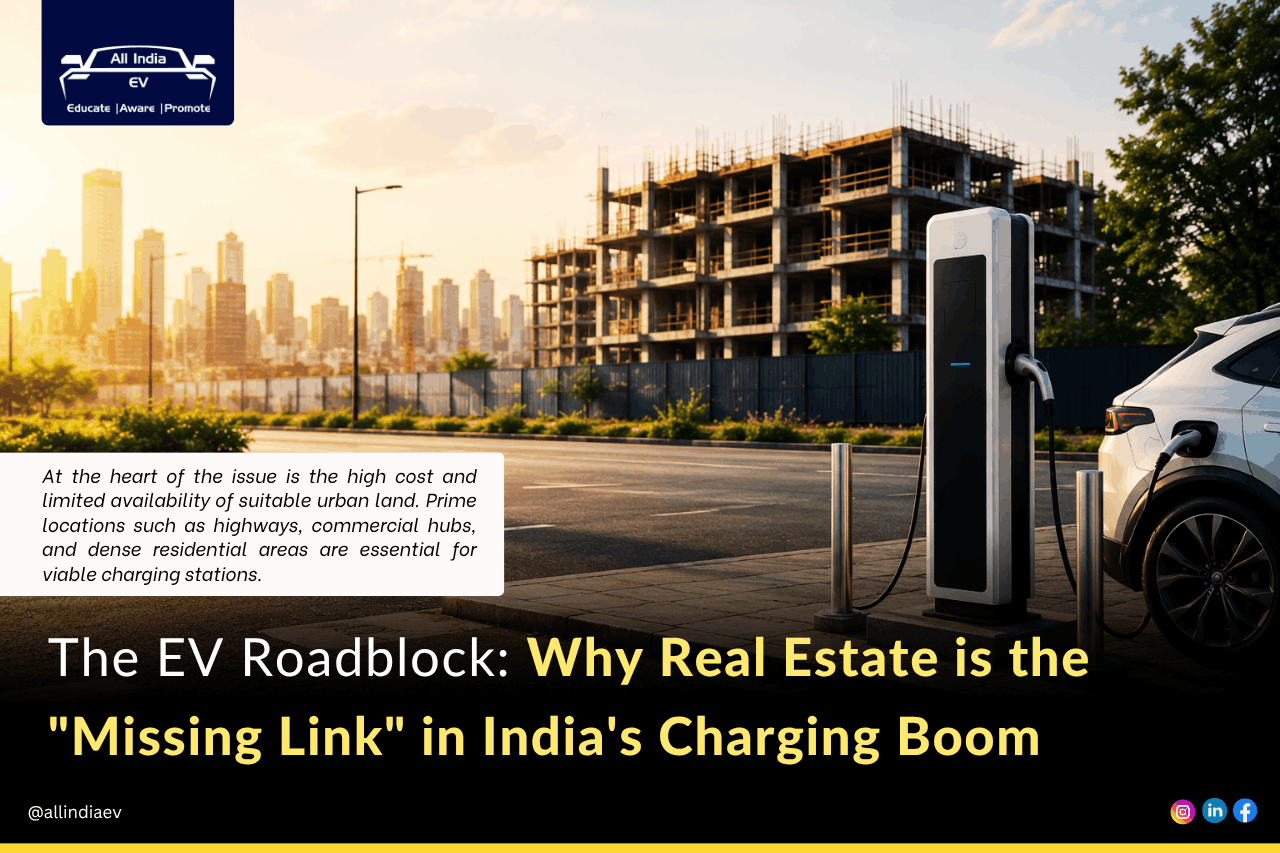
The issue is particularly visible on highways and express corridors, where charger availability remains inconsistent. EV users continue reporting operational failures, occupied chargers, and poor network reliability during long-distance travel. Real estate access has also emerged as a major constraint, with commercial property owners often preferring higher-yield retail tenants instead of dedicating premium space for EV charging infrastructure. This “land-locking” effect is becoming a major barrier in metro cities and high-traffic corridors.
More EV News

Breaking Down the Update
• India sold 24.52 lakh EVs in FY2025-26 across all vehicle segments
• Public EV charging stations reached 29,151 units by December 2025
• Slow chargers account for nearly 70% of India’s installed network
• Fast charger deployment slowed during the second half of FY26
• High utility deposits and transformer costs are hurting project economics
• Charger utilisation rates remain low for both public and oil marketing companies
• Housing societies are facing fire safety approval challenges for basement chargers
• Operators say fragmented policy execution is slowing private investment
• India may require nearly 1.32 million charging stations by 2030 to meet projected EV demand
How EV charging expansion will help Indian EV Market
India’s EV charging expansion is critical for unlocking the next phase of electric mobility adoption beyond early urban users. While two-wheelers and fleet operators have already started driving EV growth, passenger vehicle adoption still depends heavily on reliable public charging infrastructure. A stronger charging network can directly reduce range anxiety, improve long-distance travel confidence, and increase consumer trust in EV ownership.
For the Indian EV ecosystem, large-scale charging deployment also creates a multiplier effect across multiple industries. It increases electricity demand, supports domestic charger manufacturing, accelerates battery storage deployment, and creates opportunities for renewable energy integration. Public charging hubs can eventually become energy service businesses rather than standalone charging assets.
Highway charging expansion will be especially important as automakers launch larger battery SUVs and premium EVs aimed at intercity travel. Faster deployment near commercial corridors, fuel stations, malls, housing societies, and logistics hubs can improve utilisation rates and strengthen the business case for private operators.
At the policy level, successful EV charging expansion will require easier land access, standardised state regulations, faster utility approvals, and long-term tariff clarity. Without solving these execution issues, India risks building EV demand faster than its supporting infrastructure. A commercially sustainable charging ecosystem will ultimately determine whether India can achieve its long-term EV penetration targets by 2030.
Conclusion & Next Steps
India’s EV charging expansion now faces a critical execution phase. Vehicle demand is growing faster than charging economics can currently support, creating pressure on both policymakers and private operators. The next few years will determine whether charging infrastructure becomes a scalable business or remains subsidy-dependent. For the market, the focus will shift from installation numbers to charger uptime, utilisation, profitability, and corridor-level reliability
Read More: Catch up on All India EV’s related coverage on India’s evolving commercial EV subsidies and battery swapping policies at All India EV