


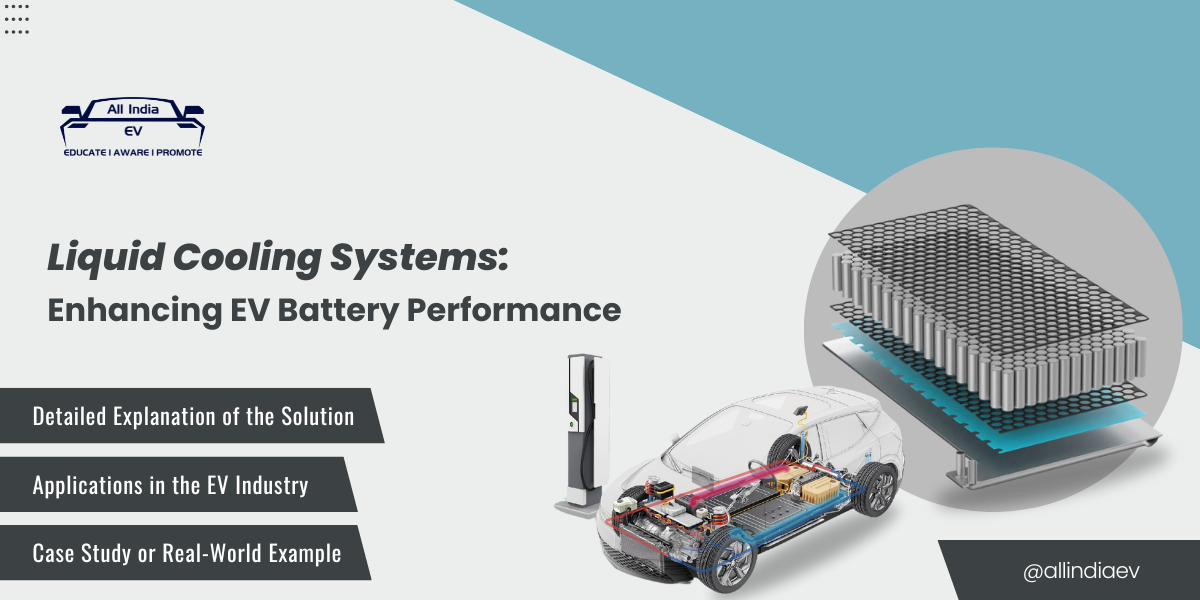
Liquid Cooling Systems: Enhancing EV Battery Performance
Liquid cooling systems offer a highly effective and reliable approach to maintaining optimal battery temperatures. By efficiently transferring heat away from the battery cells, these systems help prevent overheating, which can lead to reduced battery capacity, performance degradation, and even safety hazards.
How Liquid Cooling works?
Liquid cooling systems employ a coolant, typically a specialized fluid with high heat-transfer properties, that circulates through a network of cooling channels or plates surrounding the battery cells. This coolant absorbs excess heat generated by the battery cells during operation, effectively preventing localized hotspots and maintaining a uniform temperature distribution throughout the battery pack.
The heated coolant is then transferred to a heat exchanger, such as a radiator or condenser, where it releases its heat to the surrounding environment. This heat dissipation process ensures that the battery cells remain at a safe operating temperature, preventing thermal runaway and other potential safety risks.
Key components of a liquid cooling system:
- Coolant: A specialized fluid with high heat-transfer properties.
- Cooling channels: A network of passages that circulate the coolant around the battery cells.
- Pump: A device that circulates the coolant through the system.
- Heat exchanger: A component that transfers heat from the coolant to the surrounding environment.
Applications of liquid cooling in the EV Industry
Liquid cooling systems are particularly valuable in high-performance EVs that demand high power output and extended ranges. These systems are commonly found in premium electric vehicles, electric SUVs, and long-range electric cars. By effectively managing battery temperatures, liquid cooling systems contribute to:
More EV News

- Improved battery efficiency: Reduced heat loss leads to higher energy efficiency and longer range.
- Longer battery lifespan: Preventing overheating prolongs the lifespan of the battery cells.
- Enhanced performance: Optimal battery temperatures enable consistent and reliable power delivery.
- Improved safety: Preventing thermal runaway reduces the risk of battery fires and other safety hazards.
Case Study: Tesla
Tesla has been a pioneer in the adoption of liquid cooling systems for its electric vehicles. In models such as the Model S and Model 3, Tesla utilizes advanced liquid cooling technology to ensure optimal battery temperatures during fast charging and high-speed driving. This approach significantly enhances battery efficiency, lifespan, and overall vehicle performance.
Tesla’s liquid cooling systems contribute to:
- Faster charging times: Reduced thermal stress allows for more rapid charging without compromising battery health.
- Consistent performance: Even under heavy loads, the battery maintains optimal operating temperatures, ensuring consistent power delivery.
- Enhanced safety: The system helps prevent thermal runaway, reducing the risk of battery fires.
Companies Involved
BMW
Several leading automotive suppliers and EV manufacturers are actively involved in the development and implementation of liquid cooling systems. Notable manufacturers include:
- Bosch: A global supplier of automotive components and systems, including liquid cooling solutions.
- Mahle: A leading supplier of engine systems, thermal management, and filtration solutions.
- Dana Incorporated: A global leader in the design, manufacturing, and sale of power-transmission components and systems.
Prominent EV manufacturers that utilize liquid cooling systems in their vehicles include:
BMW, a renowned German luxury car manufacturer, has also embraced electric vehicles with a focus on advanced thermal management. BMW’s electric models incorporate sophisticated liquid cooling systems designed to handle the unique thermal challenges associated with high-performance electric motors and battery packs. These systems help to maximize efficiency, range, and charging speed.
Porsche
The Porsche Taycan is another prime example of a high-performance electric vehicle that relies heavily on liquid cooling. Porsche’s engineers have developed a complex thermal management system that efficiently cools the battery pack, electric motors, and inverters. This system enables the Taycan to deliver exceptional performance and range, even under demanding driving conditions.
Key benefits of liquid cooling in electric vehicles:
- Improved battery performance and longevity: Liquid cooling helps to maintain optimal battery temperatures, preventing overheating and extending battery life.
- Enhanced motor efficiency: By keeping the electric motors cool, liquid cooling systems can improve their efficiency and power output.
- Faster charging: Efficient heat dissipation allows for faster charging times, reducing downtime for EV drivers.
- Enhanced safety: Liquid cooling systems can help to prevent thermal runaway, a potentially dangerous condition that can occur in battery packs.
As the electric vehicle market continues to grow, liquid cooling technology will become increasingly important. By ensuring the efficient and safe operation of electric vehicles, liquid cooling systems play a vital role in driving the transition to a more sustainable and electrified future.
Challenges and Limitations
While liquid cooling systems offer significant advantages, they also present certain challenges:
- Cost: Liquid cooling systems can be more complex and costly to implement compared to air cooling systems.
- Weight: The added weight of the coolant, pumps, and heat exchangers can impact vehicle performance.
- Complexity: Liquid cooling systems require careful design and maintenance to ensure efficient and reliable operation.
- Leaks: The potential for leaks in the coolant system can pose safety and maintenance challenges.
To address these challenges, manufacturers are continually exploring innovative design approaches and materials to improve the efficiency, reliability, and cost-effectiveness of liquid cooling systems