

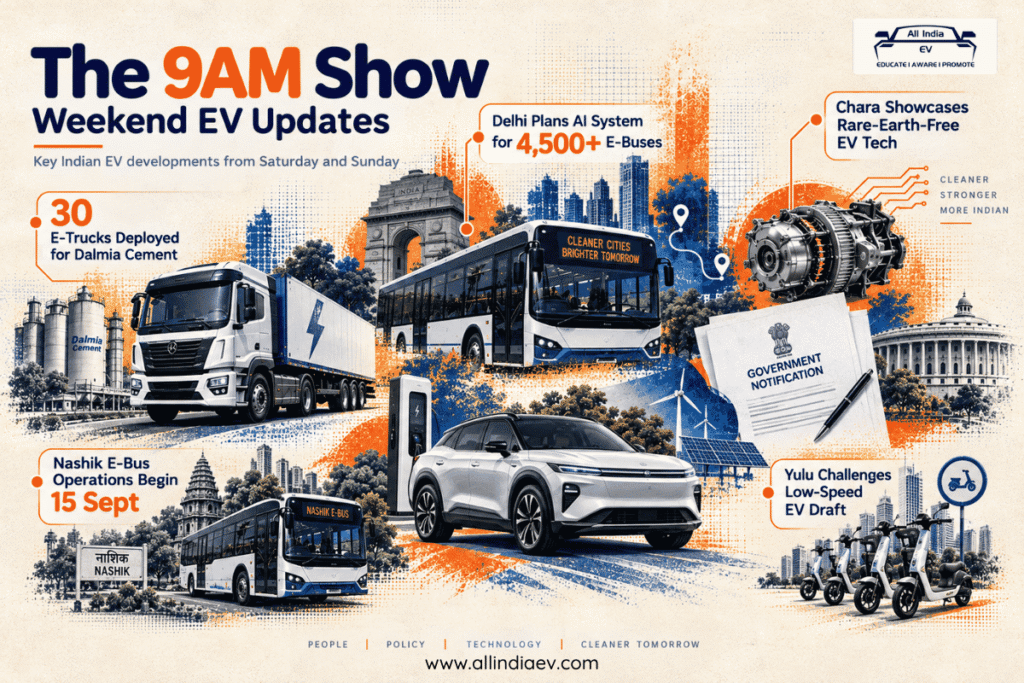
Weekends in India’s EV news cycle are usually quiet on the launch and funding front, and this one was no exception. But look past the absence of a big product reveal, and a more interesting pattern emerges: the ecosystem is steadily moving from announcement mode into operational mode. Trucks are entering real fleets, buses are moving from delivery to daily service, and regulators are re-examining rules that were written for a much smaller EV market.
- Electric Trucks Enter Real Industrial Fleets
- Delhi Bets on AI to Run Its Bus Fleet
- Rare-Earth-Free Motors Get a National Platform
- Nashik’s E-Buses Move Toward Daily Service
- Yulu Pushes Back on a Proposed Low-Speed EV Rule Change
- JSW Motors’ First PHEV May Be Called “Combat”
- Smart Garage Prepares the Aftermarket for EVs
- The Bigger Picture
Here’s what actually happened, and why it matters more than it looks.
Electric Trucks Enter Real Industrial Fleets
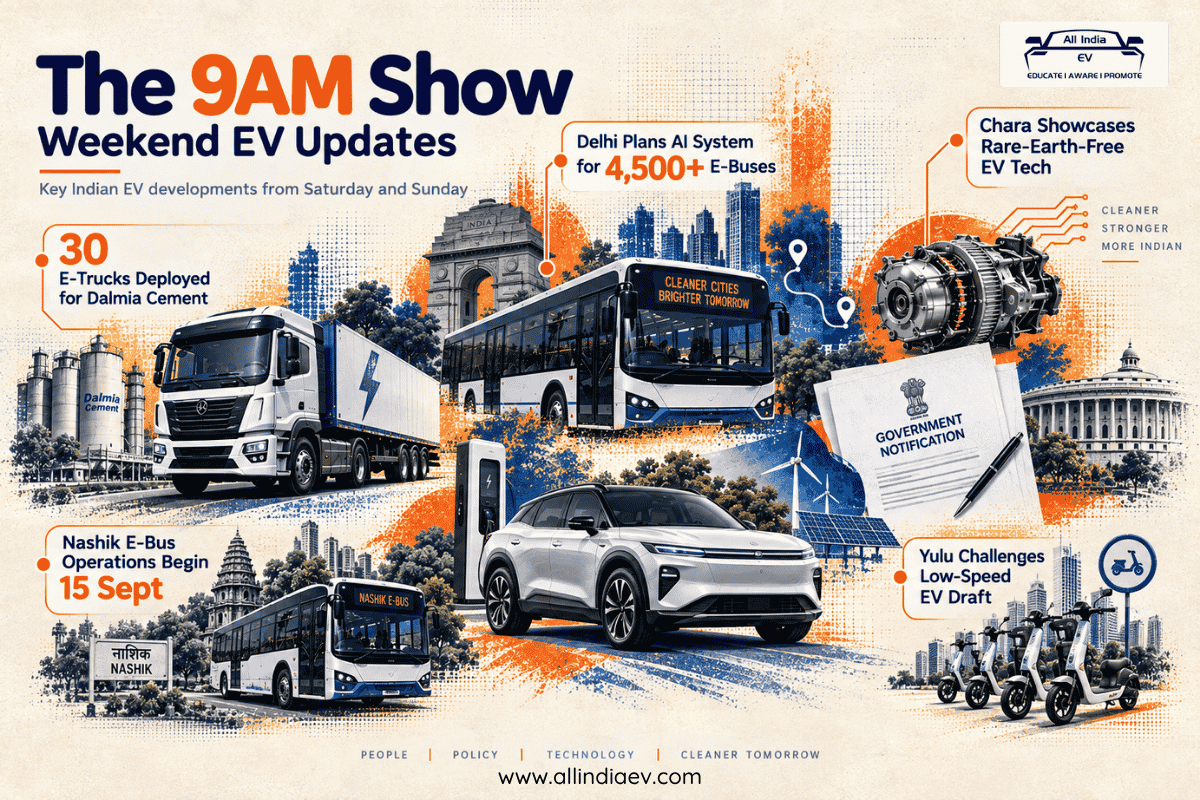
AVG Logistics flagged off 30 electric hydraulic trucks in Assam for a Dalmia Cement project, and the structure behind the deployment is worth noting as much as the number itself. Dalmia Cement is the offtaker, AVG Logistics the fleet operator, DRIVN the financing partner, and IPL Tech Electric the vehicle OEM.
That four-party structure, offtaker, operator, financier, OEM, is significant because it shows electric trucking in India moving past pilots and MoUs into an actual commercial deployment model. The first-phase trucks aren’t a promise on paper; they’re on the road.
Delhi Bets on AI to Run Its Bus Fleet
Delhi Transport Corporation is building toward an AI- and machine-learning-powered Bus Management System for a fleet that has already crossed 4,500 electric buses. The proposed platform is expected to handle:
- Charging optimisation
- Battery degradation prediction
- Predictive maintenance
- Depot allocation
- Route optimisation
- Fleet-utilisation management
The underlying signal here is bigger than Delhi. As India’s public e-bus fleets scale into the thousands, the hard problem stops being “how many buses can we buy” and becomes “how do we manage vehicles, batteries, chargers and depots as one connected system.” Software, not just procurement, is becoming the constraint.
Rare-Earth-Free Motors Get a National Platform
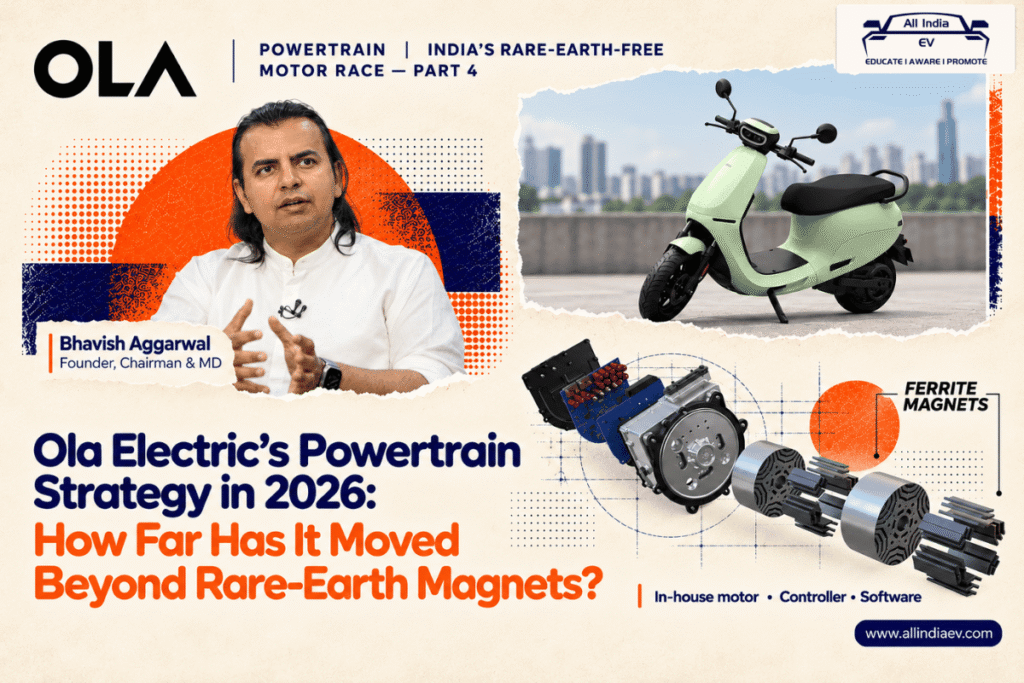
Chara Technologies showcased its rare-earth-free electric powertrain technology at the BRICS Bharat Innovates platform, with a portfolio spanning roughly 8 kW to 30 kW motors, along with controllers and drive-control systems.
The headline isn’t the kilowatt range. It’s localisation. As India pushes to scale domestic EV manufacturing, reducing dependence on permanent-magnet materials tied to global rare-earth supply chains becomes a strategic, not just technical, priority.
Nashik’s E-Buses Move Toward Daily Service
Nashik is set to begin regular Citylink electric-bus operations from 15 September, using 50 electric buses already received under PM e-Bus Sewa. Operations will start on select routes before expanding.
The metric that actually matters now isn’t how many buses have been delivered. It’s how fast the fleet reaches consistent daily utilisation, since a parked bus and a running bus solve very different problems.
Yulu Pushes Back on a Proposed Low-Speed EV Rule Change
Yulu has objected to a draft MoRTH proposal that would remove the existing 60 kg unladen-weight limit for certain low-speed battery-operated vehicles, while keeping:
- Maximum speed: 25 km/h
- Maximum motor power: 0.6 kW
Removing the weight cap could open the door to significantly heavier vehicles qualifying for the low-speed EV exemption, with real implications for India’s low-speed electric two-wheeler and gig-mobility ecosystem. It’s worth stressing this is still a draft proposal, not a notified rule, but it’s exactly the kind of regulatory detail that can quietly reshape a whole vehicle category.
JSW Motors’ First PHEV May Be Called “Combat”
Fresh reports suggest JSW Motors’ debut model could be named the Combat, built on the Jetour T2 platform and expected to use a plug-in hybrid powertrain. An India debut is likely around the festive season, with expected positioning between ₹30 to 50 lakh.
Important caveat: this is still pre-launch product development, not a confirmed launch.
Smart Garage Prepares the Aftermarket for EVs
Smart Garage launched its “Green” initiative to get independent workshops ready for the EV transition, covering:
- Battery-health assessment
- EV diagnostics
- High-voltage safety
- Charging readiness
- Technician upskilling
- Digital inspection and repair workflows
As India’s EV parc grows, the independent aftermarket will need to evolve in parallel with OEM service networks, or risk becoming a bottleneck for owners once vehicles age out of warranty.
The Bigger Picture
No single story this weekend was a headline in isolation. Put together, they point to the same shift: electric trucks entering real industrial fleets, AI beginning to manage thousands of electric buses, rare-earth-free motor technology gaining national visibility, cities moving delivered e-buses into daily operation, and regulators reconsidering the rules governing entire vehicle categories.
India’s EV market is entering a phase where the story is no longer just about vehicle sales. It’s about utilisation, localisation, charging management, financing structures, fleet economics, and the unglamorous infrastructure required to keep EVs running every single day.
This is The 9AM Show by All India EV, Weekend Updates.