
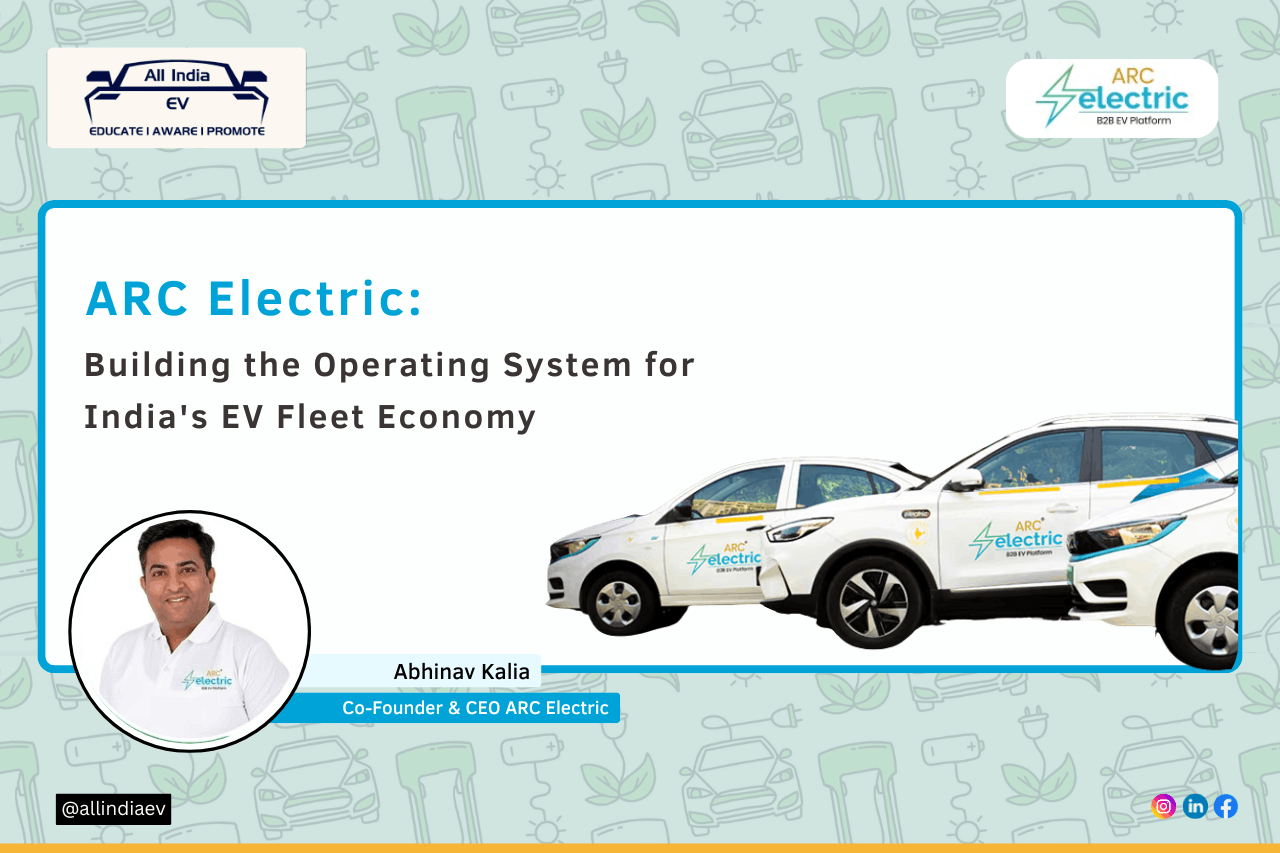

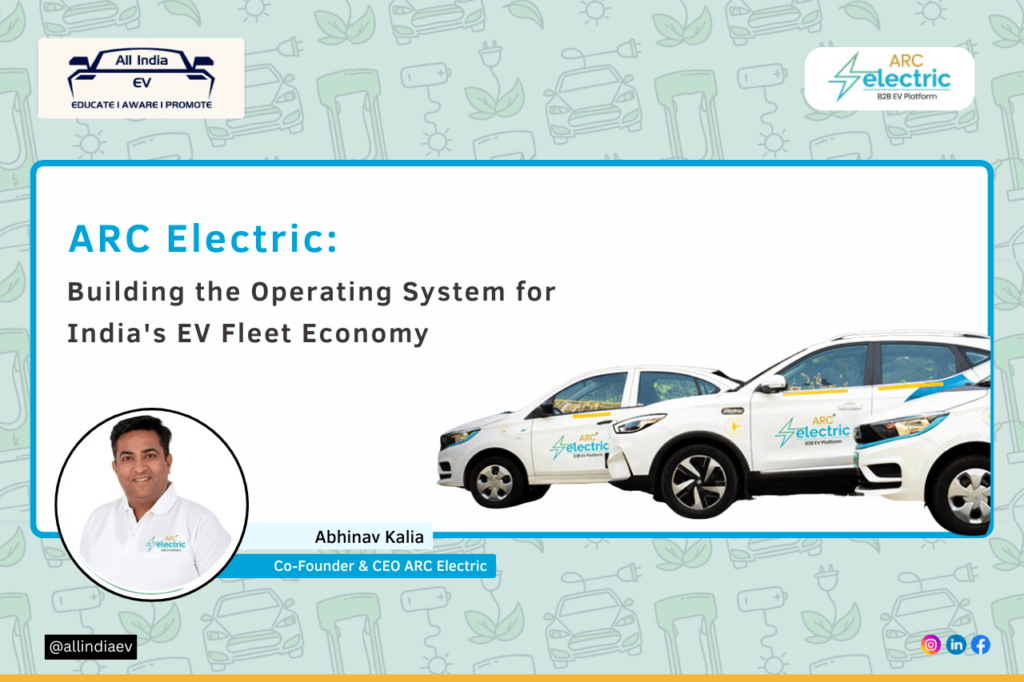
What: ARC Electric is positioning itself as a technology-led EV mobility platform focused on enterprise fleet deployment rather than a conventional ride-hailing or fleet ownership model. The company says its operational strategy is built around high-utilisation EV clusters, charging optimisation, and B2B mobility contracts.
The Number: ARC Electric claims operating costs of nearly ₹2 per km for EV operations versus ₹5–6 per km for comparable ICE fleets. The company also targets 180–220 km daily vehicle utilisation while reducing dry runs from 30–40% to nearly 10–15%.
The Impact: The ARC Electric EV fleet model reflects how India’s commercial EV ecosystem is shifting from vehicle-first thinking toward operational efficiency, utilisation management, and infrastructure optimisation. This approach could influence how enterprise EV fleets scale sustainably in Indian cities.

The Core News
The ARC Electric EV fleet model is emerging at a time when India’s electric mobility sector is reassessing business sustainability after turbulence in the EV cab aggregation market. Rather than operating as a pure fleet owner or ride-hailing intermediary, ARC Electric is positioning itself as a mobility infrastructure platform integrating vehicles, drivers, charging access, and enterprise demand under one operational layer.
The company’s strategy is built around what it calls a “micro-cluster” deployment architecture. Instead of unrestricted city-wide movement, EV fleets are deployed within tightly defined operating geographies where routing, charging schedules, and asset utilisation can be controlled more efficiently. The objective is to minimise idle time, reduce non-revenue kilometres, and improve charging predictability — areas that continue to challenge commercial EV adoption in India.
More EV News
ARC Electric says profitability in EV fleets depends less on headline vehicle acquisition costs and more on utilisation discipline. According to the company, stable enterprise contracts, predictable route density, and infrastructure planning are enabling operational profitability at current deployment levels. The model also combines public charging, private charging partnerships, and depot-based infrastructure to reduce charging-related downtime, which remains one of the sector’s largest operational risks.
Breaking Down the Update
• ARC Electric is operating as a technology-led mobility infrastructure platform rather than a traditional fleet owner
• The company uses a micro-cluster operating strategy to optimise EV deployment geography
• EV operating costs are estimated at around ₹2 per km compared to ₹5–6 per km for ICE vehicles
• Daily vehicle utilisation targets currently range between 180–220 km per vehicle
• Break-even utilisation is estimated at nearly 120–140 km per day under stable contract conditions
• Dry run distances have reportedly been reduced from 30–40% to nearly 10–15%
• ARC Electric combines public charging, depot infrastructure, and private partnerships for charging reliability
• Charging-related operational downtime is currently estimated below 10–12% of disruptions
How ARC Electric EV fleet model will help Indian EV Market
The ARC Electric EV fleet model highlights a critical transition happening in India’s commercial electric mobility market — the shift from aggressive expansion toward operational sustainability. Many early EV fleet businesses focused heavily on rapid deployment and vehicle acquisition, but long-term viability depends on utilisation efficiency, charging reliability, and disciplined route economics.
By focusing on defined operating clusters, ARC Electric is attempting to solve one of India’s largest commercial EV challenges: underutilised assets. Higher daily utilisation improves fleet economics, lowers idle charging time, and enhances return on infrastructure investments. This becomes especially important for enterprise and government mobility contracts where uptime and predictable service delivery matter more than scale alone.
The company’s hybrid charging strategy could also become increasingly relevant as India’s public charging infrastructure remains uneven across cities. Combining depot charging, private charging partnerships, and public infrastructure reduces dependency on a single charging source and lowers operational risk.
More importantly, the ARC Electric EV fleet model demonstrates how software-driven operational management may become more valuable than fleet ownership itself. As battery swapping, Battery-as-a-Service, and connected fleet technologies mature, companies with strong utilisation intelligence and infrastructure coordination could gain a structural advantage in India’s EV mobility sector.
Conclusion & Next Steps
The ARC Electric EV fleet model reflects a broader maturity phase within India’s commercial EV ecosystem, where operational efficiency is beginning to outweigh aggressive fleet expansion. The next phase for the sector will depend on whether companies can maintain high utilisation, reduce charging downtime, and achieve scalable profitability under real-world conditions. Execution discipline, infrastructure planning, and enterprise contract stability will likely define which EV fleet operators survive long term.
Read More: Catch up on All India EV’s related coverage on India’s evolving commercial EV subsidies and battery swapping policies at All India EV