



China’s electric vehicle (EV) battery market continued to expand in September 2026, with Contemporary Amperex Technology Co. Limited (CATL) retaining its position as the country’s largest battery manufacturer. However, BYD strengthened its position in second place, narrowing the market share gap with CATL for the fourth consecutive month.
According to data released by the China Automotive Battery Innovation Alliance (CABIA) on October 15, China’s domestic EV battery installations reached 87.2 GWh in September, marking a 14.7% increase year-on-year and a 10.4% rise compared with August. The figure represented the highest monthly installation volume recorded so far in 2026 for the second consecutive month.
CATL Maintains Market Leadership
CATL led the market with battery installations of 35.49 GWh in September, accounting for a 40.92% market share. Although its installation volume increased by approximately 9.1% from August, its market share declined by 0.52 percentage points as the overall market grew faster.
BYD secured second place with 18.29 GWh of installed batteries, representing a 21.09% market share. Its installations increased approximately 11.1% month-on-month, while its share rose by 0.11 percentage points.
The gap between the two manufacturers narrowed to 19.83 percentage points in September, compared with 20.47 percentage points in August. Together, CATL and BYD accounted for 62.01% of China’s EV battery installation market.
CALB ranked third with 6.04 GWh of installations and a 6.97% market share, gaining 0.46 percentage points from the previous month. Eve Energy followed with 5.03 GWh and a 5.80% share, while Gotion High-tech secured fifth place with 4.87 GWh and a 5.61% share.
The five largest manufacturers collectively controlled 80.39% of the market, slightly below August’s 80.76%.
Battery Market Rankings See Changes
Competition among other manufacturers also intensified during September. Sunwoda moved into sixth place with 3.24 GWh of installations and a 3.74% share, overtaking Rept Battero Energy, which recorded 3.17 GWh and a 3.65% share.
Energee ranked eighth with a 2.75% share, followed by Zenergy at 2.15% and Svolt Energy at 1.97%. South Korea’s LG Energy Solution ranked eleventh, with installations falling to 1.13 GWh from 1.60 GWh in August. Its market share declined to 1.30%.
LFP Batteries Continue to Dominate
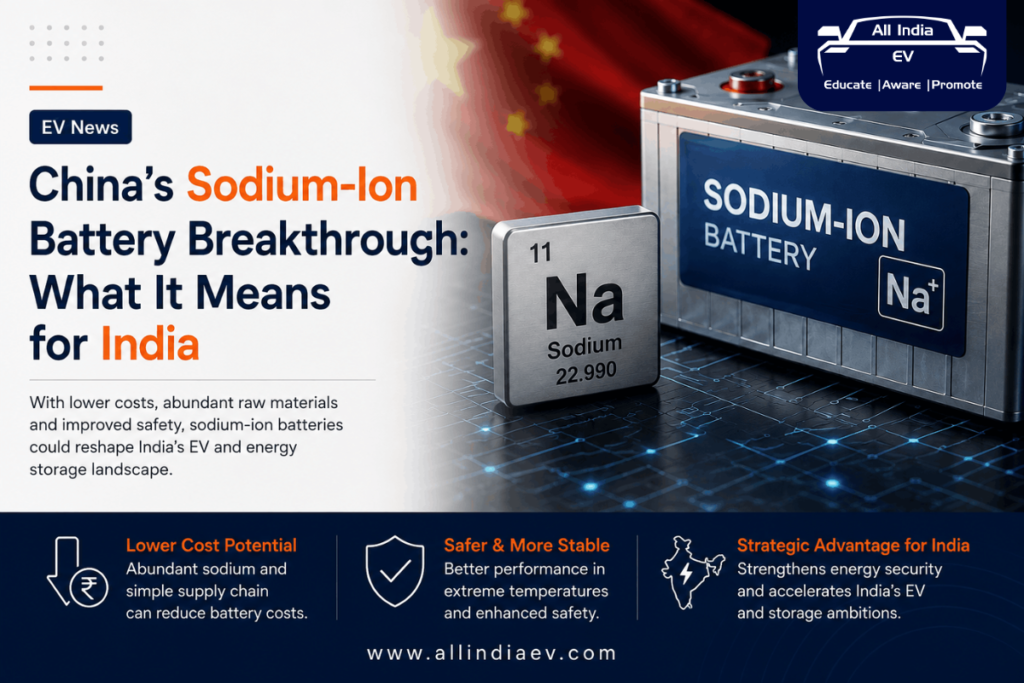
Lithium iron phosphate (LFP) batteries remained the dominant technology in China’s EV battery market. Installations reached 74.5 GWh in September, increasing 19.9% year-on-year and accounting for 85.5% of total installations.
CATL led the LFP segment with 27.15 GWh and a 36.48% share, followed by BYD with 18.29 GWh and a 24.58% share. Eve Energy, Gotion High-tech and CALB occupied the next three positions.
In contrast, ternary lithium battery installations totalled 12.3 GWh, declining 10.9% year-on-year. CATL retained its leadership in this segment with an estimated 67.78% share, while CALB climbed to second place with 1.38 GWh and an 11.23% share.
Outlook for the EV Battery Industry
During the first nine months of 2026, China’s cumulative EV battery installations reached 576.3 GWh, representing 16.7% year-on-year growth. CATL maintained the lead with 253.68 GWh and a 44.16% share, while BYD ranked second with 106.44 GWh and an 18.53% share.
The latest figures highlight the growing scale of China’s EV battery industry and the increasing importance of LFP technology. While CATL continues to dominate, BYD’s gradual market share gains and the progress of manufacturers such as CALB, Eve Energy and Gotion High-tech indicate intensifying competition.
For the global electric mobility sector, these developments underline how battery technology, manufacturing capacity and cost competitiveness are shaping the future of EV adoption.