

Union Budget Moves from Early Adoption to Building a Resilient EV Ecosystem
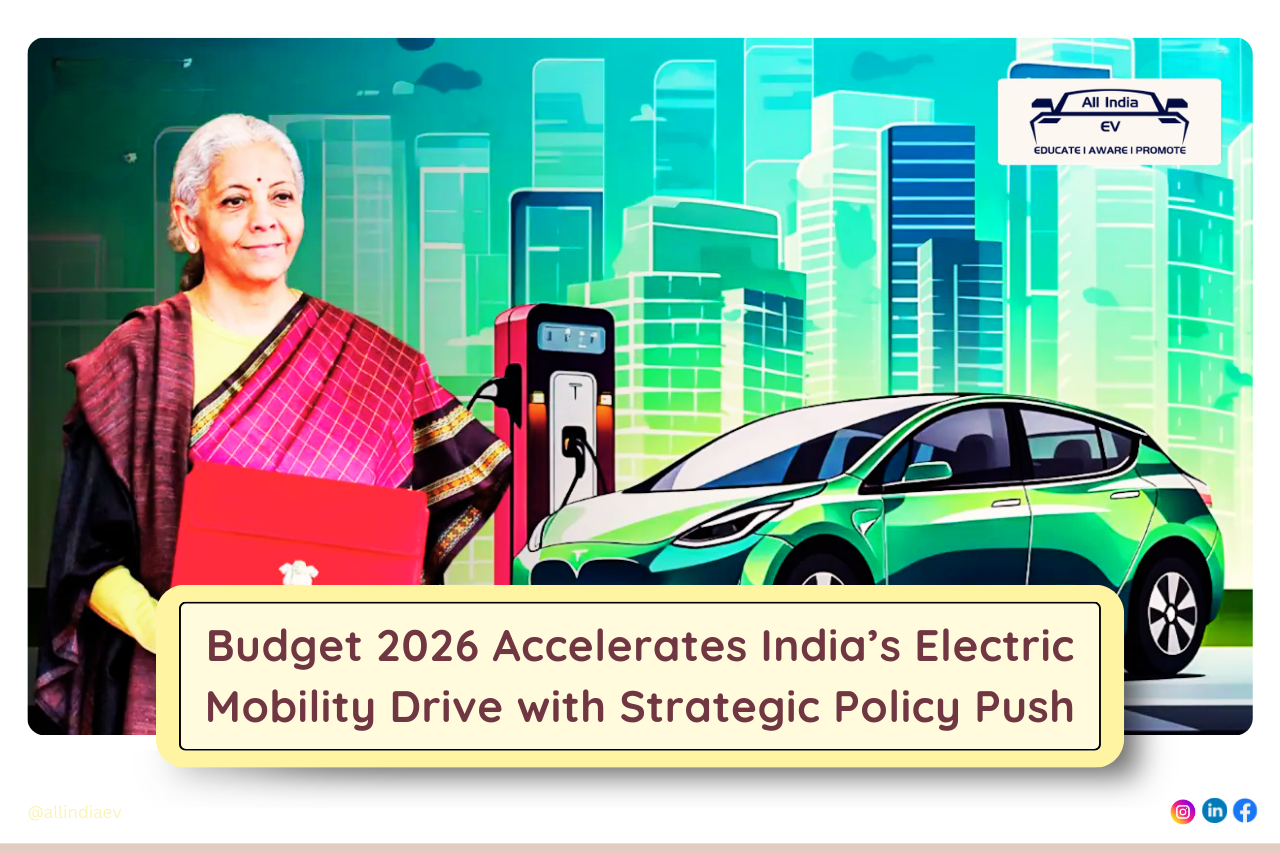
India’s Union Budget 2026-27 has emerged as a pivotal moment in the nation’s electric mobility journey, marking a transformative shift in policy focus from early adoption incentives toward building a robust manufacturing and supply-chain ecosystem. The assessment, published by the Institute for Energy Economics and Financial Analysis (IEEFA), highlights how fiscal choices in this year’s budget are laying the groundwork for India’s next phase of electric vehicle (EV) growth one anchored in industrial depth, resilience against import dependence, and long-term strategic autonomy.
Budget 2026 does more than outline expenditure plans; it reframes electric mobility as a core pillar of India’s development strategy. According to IEEFA’s analysis, transport electrification has graduated from being a narrow incentive-driven initiative to a bigger ecosystem priority that intersects with urbanisation, infrastructure resilience, and broader national competitiveness.
Transport and Urbanisation Take Centre Stage
The IEEFA report observes that Budget 2026 deliberately positions transport infrastructure and electrification at the heart of India’s economic transformation. Public capital expenditure for infrastructure has surged from ₹2 lakh crore in 2014–15 to over ₹12 lakh crore in FY2026–27, reflecting the government’s belief that systemic investment in mobility and logistics is vital for sustaining economic growth.
This broader strategic framing challenges traditional sectoral budgets that focus on piecemeal incentives. By elevating transport as a system-wide growth constraint, the budget connects EV policy with national priorities like reduced congestion, lower energy intensity, and improved export competitiveness a shift that goes beyond vehicles and towards a multi-modal mobility backbone.
From Adoption Incentives to Ecosystem Depth
One of the most significant messages from the Budget 2026, as interpreted by IEEFA, is the transition from adoption-led incentives to systemic ecosystem support. Earlier EV policy phases such as the Faster Adoption and Manufacturing of Electric Vehicles (FAME) programmes successfully stimulated demand by lowering upfront costs for consumers. However, such measures can only take the industry so far.
The IEEFA analysis notes that while demand incentives jump-started EV uptake, persistent upstream challenges remain, particularly in manufacturing capacity, supply-chain resilience, and energy storage infrastructure. Recognising this, Budget 2026 extends customs duty exemptions to capital goods used in lithium-ion cell manufacturing a critical enabler for both EVs and grid-level energy storage. This move aims to boost local production of batteries and reduce reliance on imports.
More EV News

Electric Buses: A Public Procurement Beachhead
As part of the ecosystem approach, the budget also emphasises public procurement of electric buses as a strategic entry point for electrification at scale. Urban buses, by virtue of high utilization rates and long-term contracts, provide predictable demand, creating a solid market foundation for manufacturers. Budget 2026’s announcement of 4,000 electric buses for the Purvodaya region underscores the government’s intent to use fleet electrification as a catalyst for industry consolidation and scale.
Addressing Critical Mineral Vulnerabilities
Perhaps the most ambitious component of the budget’s electric mobility thrust lies in its approach to critical minerals particularly rare earth permanent magnets used in EV motors. India’s heavy reliance on imports more than 90% from a single global supplier has exposed domestic manufacturers to price volatility and geopolitical risk.
Budget 2026 builds on an earlier ₹7,280 crore rare earth permanent magnet scheme by proposing dedicated rare earth corridors, enhanced incentives for mineral prospecting, and the removal of customs duty on monazite. These actions aim to nurture a domestic value chain that integrates mining, processing, research, and manufacturing a multi-year endeavor, but one with profound implications for sovereign capability.
System Integration and Logistics Efficiency
Beyond electrification and materials, the budget adopts a holistic view of transport efficiency. It champions multimodal logistics, including freight corridors and inland waterways that link mineral-rich regions to ports. Measures to rationalise tax treatment on minerals and promote cleaner fuels such as biogas-blended CNG also form part of the strategy to lower logistics costs and emissions.
Looking Ahead
In sum, India’s Budget 2026 signals a maturation of electric mobility policy one that moves from demand stimulation to building long-lasting industrial and supply-chain foundations. The IEEFA report concludes that the true measure of this budget’s impact will not be immediate expenditure, but whether it anticipates and addresses future constraints before they become binding.
As the electric mobility transition accelerates, sustained execution, policy stability, and deeper private-sector engagement will determine whether India can translate fiscal vision into industrial reality.