
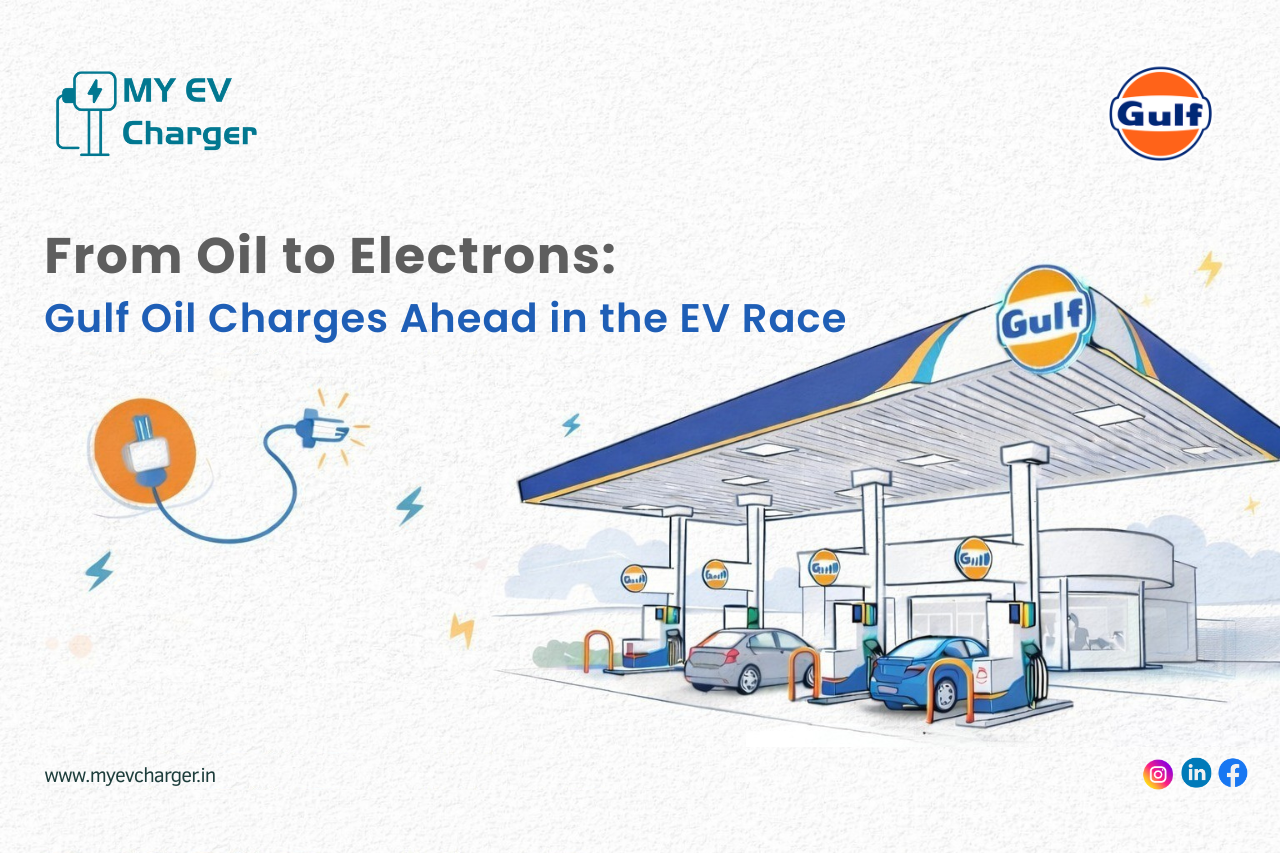

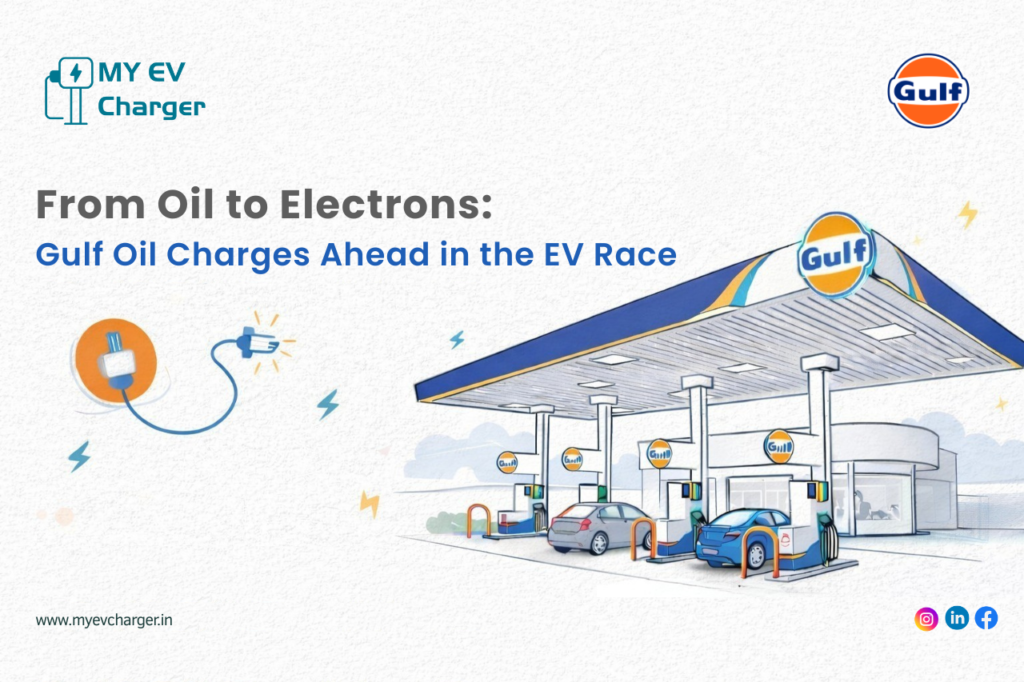
In early January 2026, Gulf Oil Lubricants India made headlines not for its core business lubricants but for a decisive leap deeper into EV charging infrastructure, increasing its stake in Tirex Transmission to ~65% with a ₹38 crore infusion. This signals more than a financial play; it reflects a strategic repositioning of a legacy energy player into a complex, capital-intensive, and technology-driven future of mobility.
- 1. Reinvention or Diversification? A Hard Strategic Pivot
- 2. Hardware Isn’t Enough: Software and Grid Dynamics
- 3. Market Realities: Fragmented Demand and Policy Tailwinds
- 4. Localization and Cost Reductions: Competitive or Necessary?
- 5. Strategic Positioning vs. Real Competitive Advantage
- Conclusion: A Catalyst, Not a Conclusion
This development deserves scrutiny not as a press release but as a case study in systemic adaptation—where incumbent energy brands must reconcile tradition with the multi-vector challenge of electrification.
1. Reinvention or Diversification? A Hard Strategic Pivot
Gulf Oil’s pivot from lubricants to EV chargers uncovers a layered strategic question: Is this an existential reinvention or merely diversification under brand convenience?
- Historically, Gulf’s core competency lay in fluid dynamics, distribution, and aftermarket service. EV charging, particularly high-speed DC charging, brings hardware design, power electronics, grid interface, and systems software into the center of its future strategy.
- Gulf’s ambition—to capture 8–10% market share and ₹400–500 crore in revenues within 4–5 years—is practical on paper but hinges on execution across manufacturing scale, cost, and go-to-market execution in a segment dominated by infrastructure players, utilities, and specialized OEMs.
This raises a critical systems question for decision-makers: Is Gulf building a charging ecosystem from legacy advantage or underestimating the integration challenges of grid services, energy management, and real-time telemetry?
2. Hardware Isn’t Enough: Software and Grid Dynamics
Gulf’s emerging portfolio isn’t just about selling boxes that deliver kilowatts; it’s about connecting hardware to grid services, fleet management, and dynamic pricing systems:
- Its stakes in software platforms and smart charging technologies reflect an understanding that DC chargers are only as valuable as their integration with grid stability, utilization forecasting, and fleet operations.
- But the question remains: Does Gulf have—or can it build—the organisational engineering depth and software ecosystem maturity to compete with established players (Tata Power, ABB, Delta) and SaaS-driven CPOs that already manage charging networks at scale?
Senior operators should weigh the execution gap: investing in disparate capabilities (hardware, AC and DC chargers, SaaS) vs. mastering one and partnering for the rest.
3. Market Realities: Fragmented Demand and Policy Tailwinds
India’s EV charging landscape is accelerating under government incentives (e.g., PM-E DRIVE and grid-linked subsidies), but demand remains nuanced and uneven: urban vs. highway corridors, fleet vs. private ownership, AC vs. DC requirements, and grid constraints.
More EV News

- Gulf’s DC focus through Tirex is logical for fleets and transit corridors, yet personal EV owners increasingly demand reliable AC charging and integrated payment/energy management solutions, not just fast-charge points.
- The deployment of over 4,500 units and a strong share in bus deployments is impressive but also indicative of early sector heterogeneity, where different vehicle segments require different business models.
This leads to a punch-point for policymakers and utilities alike: Are current incentive structures and grid policies aligned with the mixed demand profile of India’s EV market, or are we over-prioritising headline DC capacity at the expense of balanced network utility?
4. Localization and Cost Reductions: Competitive or Necessary?
Gulf’s broader effort towards ~55% local content and cost-reduction efforts reflects a matured realization that price sensitivity and supply chain robustness matter as much as charger power ratings.
But achieving localization while maintaining thermal, safety, and grid compliance at scale presents operational stress rarely faced by incumbent lubricant businesses.
Here’s the tough question executives must ask themselves:
Does Gulf have the lean manufacturing supply chain and quality processes required for high-reliability power electronics, or will tariffs, component scarcity, and certification complexity erode the projected margins?
If yes, this could transform Gulf into a genuine EV hardware contender; if not, the company risks being another OEM-adjacent player struggling against global competition.
5. Strategic Positioning vs. Real Competitive Advantage
Finally, the deeper implication of Gulf Oil’s bet isn’t the revenue projection—it’s the evolution of competitive advantage in the EV era:
- Legacy energy brands (lubricants, fuel retailers) are all racing to remain relevant as ICE revenues erode. Gulf’s bet says loudly: We will compete in the future, not just adapt to it.
- Yet this transition requires more than capital infusion and strategic positioning—it demands organizational transformation, culture shift, and engineering capability building that many traditional players struggle to achieve.
The key strategic takeaway for senior leaders:
In the EV ecosystem, ownership of the customer interface (charging network, digital services) may matter more than ownership of physical assets (chargers). Gulf’s current trajectory optimises for both—but success will depend on prioritisation discipline, blend of partnerships, and systemic integration capabilities.
Conclusion: A Catalyst, Not a Conclusion
Gulf’s reinvestment in Tirex and the broader EV charging ecosystem is more than a news item—it is a lens into how established industrial brands are grappling with disruption. This bet will succeed or fail not on the next quarterly numbers, but on how well Gulf combines hardware, software, grid strategy, and localized execution into a coherent EV infrastructure capability.
For the ecosystem—OEMs, utilities, policymakers, and operators—Gulf’s move poses strategic questions rather than answers. And in 2026, that should be the measure of meaningful industry content.
Comment by Author
Delhi’s move to allow private electric vehicles to operate as shared taxis is less a regulatory tweak and more a signal of policy pragmatism. It acknowledges that EV adoption, especially in high-utilisation segments like ride-hailing, will not scale through rigid vehicle classifications alone.
The real test, however, lies in enforcement clarity, pricing discipline, and grid-readiness—because without tight execution, a progressive rule can quickly turn into operational ambiguity rather than a mobility breakthrough.