

The launch of the Creta EV signals that electric propulsion is no longer a niche powertrain but a default choice for India’s most competitive vehicle segment.
India’s next wave of EV launches is less about breakthrough technology and more about operational depth: localisation, pricing discipline, charging partnerships, and service readiness. The market is moving from “can we launch?” to “can we deliver at scale without breaking unit economics or customer trust?”
Facts We Know
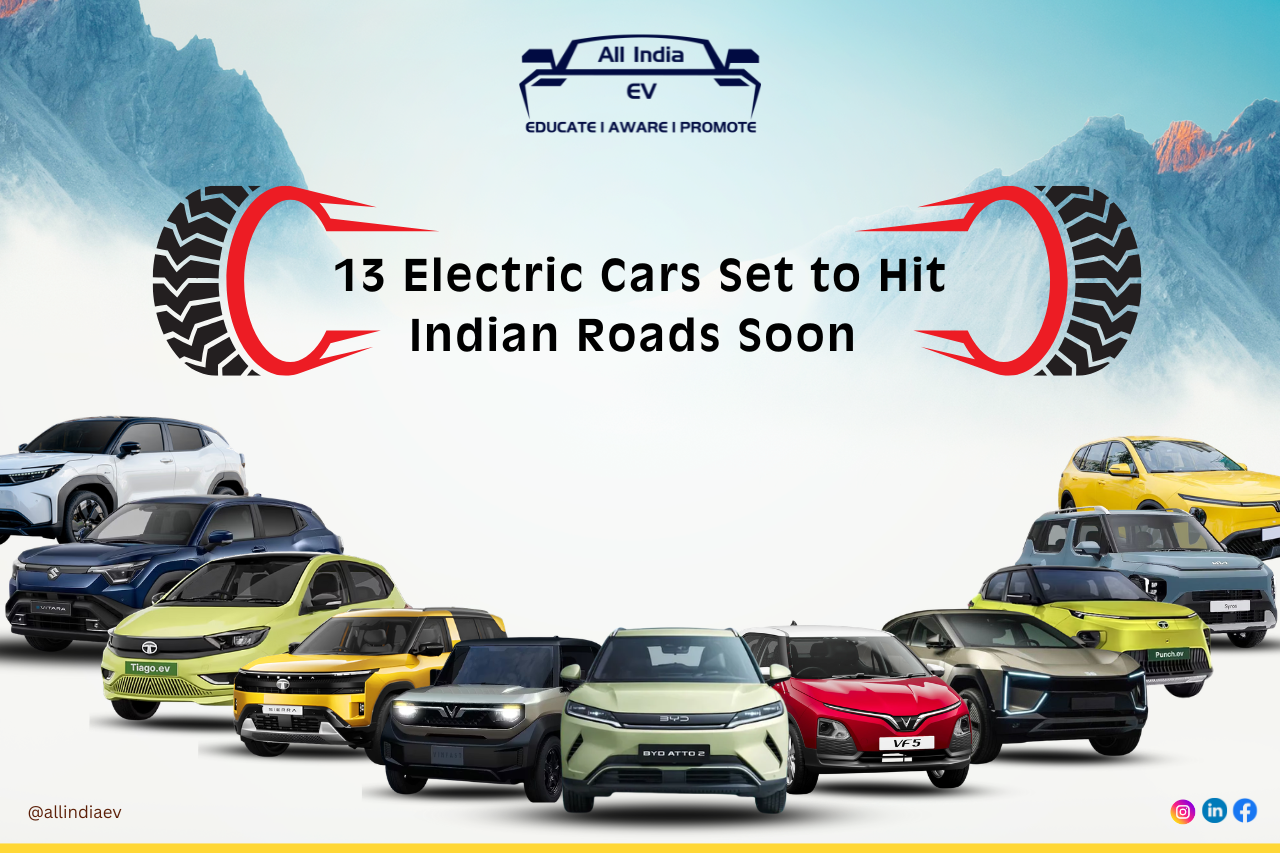
- 13 electric vehicles are expected to launch in India across 2025–2026 timelines (exact launch months vary by OEM).
- Segments covered: mass-market hatchbacks and compact SUVs, premium SUVs, electric scooters/motorcycles (mix of 2W and 4W).
- OEM mix includes established global brands and domestic manufacturers; several are expanding EV portfolios rather than debuting EVs for the first time.
- Price points: Not disclosed for most models. This matters because India’s EV adoption is highly price-elastic; ₹1–2 lakh swings can shift volumes materially.
- Battery specs, range (IDC/real-world), and charging speeds: Not disclosed for most upcoming models. This matters because charging time and real-world range now influence fleet and private buyer decisions more than headline features.
- Localisation levels: Not disclosed for most launches. This matters for cost stability, supply risk, and eligibility for government incentives.
- Warranty terms (battery/vehicle): Not disclosed. This matters for resale value, fleet TCO, and financing rates.
- Booking and delivery timelines: Not disclosed. This matters because Indian EV demand is sensitive to wait times; long queues kill conversion.
- Charging partnerships (CPO tie-ups): Not disclosed. This matters because OEM-led charging access increasingly drives purchase confidence in non-metro markets.
What This Launch Really Means
For customers (value / ownership reality)
Customers are no longer buying “an EV.” They are buying total cost of ownership plus inconvenience. The upcoming launches expand choice, but without disclosed real-world range, charging speeds, and battery warranties, buyers will default to brands with proven service networks and charging tie-ups. The value proposition will hinge less on claimed range and more on: (a) charging access near home and work, (b) service uptime, and (c) financing that recognizes battery depreciation risk. If these launches cluster in similar price bands without differentiation in charging or warranty, customers will delay purchases rather than trade up.
For competitors (positioning + segment shift)
A crowded pipeline compresses differentiation. OEMs entering the same ₹10–15 lakh (mass) and ₹15–25 lakh (mid) brackets risk price-led competition unless they carve out operating moats—faster DC charging, better battery warranty, or bundled charging credits. Expect incumbents to defend share with quiet price adjustments and feature upgrades rather than headline cuts. The strategic question is not who launches first, but who sustains post-sales reliability at scale. In a tight field, service NPS becomes a growth lever, not a hygiene factor.
For the ecosystem (charging / service / supply chain implications)
Thirteen launches in quick succession stress the ecosystem. Charging operators (CPOs) face unpredictable load profiles if OEMs don’t publish charging curves and port standards clearly. Dealers face inventory risk without firm booking-to-delivery cycles. Suppliers face working-capital strain if localisation ramps are aggressive but volumes underdeliver. This pipeline will test whether India’s EV stack—cells, BMS, power electronics, aftersales—has matured beyond pilot scale into repeatable operations.
Execution Reality Check
- Demand–supply mismatch: Launch hype without production readiness leads to long waiting periods and cancellations.
- Charging experience gap: Poor DC fast-charging curves or fragmented CPO access erodes early customer trust.
- Service bottlenecks: Insufficient trained technicians for high-voltage systems can spike vehicle downtime.
- Cost volatility: Battery input cost swings can force quiet price hikes, damaging momentum.
- Residual value uncertainty: Weak battery warranty clarity hurts financing and fleet adoption.
Who Wins / Who Loses
Who wins
- OEMs with localisation depth: Lower BOM volatility, better pricing control.
- Brands bundling charging + service: Reduced ownership friction converts fence-sitters.
Who loses
- Late movers without service scale: Launches stall at delivery.
- Models with optimistic range claims: Real-world underperformance invites backlash.
Next 90 Days: Operator Actions
- [OEM] Publish real-world range and DC charging curves; clarify battery warranty in km/years.
- [Dealer] Build HV technician capacity and parts inventory ahead of first deliveries.
- [CPO] Align with OEM launch maps; pre-position fast chargers on intercity corridors.
- [Fleet] Pilot two models with telematics to benchmark real-world TCO before bulk orders.
- [Investor] Track localisation announcements and supplier contracts; discount models with opaque sourcing.
- [Policy] Clarify incentive continuity and interoperability standards to reduce market friction.
Conversation Starters
- Will customers trade headline range for faster, more reliable charging access?
- Are OEMs overestimating their ability to scale service for high-voltage systems in Tier-2/3 cities?
- Does India need fewer launches and deeper execution to move the adoption curve?