


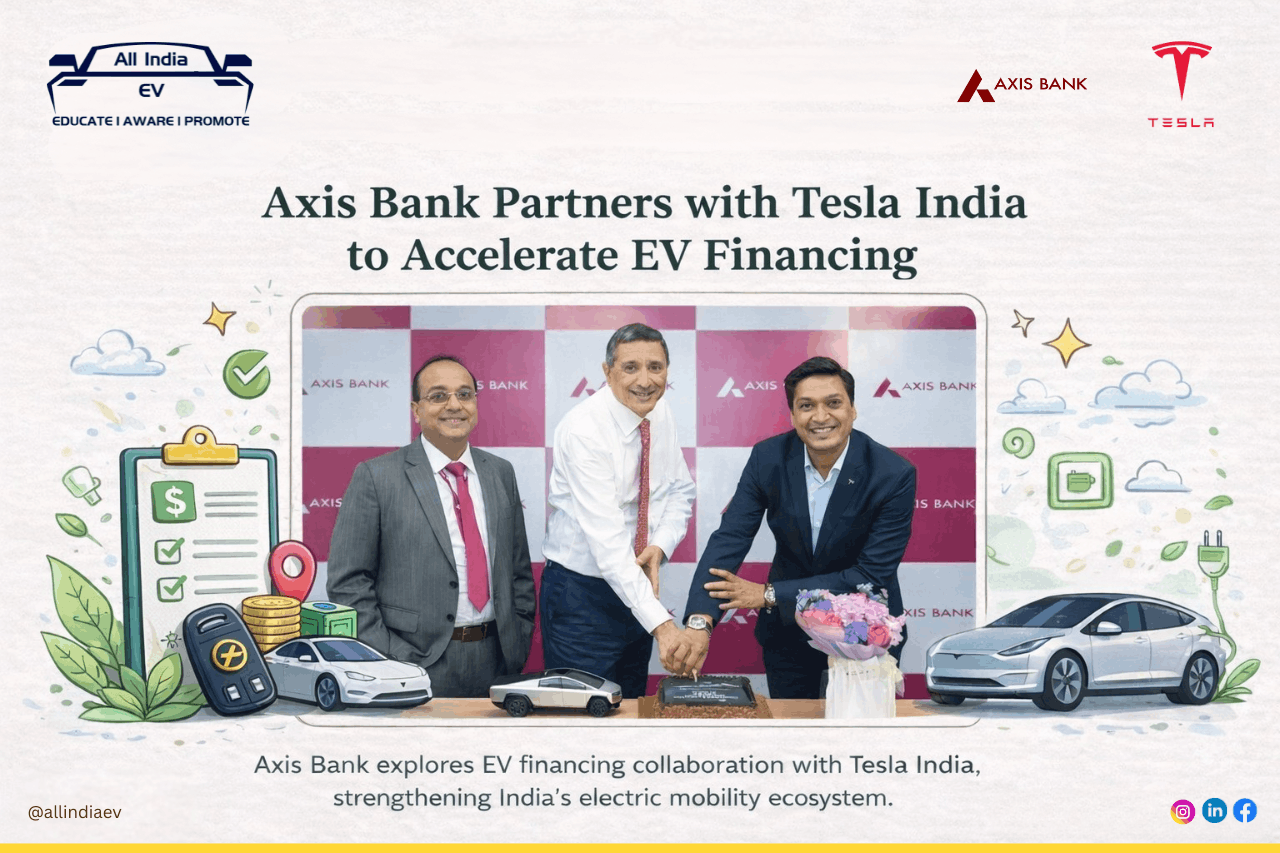
Axis Bank becomes Tesla’s preferred EV financing partner in India, marking an important step in building the financial ecosystem around electric vehicles as premium EV brands prepare to enter the Indian market. The partnership focuses on offering specialised loan products designed specifically for Tesla customers purchasing electric vehicles in the country.
Under this arrangement, Axis Bank will provide dedicated EV financing solutions that simplify the vehicle purchase process for customers. One of the most notable aspects of the program is the introduction of loan tenures of up to ~10 years, which is longer than traditional car loan structures in India. The bank also plans to enable a fully digital financing journey, allowing customers to complete loan applications and approvals through online channels.
The financing program will be available across major Indian cities and is expected to support Tesla’s initial customer base as the company gradually builds its presence in the country. Longer loan tenures can significantly reduce monthly EMI obligations, which is particularly relevant for premium EVs where upfront vehicle prices are typically higher compared to mass-market cars.
From a banking perspective, the collaboration also signals a growing confidence among financial institutions in the electric vehicle sector. As EV adoption expands, banks are increasingly exploring customised financial products tailored to the unique characteristics of electric vehicles, including battery value, resale patterns, and long-term ownership costs.
The partnership reflects a broader evolution of the EV ecosystem. While early conversations around electric mobility focused largely on vehicles and charging infrastructure, the industry is now entering a phase where financing models, ownership flexibility, and digital customer experiences are becoming equally important in accelerating adoption.
For Tesla, a structured financing partnership strengthens its retail strategy in India by reducing friction in the vehicle purchase process. For Axis Bank, the collaboration positions the institution at the forefront of EV financing as electric mobility continues to gain momentum in the Indian automotive market.
More EV News

How This Will Help the Indian EV Market
The development highlights a critical but often overlooked layer of the EV ecosystem: financing. While technology, charging infrastructure, and battery performance typically dominate EV discussions, financing solutions play a major role in determining how quickly electric vehicles can reach mainstream buyers.
In India, EV adoption is still strongly influenced by the upfront cost of vehicles. Premium electric cars, especially global brands entering the market, tend to carry higher price tags compared to conventional vehicles. By introducing longer loan tenures of up to ~10 years, financial institutions can reduce the monthly repayment burden, making premium EV ownership more accessible to a wider group of buyers.
This move could also encourage other banks and non-banking financial companies to develop similar EV-specific financing products. As competition grows in the lending space, customers may benefit from better interest structures, flexible repayment models, and specialised financing plans tailored to electric vehicles.
Another important impact is market signalling. When a major private bank builds financing products around EV ownership, it reflects growing confidence in the long-term value and stability of electric vehicles as an asset class. This can help build trust among customers who are still evaluating EV ownership.
Over time, stronger financing options combined with expanding charging infrastructure and new vehicle launches could significantly accelerate the adoption of electric passenger vehicles in India.