
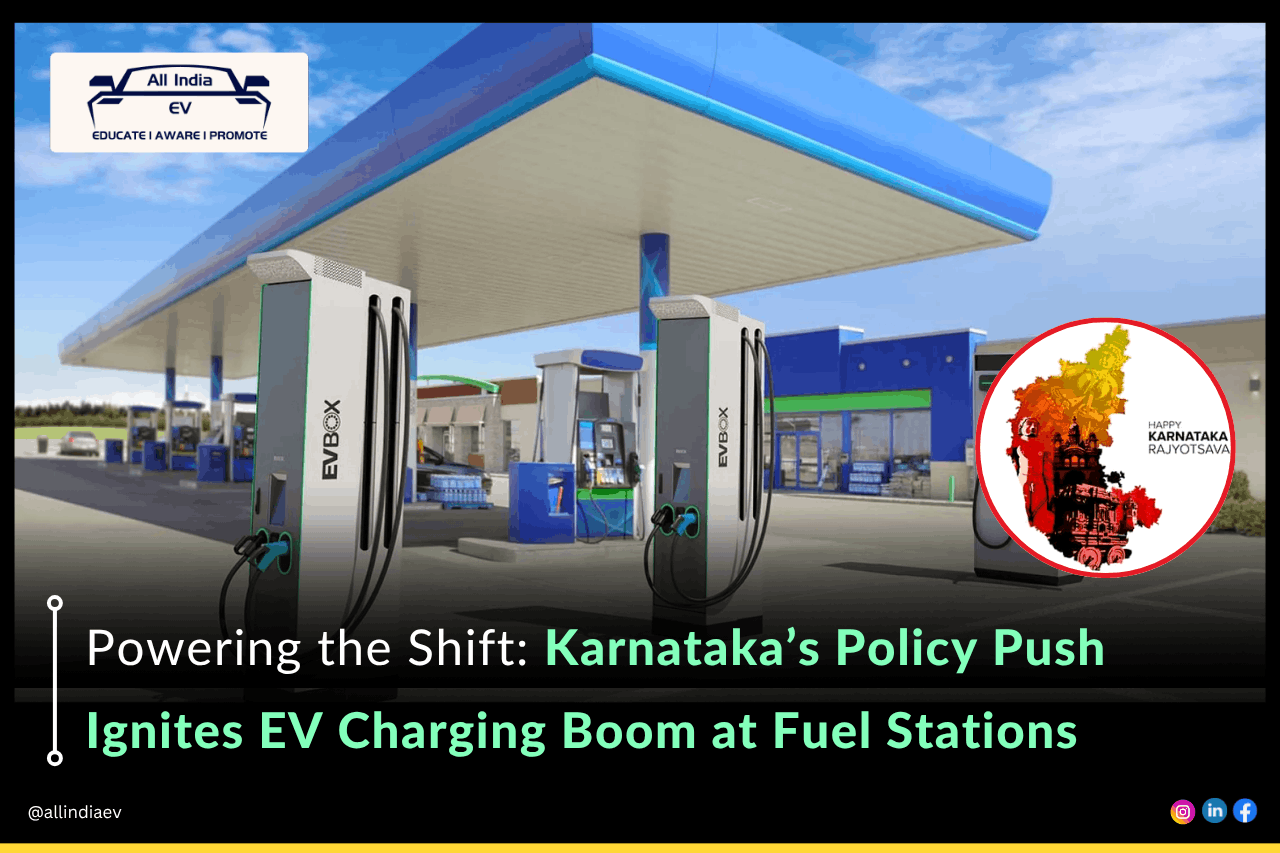

What: A regulatory relief by the Karnataka Electricity Regulatory Commission is accelerating EV charging infrastructure rollout at petrol pumps across Karnataka.
The Number: Multiple oil marketing companies are rapidly converting fuel stations into EV charging hubs, particularly in Bengaluru, as part of large-scale infra expansion.
The Impact: Lower regulatory barriers are making EV charging deployment commercially viable, pushing traditional fuel retailers into the EV ecosystem.

The Core News
The Karnataka Electricity Regulatory Commission relief EV charging infrastructure shift is emerging as a key trigger behind the rapid expansion of EV charging stations at petrol pumps. By easing regulatory constraints around electricity supply and usage for EV charging, the state regulator has effectively lowered entry barriers for fuel retailers and charge point operators.
Oil marketing companies are now actively repurposing existing petrol pumps into hybrid energy stations that support both fossil fuels and electric mobility. This transition is particularly visible in urban clusters like Bengaluru, where EV demand and charging needs are rising sharply. The move aligns with broader energy transition trends, where legacy fuel infrastructure is being repositioned for electrification.
The development reflects a deeper structural shift in India’s energy retail landscape. Petrol pumps, once dependent solely on liquid fuel sales, are evolving into decentralized energy hubs. This reduces range anxiety for EV users while leveraging existing real estate and grid connectivity—two major bottlenecks in charging infrastructure deployment.
More EV News

Breaking Down the Update
• Regulatory easing reduces electricity-related compliance burden for EV charging operators
• Oil marketing companies are leading deployment at fuel retail outlets
• Bengaluru is emerging as the early hotspot for this transition
• Petrol pumps are being converted into multi-energy stations
• Charging infrastructure rollout is now linked to policy clarity and tariff structures
• The model leverages existing land, grid access, and customer footfall
How Karnataka Electricity Regulatory Commission relief EV charging infrastructure will help Indian EV Market
The Karnataka Electricity Regulatory Commission relief EV charging infrastructure framework can become a blueprint for other Indian states. One of the biggest bottlenecks in EV adoption has been the lack of accessible, reliable charging infrastructure. By enabling petrol pumps to double up as EV charging hubs, the state is solving both infrastructure and accessibility challenges simultaneously.
This model reduces capital expenditure for new entrants since fuel stations already have prime locations, power connectivity, and operational ecosystems. It also improves utilization rates, making EV charging commercially viable—a key concern for private investors.
From a consumer standpoint, integrating charging with existing fuel stations builds trust and familiarity. Users are more likely to adopt EVs when charging points are visible and conveniently located.
At a policy level, this signals a shift toward infrastructure-first EV adoption, where supply-side readiness precedes mass vehicle adoption. If replicated nationally, this approach can accelerate India’s transition to electric mobility without requiring entirely new land acquisition or grid expansion strategies.
Way Forward…..
The Karnataka Electricity Regulatory Commission relief EV charging infrastructure push highlights how regulatory clarity can unlock private investment and accelerate EV ecosystem growth. The next phase will depend on tariff stability, grid readiness, and execution at scale. If sustained, this model could redefine India’s fuel retail network into a nationwide EV charging backbone
Read More: Catch up on All India EV’s related coverage on India’s evolving commercial EV subsidies and battery swapping policies at All India EV