
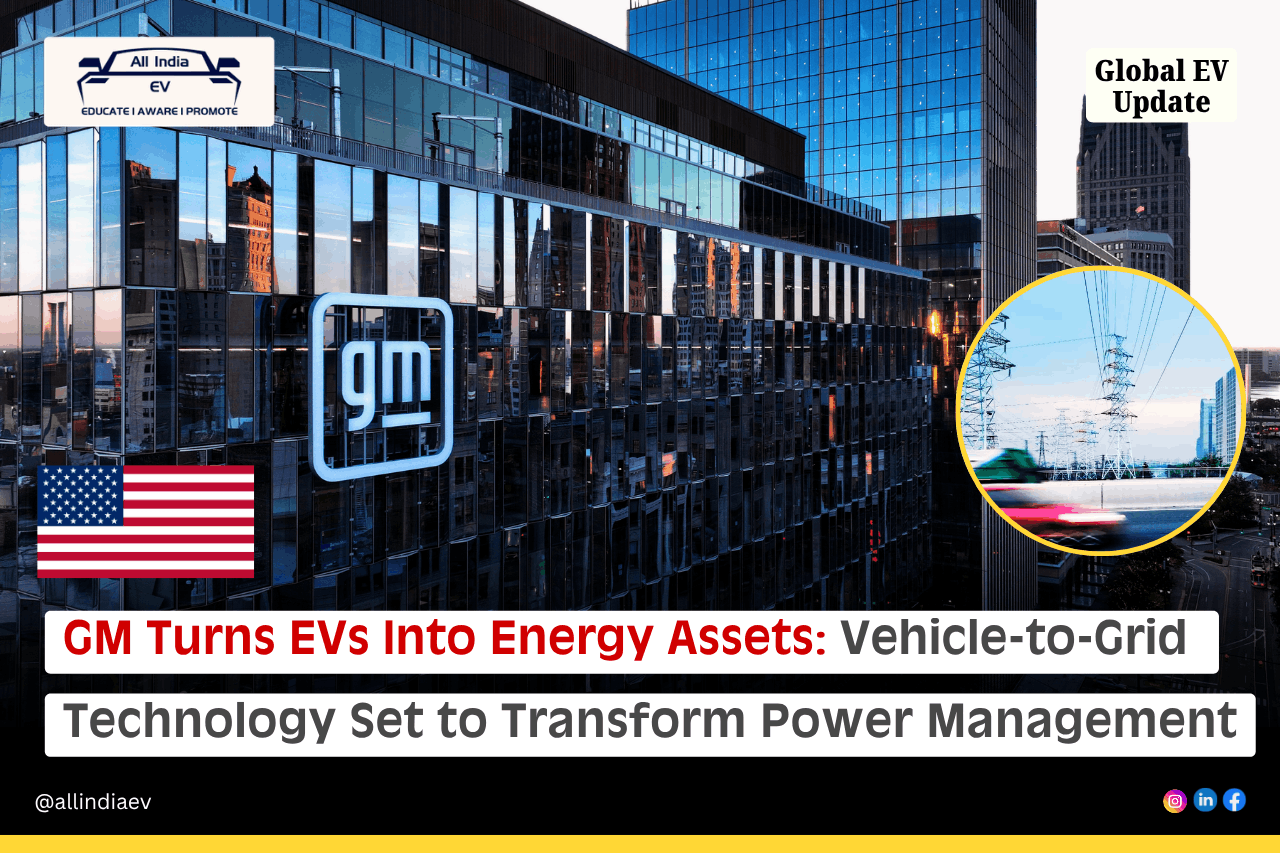


What: General Motors (GM) is rolling out a software update that will allow eligible electric vehicle owners in the United States to export electricity from their EVs back to the grid. The move expands GM’s existing vehicle-to-home capability into a broader vehicle-to-grid (V2G) energy ecosystem.
The Number: GM says more than 250,000 bidirectional-capable EVs are already on US roads, creating a sizable distributed energy resource that could support grid stability during peak demand periods.
The Impact: The development could transform EVs from transportation assets into revenue-generating energy resources, helping utilities manage rising electricity demand while offering EV owners a potential new income stream.

The Core News
The Vehicle-to-Grid technology rollout marks a significant shift in how automakers view the role of electric vehicles within the broader energy ecosystem. General Motors is enabling select customers with its existing vehicle-to-home systems to export electricity directly to the grid through a software update, eliminating the need for major additional hardware investments in many cases.
The announcement comes as electricity demand in the United States continues to increase due to rapid AI data center expansion, electrification trends, and grid modernization requirements. Utilities are increasingly looking at distributed energy resources to help balance supply and demand. EV batteries represent a largely untapped storage asset that remains parked for much of the day, making them suitable candidates for grid-support applications.
More EV News

GM’s strategy extends beyond vehicle manufacturing, positioning the company more deeply in the energy sector. The automaker is already running pilot vehicle-to-grid programs with utility partners, including PG&E in California and DTE Energy in Michigan. If scaled successfully, bidirectional charging could create a new business model where EV owners receive incentives or payments for supplying electricity during peak-demand periods while maintaining mobility requirements.
Breaking Down the Update
• GM is launching a software update that enables eligible EVs to send electricity back to the grid.
• The feature expands existing vehicle-to-home systems into full vehicle-to-grid functionality.
• More than 250,000 bidirectional-capable GM EVs are already operating in the US market.
• Utilities are exploring EV batteries as distributed energy storage resources to improve grid resilience.
• GM is conducting pilot programs with PG&E and DTE Energy to validate large-scale V2G deployment.
• EV owners could potentially earn incentives or electricity credits by participating in grid-balancing programs.
Way Forward ….
The Vehicle-to-Grid technology initiative highlights how automakers are increasingly expanding beyond vehicle sales into energy management and grid services. While consumer participation, battery degradation concerns, and regulatory frameworks remain key variables, successful deployment could establish EVs as a critical component of future electricity infrastructure. The next phase to watch will be the commercial performance of utility partnerships and the willingness of EV owners to actively participate in energy markets.
Read More: Catch up on All India EV’s related coverage on India’s evolving commercial EV subsidies and battery swapping policies at All India EV