
All India EVAll India EVAll India EV
Notification
Font ResizerAa
  • Home
  • EV News
  • EV Launch
  • Market Insights
  • Investments & Funding
  • Guest Articles
  • EV Engineering
  • Contact
Reading: Ashok Leyland Signs First MoU for Electric Fleet Upgrade Scheme
Share
All India EVAll India EV
Font ResizerAa
  • Home
  • EV News
  • EV Launch
  • Market Insights
  • Guest Articles
  • EV Engineering
  • Contact
Search
Follow US
Ashok Leyland Signs First MoU for Electric Fleet Upgrade Scheme
Home » Blog » Ashok Leyland Signs First MoU for Electric Fleet Upgrade Scheme
EV NewspartnershipPolicy

Ashok Leyland Signs First MoU for Electric Fleet Upgrade Scheme

Piyush
By
Piyush
Last updated: 20 June 2026
Share
4 Min Read
SHARE
Ashok Leyland Signs First MoU for Electric Fleet Upgrade Scheme

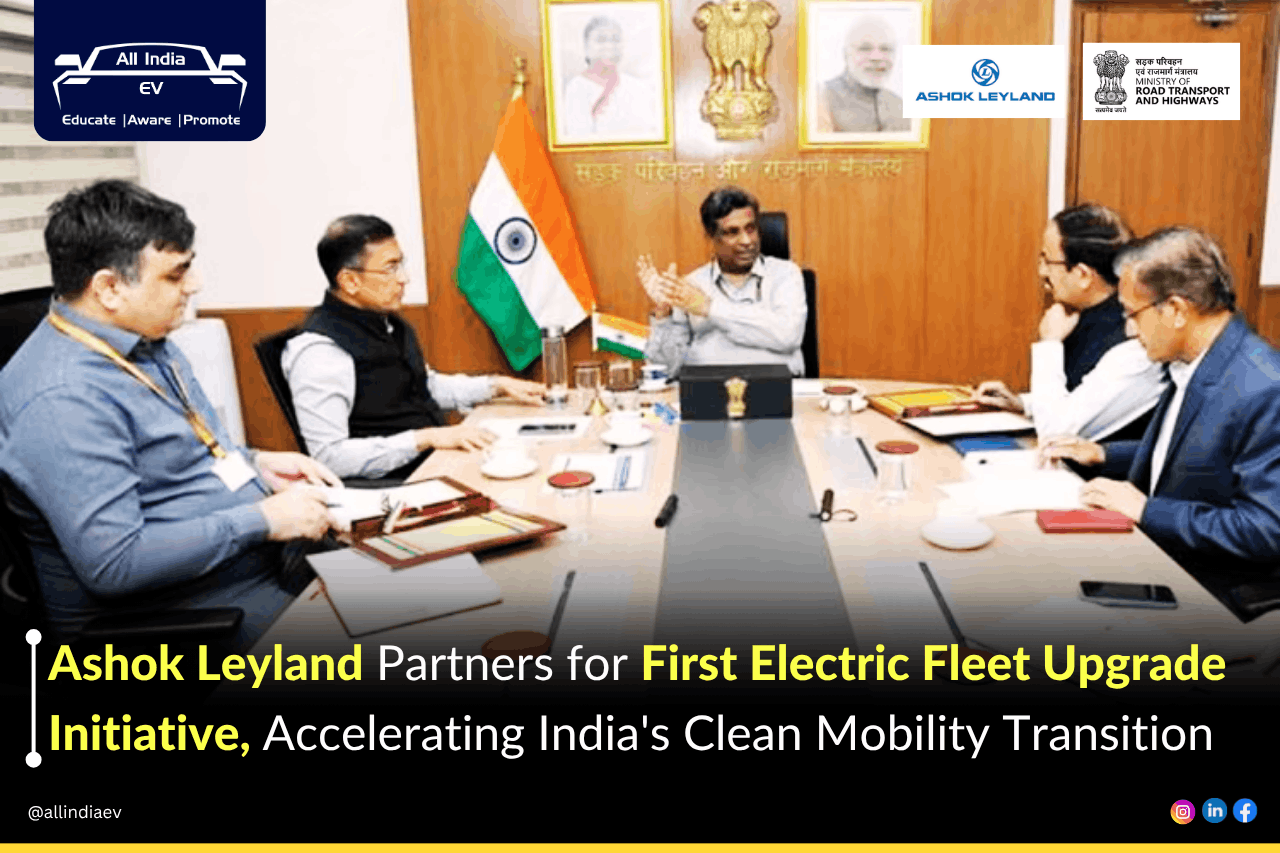
What Happened: Ashok Leyland and its electric mobility subsidiary, Switch Mobility, have become the first OEMs to sign a Memorandum of Understanding (MoU) with the Ministry of Road Transport and Highways (MoRTH) under the Delhi-NCR vehicle replacement scheme.

Contents
  • The Core News
  • Conclusion & Next Steps

The Key Number: 8% discount on the ex-showroom price of eligible trucks and buses purchased under the scheme.

Why It Matters: The agreement marks the operational launch of the government’s commercial vehicle replacement programme, aimed at reducing emissions and accelerating the adoption of cleaner trucks and electric buses in Delhi-NCR.

The Core News

The Delhi-NCR vehicle replacement scheme has entered its implementation phase with Ashok Leyland and Switch Mobility becoming the first original equipment manufacturers (OEMs) to partner with the government. Under the MoU signed with MoRTH, the companies will offer an 8% discount on eligible trucks and buses. For electric vehicles, the discount will be capped at the level applicable to an equivalent internal combustion engine (ICE) vehicle in the same Gross Vehicle Weight (GVW) category.

The scheme targets owners of Bharat Stage-IV (BS-IV) and older commercial vehicles registered in Delhi-NCR, encouraging them to replace ageing fleets with Bharat Stage-VI (BS-VI) compliant or electric trucks and buses. In addition to the OEM discount, the Centre will provide a 5% interest subvention and fixed monthly fuel vouchers for five years, while participating states may offer up to 100% concession on motor vehicle tax and waive registration fees.

The government expects more commercial vehicle manufacturers to join the programme in the coming weeks. Wider OEM participation is expected to support fleet modernisation, improve air quality in Delhi-NCR and encourage greater adoption of electric commercial vehicles.

More EV News
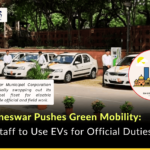
What: The Bhubaneswar Municipal Corporation (BMC) has decided to deploy electric vehicles for official staff movement as part of its urban sustainability and clean mobility strategy. The move is linked to the city’s broader push toward low-emission municipal operations. The Number: BMC has already floated an Expression of Interest (EOI) process for EV deployment and fleet engagement under its civic mobility transition programme. The Impact: The Bhubaneswar civic body EV adoption plan could accelerate municipal fleet electrification across tier-2 Indian cities, especially where urban governance bodies are under pressure to reduce fuel costs and urban emissions. The Core News The Bhubaneswar civic body EV adoption initiative reflects a growing trend among Indian municipal administrations to electrify official transport fleets. According to reports, staff members of the Bhubaneswar Municipal Corporation will increasingly use electric vehicles for official duties as the city administration attempts to align governance operations with sustainability targets and cleaner urban mobility policies. The transition is strategically important because municipal fleets operate daily within dense urban zones where fuel consumption, emissions, and maintenance costs directly impact civic expenditure. Unlike private EV adoption, government fleet electrification creates predictable utilisation cycles, making electric mobility economically more viable over time. BMC’s move also complements Bhubaneswar’s Smart City infrastructure programme, which has increasingly focused on integrated urban transport modernisation and sustainable city operations. The development comes at a time when Indian cities are gradually shifting beyond symbolic EV announcements toward operational deployment models. Several urban local bodies are now evaluating EVs not only for environmental reasons but also for lifecycle cost savings, lower fuel dependency, and simplified fleet management. Bhubaneswar’s decision could become a reference model for other municipal corporations looking to electrify internal administrative transport without immediately requiring large-scale public EV infrastructure rollouts. Breaking Down the Update • Bhubaneswar Municipal Corporation staff will use EVs for official work • The move is linked to the city’s sustainability and clean mobility objectives • BMC has initiated EOI processes related to EV engagement and deployment • The programme aligns with Bhubaneswar Smart City initiatives • Municipal fleet electrification can reduce long-term fuel and maintenance expenditure • Government-led EV adoption improves visibility and institutional acceptance of electric mobility • Tier-2 cities are increasingly becoming active participants in India’s EV transition How Bhubaneswar civic body EV adoption will help Indian EV Market The Bhubaneswar civic body EV adoption initiative could strengthen India’s municipal EV ecosystem by demonstrating how local governments can become early institutional adopters of electric mobility. Unlike private consumers, civic administrations operate predictable fleets with fixed routes and regular usage cycles, making EV economics easier to optimise. Municipal EV deployment also creates secondary market opportunities across charging infrastructure, battery servicing, fleet software, telematics, and maintenance operations. As more civic bodies shift toward electric fleets, demand for fleet-oriented EV platforms is expected to rise, especially in compact passenger mobility and utility transport segments. The Bhubaneswar civic body EV adoption model is particularly relevant for India’s tier-2 and tier-3 cities where pollution levels, fuel costs, and operational inefficiencies are increasing but large-scale metro-style transit systems remain limited. Electrifying government vehicles can help build confidence in EV reliability while simultaneously reducing public-sector fuel expenditure. Another important factor is policy signalling. When municipal administrations themselves adopt EVs, it improves institutional confidence among businesses, contractors, and urban residents. This can indirectly support broader EV adoption in public transport, delivery fleets, sanitation vehicles, and administrative mobility services across India. Conclusion & Next Steps The Bhubaneswar civic body EV adoption programme now moves into the implementation phase, where procurement quality, charging infrastructure readiness, and operational efficiency will determine long-term success. If executed effectively, the initiative could become an important template for municipal fleet electrification in India’s emerging smart cities.
Bhubaneswar civic body staff to use EVs for official work
Jitendra EV adopts LECCS connector for fast-charging
Evfin and Muthoot Capital Join Forces to Boost Financing for Electric Two-Wheelers in India
Eicher sets new EV benchmark with K2K campaign
India’s Electric Cab Revolution Stalled by Vehicle Shortage

Breaking Down the Update

  • First OEMs: Ashok Leyland and Switch Mobility are the first manufacturers to join the scheme.
  • OEM Incentive: Eligible trucks and buses receive an 8% ex-showroom discount.
  • EV Benefit: Electric vehicle discounts are linked to the equivalent ICE GVW category.
  • Central Support: Buyers receive 5% interest subvention and fuel vouchers for five years.
  • State Incentives: Participating states may provide 100% motor vehicle tax concession for ten years and registration fee waivers.
  • Target Vehicles: BS-IV and older trucks and buses registered in Delhi-NCR are eligible for replacement.

How Delhi-NCR vehicle replacement scheme Will Help the Indian EV Market

The Delhi-NCR vehicle replacement scheme is expected to accelerate the transition toward cleaner commercial transportation by making electric trucks and buses more financially accessible. The combination of OEM discounts, lower financing costs and state-level tax concessions reduces the upfront cost of fleet replacement for commercial operators.

For Indian manufacturers, the scheme creates fresh demand for electric commercial vehicles while supporting higher production volumes. This could encourage further investment in domestic manufacturing, localisation and charging infrastructure.

The programme also supports India’s broader clean mobility goals by targeting older, high-emission commercial vehicles that contribute significantly to urban air pollution. If successfully implemented, the model could serve as a blueprint for similar fleet modernisation initiatives in other states, expanding the market for electric commercial vehicles nationwide.

Conclusion & Next Steps

The success of the Delhi-NCR vehicle replacement scheme will depend on how quickly additional OEMs join the programme and how effectively eligible fleet owners utilise the available incentives. As implementation gathers pace, the initiative could become an important driver of electric commercial vehicle adoption while helping modernise India’s ageing truck and bus fleet.

Read More: Catch up on All India EV’s related coverage on India’s evolving commercial EV subsidies and battery swapping policies at All India EV
Power consumption analysis of EV Charging Stations in 2024-25
India and Sri Lanka Engage in Talks Over Acquisition of Critical Graphite Mines
Bacancy to Ramp Up Production to 20k DC Charger Power Modules Annually
Recyclekaro Joins India’s EPR Portal for Battery Recycling
VinFast India partners with CSB Bank to deliver comprehensive EV financing solutions

Sign Up For Daily Newsletter

Be keep up! Get the latest breaking news delivered straight to your inbox.
Loading
By signing up, you agree to our Terms of Use and acknowledge the data practices in our Privacy Policy. You may unsubscribe at any time.
Share This Article
Facebook Whatsapp Whatsapp LinkedIn Copy Link Print
Leave a Comment

Leave a Reply Cancel reply

Your email address will not be published. Required fields are marked *

Follow US
XFollow
InstagramFollow
YoutubeSubscribe
LinkedInFollow
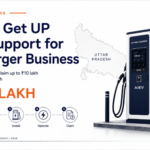
UP EV Charger Subsidy under VGF Step-by-step process
8 July 2026
Revolt Motors unveils RVX electric motorcycle priced at ₹1.24 lakh
6 July 2026
uantum Energy partners with Hero FinCorp to enable easy financing for electric scooters
Quantum Energy partners with Hero FinCorp to enable easy financing for electric scooters
6 July 2026
All India EV: Edition 51
What all happened in June 2026?
Click Here
All India EV Footer
All India EV
India's EV Industry Desk

All India EV is a media, market research and market intelligence platform tracking the companies, technologies, capital and market shifts shaping India's electric mobility ecosystem.

News Categories

  • EV News
  • EV Launch
  • Market Insights
  • Investments & Funding
  • EV Engineering
  • Guest Articles

Follow the Network

Instagram Follow daily EV updates LinkedIn Join the industry conversation WhatsApp Join the AIEV community

Contact the Desk

Business & Editorial
business@allindiaev.com
Website
www.allindiaev.com
Based In
New Delhi, India

© 2026 All India EV. All rights reserved.

Aware Educate Promote

Welcome Back!

Sign in to your account

Username or Email Address
Password

Lost your password?