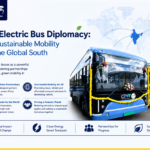

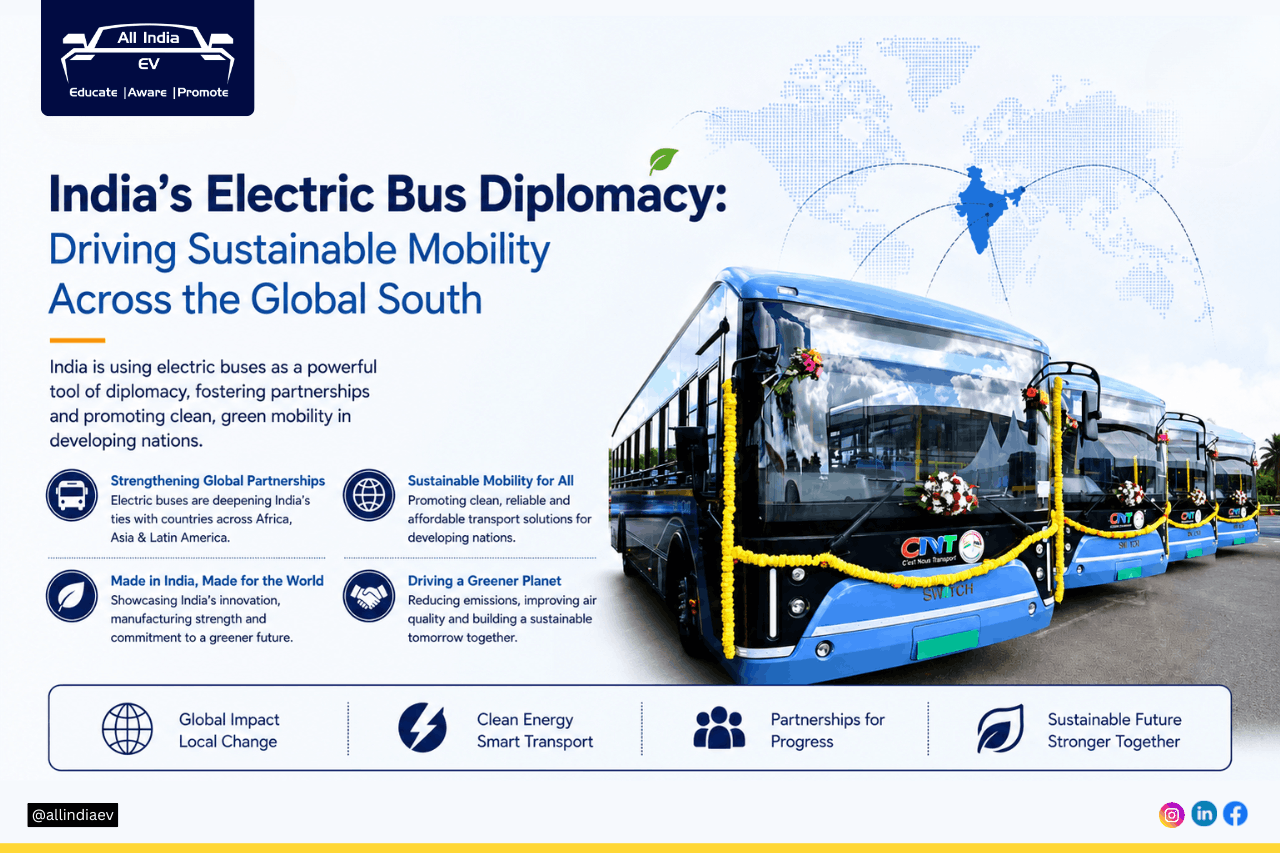

What Happened: India is increasingly using electric bus diplomacy to strengthen strategic partnerships with neighbouring countries and nations across the Global South. Government-backed electric bus deployments are already underway in Mauritius, Bhutan and Nepal through public sector tenders and bilateral cooperation.
The Key Number: 132 electric buses exported by India in FY26.
Why It Matters: The initiative extends India’s clean mobility capabilities beyond its borders while reinforcing diplomatic ties. It also positions Indian electric bus manufacturers in emerging overseas markets as domestic production capacity expands.

The Core News
India’s electric bus diplomacy strategy is emerging as a new pillar of its regional engagement, combining clean mobility with foreign policy objectives. The country has already supplied 100 electric buses to Mauritius through a government-to-government arrangement. Bhutan is set to receive 45 electric buses from Switch Mobility under the Government of India-supported “Accelerating E-mobility Uptake in Bhutan” initiative. Meanwhile, state-owned Convergence Energy Services Limited (CESL) has floated a tender to supply 20 electric buses and 10 charging stations to Nepal. According to people familiar with the development, India’s Ministry of External Affairs has played a coordinating role in several overseas electric bus deployment projects.
The initiative comes as India continues expanding its domestic electric bus ecosystem through large-scale procurement programmes. The ₹4,391-crore PM E-Drive scheme and the ₹20,000-crore PM E-Bus Sewa programme have significantly increased demand for electric buses across the country. CESL has already floated tenders covering more than 6,200 electric buses, including a 3,604-bus tender under PM e-Bus Sewa. The broader programme aims to deploy 10,000 electric buses across 116 Tier-II and Tier-III cities, while PM E-Drive plans another 14,028 buses across nine metropolitan cities. This growing domestic manufacturing base is now supporting India’s export ambitions.
Breaking Down the Update
- FY26 Exports: India exported 132 electric buses, with Mauritius receiving 100 units.
- Bhutan Deployment: Switch Mobility will supply 45 electric buses under an India-supported clean mobility programme.
- Nepal Tender: CESL has floated a tender for 20 electric buses and 10 chargers.
- Domestic Scale: CESL has issued tenders covering more than 6,200 electric buses in India.
- Training Support: Around 100 Bhutanese officials received specialised electric bus operations training.
- Market Growth: India’s domestic electric bus sales rose 37% to 5,356 units in FY26.
How Electric Bus Diplomacy Will Help the Indian EV Market?
India’s electric bus diplomacy initiative has the potential to strengthen multiple segments of the country’s electric mobility ecosystem. For domestic manufacturers, overseas government-backed projects create additional demand beyond the Indian market, allowing companies to increase production volumes and improve manufacturing efficiency. Larger production runs can also help lower costs over time, making electric buses more competitive in both domestic and export markets.
More EV News
The strategy also enhances India’s position as a provider of complete clean mobility solutions rather than simply a vehicle exporter. By combining electric buses with charging infrastructure, technical assistance and operational training, India is building long-term partnerships that could generate repeat business and wider cooperation in future mobility projects.
For policymakers, successful international deployments demonstrate the maturity of India’s public procurement model and manufacturing capabilities. This can strengthen confidence among other developing nations looking to electrify public transport systems.
Indian suppliers of batteries, charging equipment, power electronics and software could also benefit as international projects increasingly require integrated mobility ecosystems. Over the longer term, stronger export demand may encourage further investment in manufacturing, research and supply chains, supporting India’s ambition to become a major global electric vehicle production hub.
Way Forward …
The next phase of electric bus diplomacy will depend on how quickly projects in Bhutan and Nepal move from tenders to deployment and whether additional Global South nations adopt similar partnerships with India. Continued government support, reliable manufacturing capacity and timely execution will determine whether electric buses become a sustained instrument of India’s clean mobility exports and regional engagement strategy.
Read More: Catch up on All India EV’s related coverage on India’s evolving commercial EV subsidies and battery swapping policies at All India EV