

The Quick Update
What Happened:
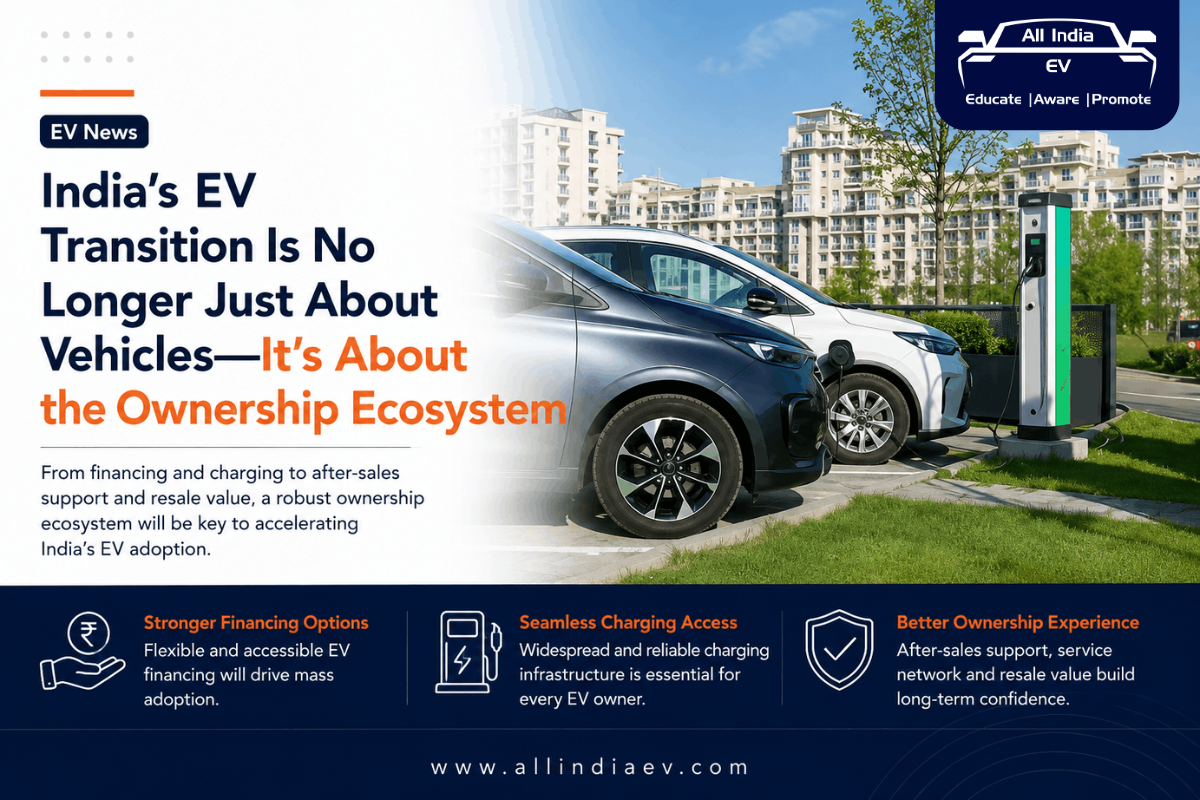
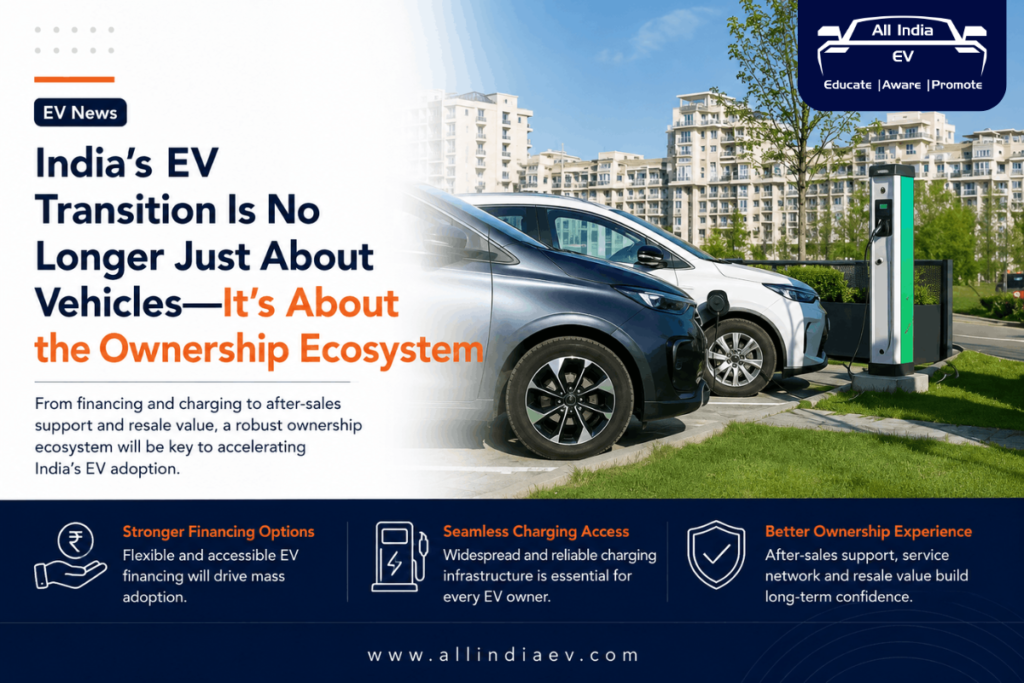
India’s electric vehicle industry is entering a new phase where success is increasingly defined by the ownership ecosystem rather than vehicle sales alone. Industry stakeholders are shifting their focus toward charging infrastructure, battery lifecycle management, financing, digital services, after-sales support and recycling to make EV ownership more reliable and scalable.
The Key Number:
8% — Electric vehicles accounted for approximately 8% of all new vehicle registrations in India during 2025, highlighting the need for a stronger ecosystem to support the growing EV fleet.
Why It Matters:
As EV adoption accelerates, long-term customer satisfaction will depend less on vehicle specifications and more on charging accessibility, battery health, service quality, financing options and residual value. These ecosystem components will determine whether EV ownership becomes mainstream across India.
The Core News
India’s EV ownership ecosystem is emerging as the next critical battleground for the country’s electric mobility transition. While the initial phase focused on launching new electric vehicles and encouraging adoption through incentives, industry leaders now believe the next stage of growth will be driven by the overall ownership experience. This includes reliable charging infrastructure, predictive maintenance, battery health monitoring, financing, insurance, software services and battery recycling rather than vehicle sales alone.
The transition reflects the growing maturity of India’s EV market. As electric two-wheelers, passenger cars and commercial vehicles become increasingly common, consumers and fleet operators are demanding dependable charging networks, trained service technicians, transparent battery health certification and affordable ownership solutions. Industry participants also emphasize the importance of digital connectivity, telematics, roadside assistance and lifecycle management to improve vehicle uptime and customer confidence. These services are becoming essential differentiators as competition intensifies among automakers and mobility providers.
For the broader EV industry, this evolution signals a shift from product-centric competition to ecosystem-led growth. Manufacturers, charging operators, battery suppliers, financial institutions, recyclers and technology companies will need to collaborate more closely to deliver seamless ownership experiences. A robust ecosystem not only supports higher customer retention but also strengthens confidence in electric mobility, making large-scale EV adoption more sustainable over the long term.
Breaking Down the Update
- Ownership Focus: The industry is moving beyond vehicle sales to prioritize the complete EV ownership experience.
- Charging Infrastructure: Reliable public and private charging networks remain central to reducing range anxiety and improving usability.
- Battery Lifecycle: Battery health monitoring, second-life applications and recycling are becoming strategic priorities.
- After-Sales Service: Specialized EV diagnostics, technician training and software-enabled maintenance are gaining importance.
- Digital Services: Connected vehicle platforms, telematics and predictive maintenance are enhancing ownership convenience.
- Financing & Insurance: Innovative financing models and battery-backed lending solutions are expected to improve affordability and buyer confidence.
How EV ownership ecosystem Will Help the Indian EV Market
A stronger EV ownership ecosystem will play a pivotal role in accelerating India’s electric mobility ambitions by addressing the practical challenges that influence buying decisions after the initial purchase. While vehicle technology has improved considerably, widespread adoption now depends on ensuring that charging, servicing and battery support are as reliable as those available for conventional vehicles.
An integrated ecosystem can reduce ownership anxiety through accessible charging infrastructure, certified battery health reports, trained technicians and digital service platforms. These improvements enhance customer confidence while lowering operational risks for fleet operators, logistics companies and ride-hailing businesses that rely heavily on vehicle uptime.
The ecosystem approach also encourages innovation beyond vehicle manufacturing. Charging companies, battery recyclers, software developers, insurers and financial institutions can create new business models that support sustainable EV growth. Standardized battery health certification and efficient recycling systems can improve resale values while reducing dependence on imported critical minerals.
As India targets higher EV penetration across passenger and commercial segments, a mature ownership ecosystem will become the foundation of long-term market expansion. The next phase of the country’s EV journey will be measured not only by the number of vehicles sold, but by how seamlessly those vehicles are charged, serviced, financed and supported throughout their lifecycle.
Way Forward …
The EV ownership ecosystem is rapidly becoming the defining factor in India’s next phase of electric mobility. While vehicle launches and policy incentives will continue to drive adoption, sustainable growth will depend on building dependable charging networks, advanced battery lifecycle management, skilled service infrastructure and integrated digital mobility services. Companies that deliver a complete ownership experience—not just an electric vehicle—are likely to shape the future of India’s EV market.