

For most of the last five years, capital and attention in India’s EV sector have concentrated on a single question: which vehicle wins. Which scooter brand scales, which OEM takes share, which manufacturer builds capacity fastest. The vehicle has been treated as the market.
Blume Ventures’ own published commentary suggests it read the same transition differently: not by chasing the OEM wave, but by asking where value settles after a vehicle is sold. That reframing, not “which OEM wins” but “which layer of the stack captures durable value,” is the organising idea behind Blume Ventures’ approach to India’s EV sector, and the organising idea of this editorial.
Claims Ledger note: The investment rationale described below is Blume Ventures’ own account, drawn from its published commentary (see Sources & References). It is company-reported strategic reasoning, not an independently audited investment record, and AIEV Intelligence treats it accordingly, as a documented thesis, not a verified outcome.
What Blume Ventures Disclosed
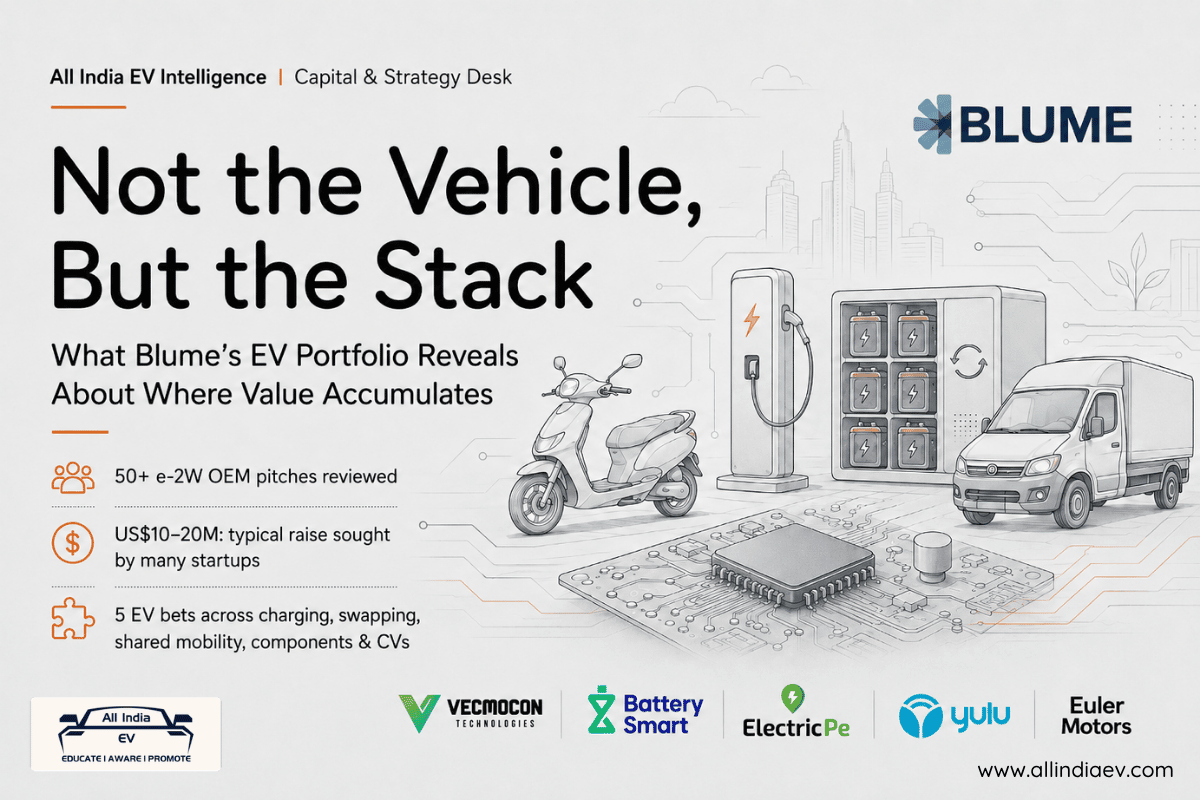
In a November 2023 commentary on the venture potential of India’s EV sector, Blume Ventures stated it had evaluated more than 50 electric two-wheeler OEM pitches since early 2021. A large share of these were pre-production companies seeking roughly US$10–20 million in capital, commonly pitching their battery-management systems as the core differentiator.
Blume Ventures did not build its EV portfolio around this OEM wave. By November 2023, its disclosed EV exposure consisted of five companies: Yulu, Euler Motors, Battery Smart, ElectricPe and Vecmocon.
Read as a set, this is not an OEM-heavy portfolio. Euler Motors is the one vehicle manufacturer in the Blume Ventures EV portfolio, and it sits in commercial vehicles, a segment where purchase decisions are driven more by total cost of ownership and uptime than by brand aspiration. The remaining four sit inside the operating stack of electric mobility: shared-mobility utilisation (Yulu), battery swapping (Battery Smart), charging infrastructure (ElectricPe), and vehicle electronics/intelligence (Vecmocon).
Four Lenses: Reading the Blume Ventures Portfolio
Demand. The OEM segment competes for a single, finite pool of vehicle buyers: one winner’s gain is largely another’s loss. The infrastructure and component layers that Blume Ventures backed, by contrast, are exposed to aggregate EV demand: they can grow whether the winning scooter brand is A, B or C, provided the category itself expands.
Supply. Blume Ventures’ October 2022 commentary on Vecmocon is explicit about a supply-side gap: the firm cites the emergence of 200+ EV OEM brands and a shortage of quality motors, controllers, BMS units and battery packs to serve them. That gap, not the vehicle count itself, is the investable observation Blume Ventures acted on. A component supplier does not need to pick the winning OEM; it can sell into most of them.
Capital. Vehicle manufacturing is capital-intensive and margin-thin, particularly for early-stage OEMs competing against incumbents with deeper balance sheets. Blume Ventures’ EV Primer (December 2023) frames this directly, noting that conventional OEM economics do not always fit venture-capital return profiles, while pointing to charging, swapping, mobility and financing as separate investable layers with different capital-efficiency characteristics.
Policy. None of the five companies in the Blume Ventures EV portfolio depend on a single OEM’s regulatory fortunes. Charging, swapping and fleet-utilisation businesses are more directly exposed to infrastructure and energy policy, subsidy design, standardisation and grid access, than to any individual vehicle-approval or FAME-style incentive cycle tied to one manufacturer.
Not a Vehicle Bet, But a Utilisation Bet
The distinction AIEV Intelligence draws from Blume Ventures’ thesis is this: not which vehicle wins, but which layer every vehicle eventually needs.
- Vecmocon: Sells intelligence and electronics into competing OEMs rather than competing with them directly. Its thesis scales with EV market growth generally, not with the fortunes of one brand.
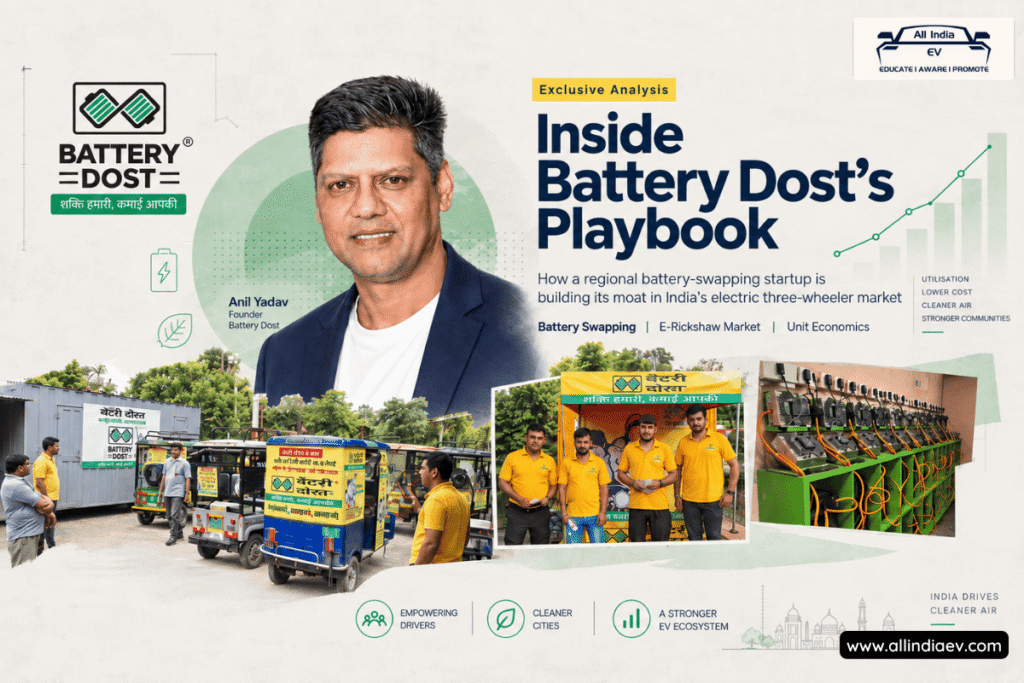
- Battery Smart: An infrastructure and utilisation business. Its economics depend on swap-station density and network utilisation, not on which two- or three-wheeler brand its customers ride.
- ElectricPe: Sits in the charging layer, working through independent charge-point operators rather than owning vehicles.
- Yulu: A utilisation and mobility-services model, monetising rides rather than vehicle sales.
- Euler Motors: The exception that proves the pattern: a manufacturer, but one operating in commercial EVs, where fleet economics and uptime matter more than brand pull.
The Case Against Overreading the Blume Ventures Thesis
AIEV Intelligence’s Four Lenses framework requires stress-testing the thesis, not just narrating it. Two caveats apply here, and both come directly from the source material rather than from hindsight:
This is not a “safer” strategy. Charging networks can carry long payback periods and low early utilisation. Battery swapping needs significant infrastructure density before network effects materialise. Fleet models can become asset-heavy. Component suppliers face the same margin pressure as OEMs, from a different direction: they must keep pace with fast-moving technology while competing against established global supply chains. The risk simply takes a different shape: an OEM competes head-on for the same customer; an infrastructure or component company can benefit from several competing OEMs growing at once.
This is not yet a validated outcome. Blume Ventures’ own commentary is a disclosed rationale from 2023, not a track record. Several of these business models are still evolving, and long-term returns will depend on execution, capital efficiency and how India’s EV market ultimately consolidates. AIEV Intelligence flags this distinction deliberately: a documented investment thesis and a proven investment result are not the same claim, and should not be reported as though they were.
Why the Blume Ventures Approach Matters for the Next Phase
The first phase of India’s EV transition rewarded market entry: subsidies were supportive, demand was emerging, and hundreds of entrepreneurs built vehicles for a market that looked ready for disruption. That phase rewarded launching. The next phase is more likely to reward what keeps a vehicle running after it is sold.
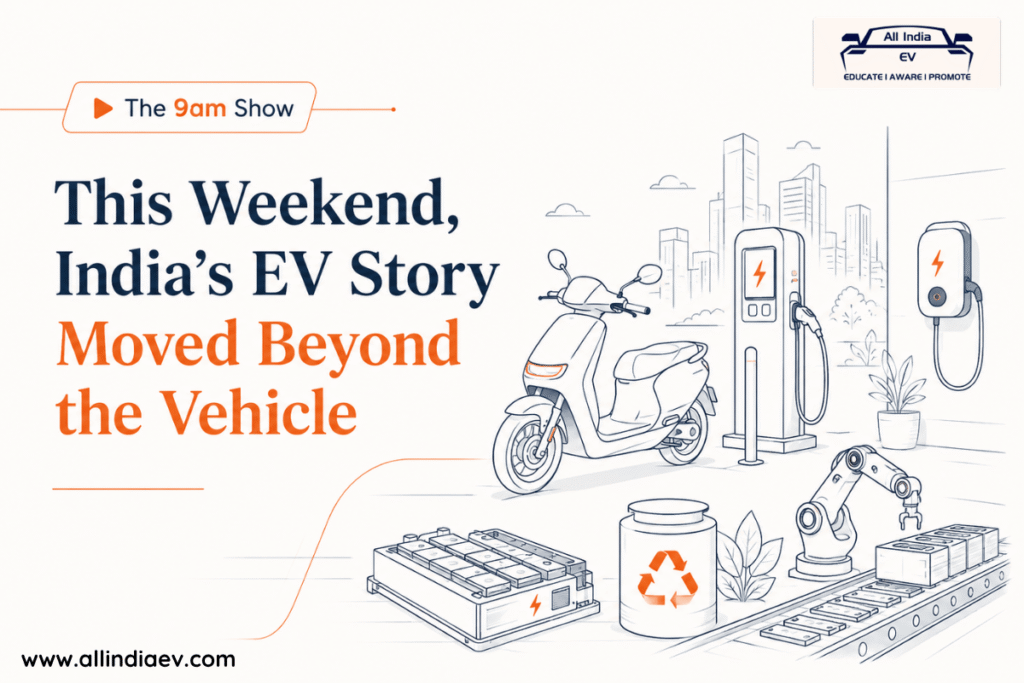
Who finances it. Who charges it. Who manages the battery. Who keeps fleet utilisation high. Who supplies the electronics. Who manages the energy demand. Who handles end-of-life. Who makes commercial EV ownership economically superior to ICE without leaning permanently on subsidy.
These are becoming structural questions for the market, not peripheral ones. Blume Ventures’ five-company portfolio is one venture firm’s answer to them, disclosed several years before the market conversation caught up.
The more useful question for anyone tracking India’s EV capital flows in 2026 is not which brand wins the scooter race. It is: across the EV stack, where does the industry ultimately let value accumulate, and who, like Blume Ventures, positioned for that layer before it was obvious?
Sources & References
- Blume Ventures, “The Venture Potential of the Electric Vehicle Sector in India.” November 10, 2023. Primary source for this editorial. Blume Ventures states it evaluated 50+ electric two-wheeler OEM pitches, many seeking US$10–20 million, and explains its rationale for not investing in the 2W OEM category. The same commentary identifies Yulu, Euler Motors, Battery Smart, ElectricPe and Vecmocon as its five EV investments at the time.
- Blume Ventures, “Why We Invested In Vecmocon.” October 13, 2022. Source for the argument on investing upstream of EV OEMs. Discusses the emergence of 200+ EV OEM brands, pressure on OEM margins, and the shortage of quality motors, controllers, BMS units and battery packs. Positions Vecmocon as a supplier capable of serving multiple competing OEMs.
- Blume Ventures, EV Primer. December 2023. Additional context on how Blume Ventures viewed investable layers of electric mobility. Arpit Agarwal discusses charging and swapping, mobility, EV financing and other parts of the ecosystem, and explains why conventional OEM models may not always fit venture-capital economics.
- Blume Ventures, EV & Mobility Portfolio. Blume Ventures’ sector page categorises Vecmocon, Yulu, Euler Motors, ElectricPe and Battery Smart among its active EV & Mobility investments, alongside its broader mobility portfolio.
- Blume Ventures, Battery Smart Portfolio Profile. Describes Battery Smart as a battery-swapping network serving electric two- and three-wheelers through an asset-light network of partner swapping stations.
- Blume Ventures, ElectricPe Portfolio Profile. Describes ElectricPe as an EV charging platform working with thousands of independent charge-point operators, supporting this editorial’s positioning of ElectricPe within the charging layer rather than vehicle manufacturing.
- Blume Ventures, Yulu Portfolio Profile. Identifies Yulu as a shared electric micro-mobility business serving last-mile commuting and delivery use cases.