




An All India EV feature exploring how Clean Electric’s immersion-cooled batteries address the demands of electric cargo and passenger three-wheelers.
At the end of a delivery shift, an electric cargo three-wheeler reaches the ramp of a warehouse with part of its load still on board. The driver slows, stops and pulls away uphill. Across town, an electric passenger auto has spent the afternoon making short trips, repeatedly accelerating with a full cabin before stopping to pick up its next fare. Both vehicles might return with a similar reading on the odometer. Their batteries have done different work.
That difference matters when a fleet asks how long a battery will last. A cargo vehicle may draw sustained power on a loaded climb. A passenger auto may make hundreds of shorter power demands across a long day. Either can arrive at a charger with a warm battery and limited time before the next shift. What happens during those hours tells an OEM more about the battery it needs than a single range figure can.
Payload changes what every kilometre costs
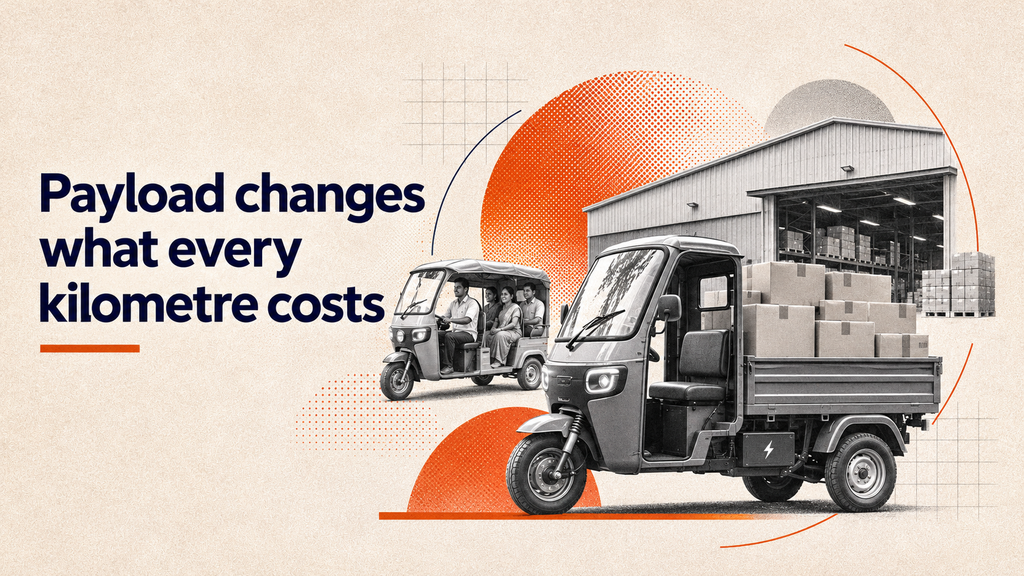
An extra load asks more of the powertrain each time the vehicle accelerates. It also increases the energy needed to lift the vehicle uphill. For a cargo three-wheeler, the load can change considerably over a route. A vehicle may leave a depot near its rated payload and get lighter with each drop, or accumulate weight as it makes pickups. Two trips of the same length can therefore leave very different amounts of charge in the battery.
In passenger service, the load changes as people get in and out. The power demand on a busy urban route often comes in bursts as the auto pulls away from signals, stops for fares and merges back into traffic. Regenerative braking can recover some of the energy spent accelerating, with the amount depending on the vehicle’s controls and how much charge the battery can accept at the time. A day of short trips can still use a substantial share of the pack’s energy, particularly when the vehicle stays in service across shifts. unece.org
For battery sizing, that makes usable energy at the end of the shift a practical starting point. How much of the pack will the vehicle use on its busiest regular day? What reserve will be left for a missed charging stop or an extra trip? And as the pack ages, will it still be able to complete that shift? A larger pack can provide more reserve and reduce the fraction of capacity used on a given route, but it also adds cost and mass. In a cargo vehicle, that extra mass matters to the payload budget.
Gradeability is a whole-vehicle test

A gradeability figure describes a vehicle’s ability to tackle a slope under specified conditions. For an operator, the revealing question is whether the vehicle can start and keep moving on that slope at its rated load, after working for several hours, with the battery partly depleted.
A hill start and a sustained climb put different demands on the vehicle. Starting from rest requires enough wheel torque, which depends on the motor, controller, gearing and traction. Holding speed up a long incline requires the system to supply power continuously. The battery must deliver that power within its current, voltage and temperature limits. At a lower pack voltage, supplying the same electrical power takes more current. If voltage sags or the battery management system reduces the allowed current as temperatures rise, the vehicle may climb more slowly even when the dashboard still shows charge remaining.
That is why a useful OEM test includes repeated starts on the steepest ramp the vehicle will routinely encounter, along with a sustained climb at rated load. The test should capture speed, pack voltage, current and cell temperature alongside any power derating. Repeating it with an aged pack helps show whether the vehicle can still do its job after its capacity and power capability have declined.
Heat connects the route to battery life
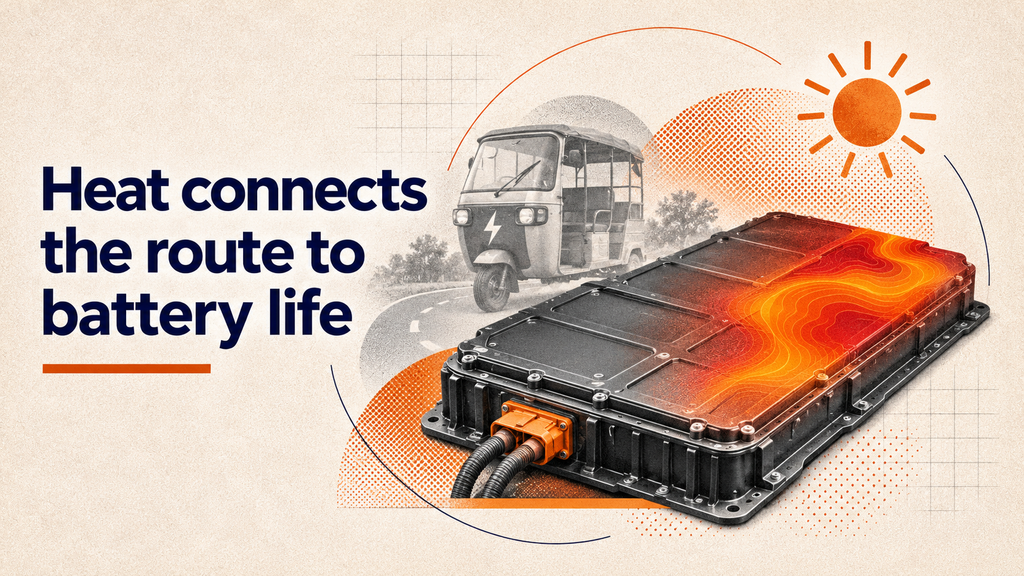
Higher electrical current increases resistive heating. How hot the cells actually get depends on how long that current flows, how effectively the pack sheds heat and the temperature around it. A short burst pulling away from a junction and a long loaded climb can reach similar peak currents while exposing the cells to very different temperatures. The next charging session adds another variable, especially if the vehicle plugs in immediately after a demanding run. unece.org
Battery ageing also continues while the vehicle is parked. High temperatures and prolonged time at a high state of charge can accelerate calendar ageing. During operation, higher currents and deeper discharge can add to cycle ageing, with the effect depending on the cells and operating conditions. That makes a fleet’s parking and charging schedule part of the battery-life story. An auto that sits fully charged through the hottest hours of the day sees a different pattern of stress from one that finishes charging shortly before departure.
How Clean Electric builds for that duty cycle
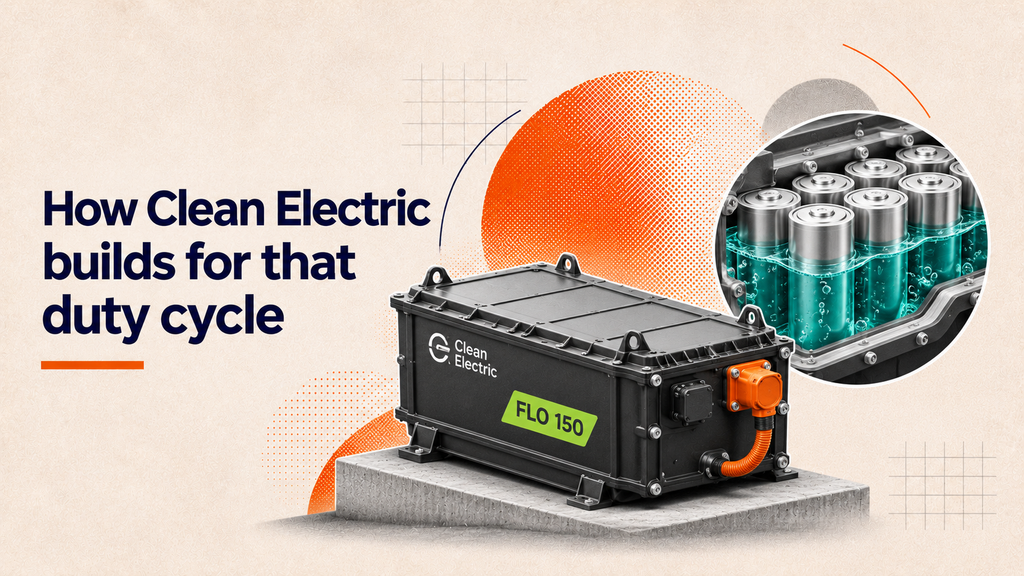
Clean Electric’s approach is to bring the coolant directly into contact with the cells. The company describes an immersion-cooling system in which a circulating, electrically insulating fluid surrounds each cell and carries heat away. One aim is to limit the temperature difference between cells. If part of a pack runs hotter than the rest day after day, those cells can age faster and ultimately constrain how much energy or power the whole pack can deliver. Clean Electric
The FLO 150 is a concrete example of how Clean Electric packages that approach for three-wheeler applications. The company lists a 15.1 kWh LFP pack at 48 V nominal, with a 200 A rated discharge current, direct-contact active liquid cooling and 10–80% charging in 60 minutes. It also lists AIS 156 Amendment 3 certification and a 2,000-cycle, five-year warranty. OEMs evaluating the pack would need the written warranty terms and the conditions behind the ratings, including the applicable capacity-retention threshold and the current available across temperature and state of charge. Clean Electric
The cooling system addresses a specific moment in the working day. A cargo vehicle might finish a series of loaded runs and need to take on enough charge for another round. A passenger auto might have a narrow charging window between shifts. In both cases, the commercial question is whether the pack can accept the required charge within that window after arriving warm. Answering it takes vehicle-level testing with the intended charger, the actual installation and temperatures representative of the routes where the vehicle will work.
What an L5 fleet should measure

For cargo fleets, validation should follow a loaded route from depot departure through the final ramp, with extra attention to sustained climbs, hill starts and the time spent near the pack’s current limit. For passenger fleets, the test should reproduce repeated stops, changing occupancy and the turnaround between shifts. Both should log energy use, the hottest cell temperature, the temperature spread across the pack and the time needed to recharge for the next run. Over time, capacity retention and any loss of power under load show whether the battery is ageing in a way that affects revenue service. unece.org
The useful measure of battery life is how long the vehicle can keep doing the work it was bought for. For a cargo operator, that may mean making the last loaded climb without losing speed. For a passenger operator, it may mean finishing the second shift with enough reserve for one more fare. Clean Electric’s immersion cooling gives OEMs a way to manage the heat behind both demands. The route, charging window and performance of the ageing pack determine what that capability is worth in service.