
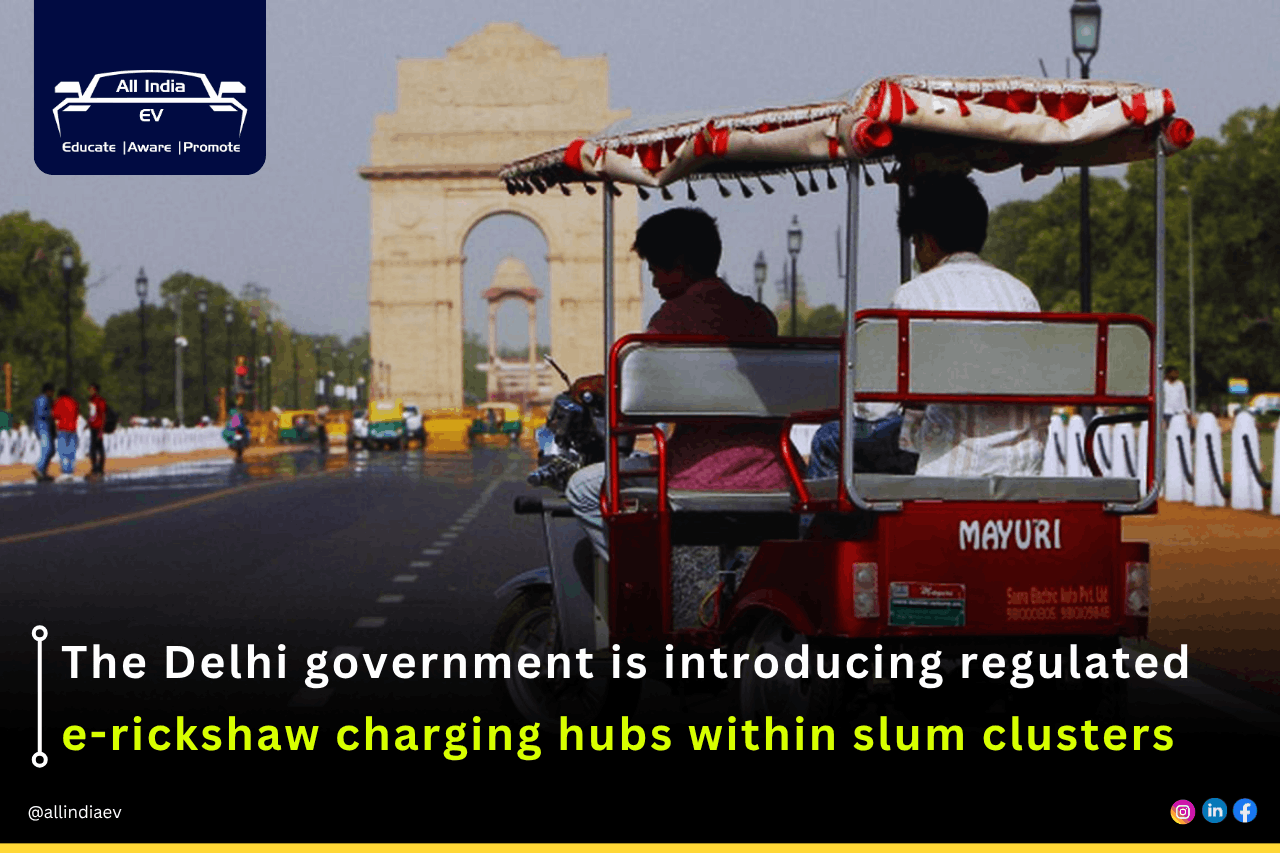


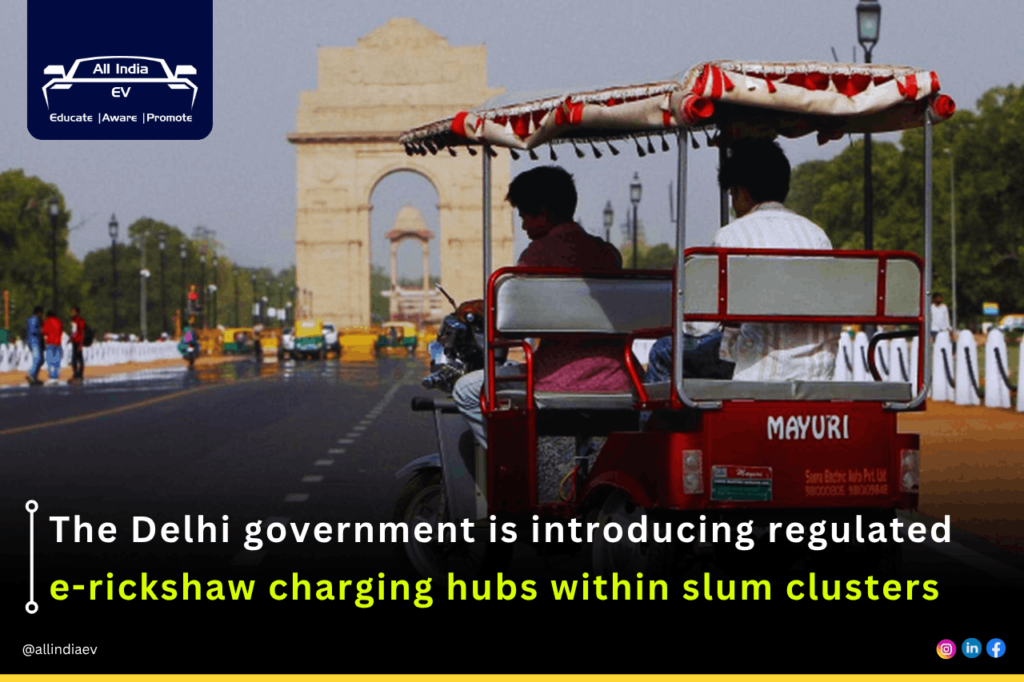
What: The E-rickshaw charging hubs in slums proposal is being prepared by the Delhi government as part of its upcoming slum rehabilitation and resettlement policy to reduce unsafe charging practices, illegal electricity tapping, and safety risks.
The Number: Delhi has around 1.2 lakh registered e-rickshaws, though officials estimate the actual number may be nearly double that. The city also has around 750 slum clusters.
The Impact: The E-rick charging hubs in slums plan could formalize a part of the EV ecosystem that has so far grown through informal and unsafe charging arrangements.
The Core News
The E-rickshaw charging hubs in slums proposal is part of Delhi government’s upcoming slum rehabilitation and resettlement policy, which is now in its final stage. The idea is to create regulated charging points inside slum clusters so e-rickshaw drivers do not have to depend on illegal electricity connections or dangerous makeshift wiring setups.
According to officials, the absence of formal charging infrastructure has led to widespread power theft and also raised the risk of electrocution due to exposed wires, overloaded systems, and hazardous charging arrangements in densely populated settlements. The government believes regulated charging stations with proper safety systems can reduce both financial losses and public safety hazards.

The proposal is also linked to broader urban-upgrade measures inside slum areas. These include plans for shopping complexes, parking spaces, schools, Jan Suvidha Kendras, and sanitation facilities, particularly for women. Officials have also said that integrating safe charging into these settlements can support sustainable mobility while improving everyday living conditions.
Breaking Down the Update
- Policy linkage: The E-rickshaw charging hubs in slums plan will be part of Delhi’s upcoming slum rehabilitation and resettlement policy.
- Main purpose: The hubs are meant to reduce dependence on unsafe and illegal charging connections.
- Safety issue: Officials say hazardous wiring and overloaded systems have increased the risk of electrocution.
- Scale of the market: Delhi has about 1.2 lakh registered e-rickshaws, while the real number may be nearly twice as high.
- Geographic scope: Delhi has around 750 slum clusters, nearly half on land owned by central agencies and the rest under DUSIB.
- Urban development angle: The proposal is tied to wider upgrades such as parking, schools, sanitation, and community facilities.
- Eligibility change under review: The government is considering extending the rehabilitation cut-off date from January 1, 2015 to January 1, 2025.
How E-rickshaw charging hubs in slums will help Indian EV Market
The E-rick charging hubs in slums plan matters because it addresses one of the least discussed parts of India’s EV transition: informal charging. A very large share of electric three-wheeler usage in India is commercially driven, daily operated, and concentrated in dense urban pockets where formal infrastructure is still patchy. In those areas, EV adoption may look strong on paper, but the charging backbone can remain messy, unsafe, and economically distorted if it depends on illegal tapping and exposed wires.
More EV News

For the Indian EV market, this kind of intervention helps in three ways. First, it formalizes energy access for a vehicle segment that is already deeply embedded in urban mobility. Second, it improves safety, which is critical because electrical accidents can damage not just public trust but also the perception of EVs in lower-income, high-density neighborhoods. Third, it creates a more accountable operating framework for e-rickshaw charging, which can make future policy, metering, and even financing support easier to structure.
This also matters beyond Delhi. E-rickshaws are one of the most visible and commercially relevant EV categories in India, but their charging behavior often remains outside the polished public-charging narrative. If Delhi succeeds in turning E-rick charging hubs in slums into a workable model, it could offer a replicable template for other Indian cities facing the same mix of EV growth, power theft, and safety risks. In that sense, this is not just a local infrastructure fix. It is a practical lesson in how India may need to build EV systems for the real city, not the ideal one.
The E-rick charging hubs in slums proposal is important because it recognizes that EV adoption at the bottom of the mobility pyramid needs safe, legal, and neighborhood-level infrastructure, not just citywide targets and headline announcements. The next thing to watch will be execution: where these hubs are placed, how tariffs are structured, who operates them, and whether they genuinely reduce theft and unsafe wiring. If implemented well, E-rick charging hubs in slums could become one of the more practical urban EV policy experiments in India.
Read More: Catch up on All India EV’s related coverage on India’s evolving commercial EV subsidies and battery swapping policies at All India EV