
All India EVAll India EVAll India EV
Notification
Font ResizerAa
  • Home
  • EV News
  • EV Launch
  • Market Insights
  • Investments & Funding
  • Guest Articles
  • EV Engineering
  • Contact
Reading: Public-Private Partnership to Boost EV Charging Network on Major Highways Across India
Share
All India EVAll India EV
Font ResizerAa
  • Home
  • EV News
  • EV Launch
  • Market Insights
  • Guest Articles
  • EV Engineering
  • Contact
Search
  • Home
    • Home 1
    • Home 2
    • Home 3
    • Home 4
    • Home 5
  • Home
  • Categories
    • Electric
  • Categories
  • Shows
    • Rap
  • More Foxiz
    • Blog Index
    • Contact
  • Bookmarks
    • Customize Interests
    • My Bookmarks
  • More Foxiz
    • Blog Index
    • Sitemap
Have an existing account? Sign In
Follow US
EV Charging
Home » Blog » Public-Private Partnership to Boost EV Charging Network on Major Highways Across India
EV News

Public-Private Partnership to Boost EV Charging Network on Major Highways Across India

Sunita
By
Sunita
Last updated: 19 August 2025
Share
4 Min Read
SHARE

Public-Private Partnership to Expand EV Charging on Highways, Supporting India’s 2070 Net Zero Goal

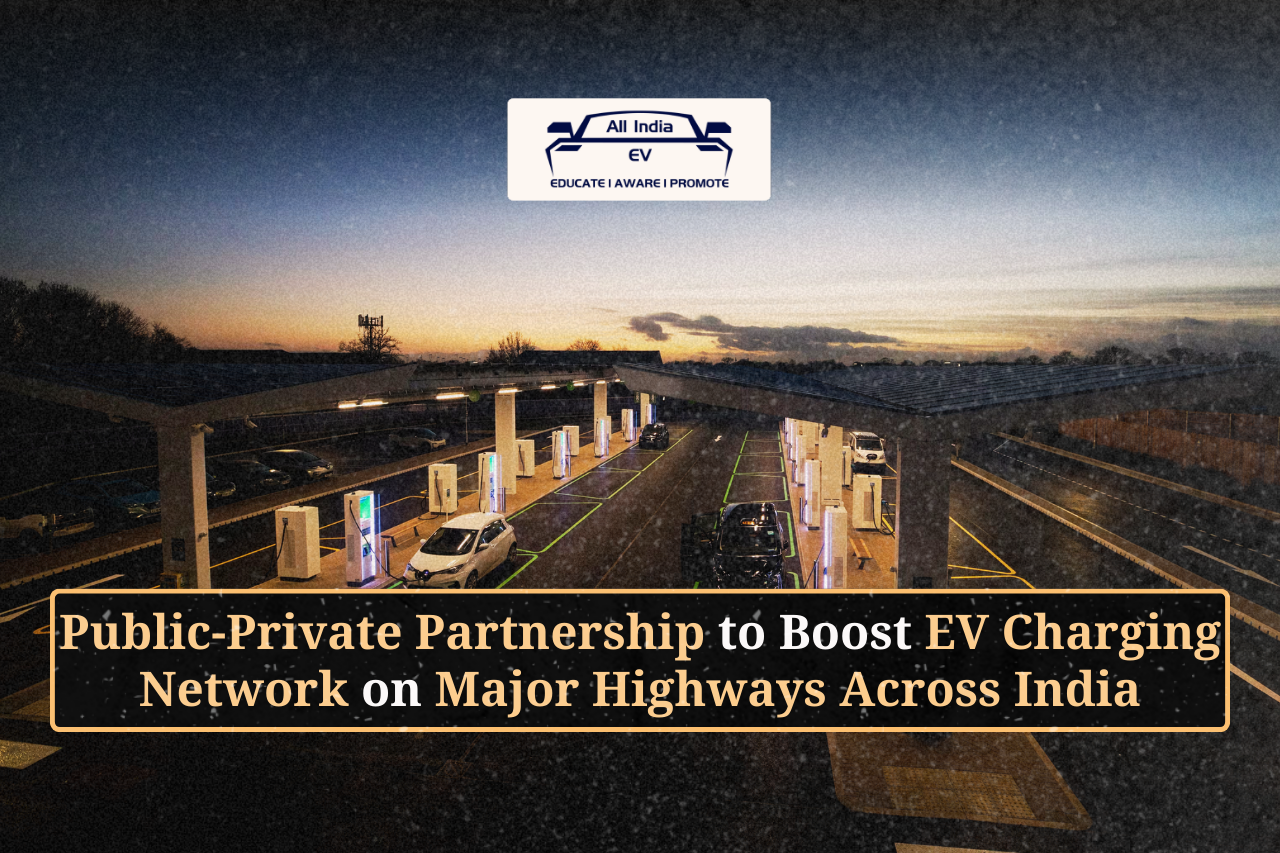
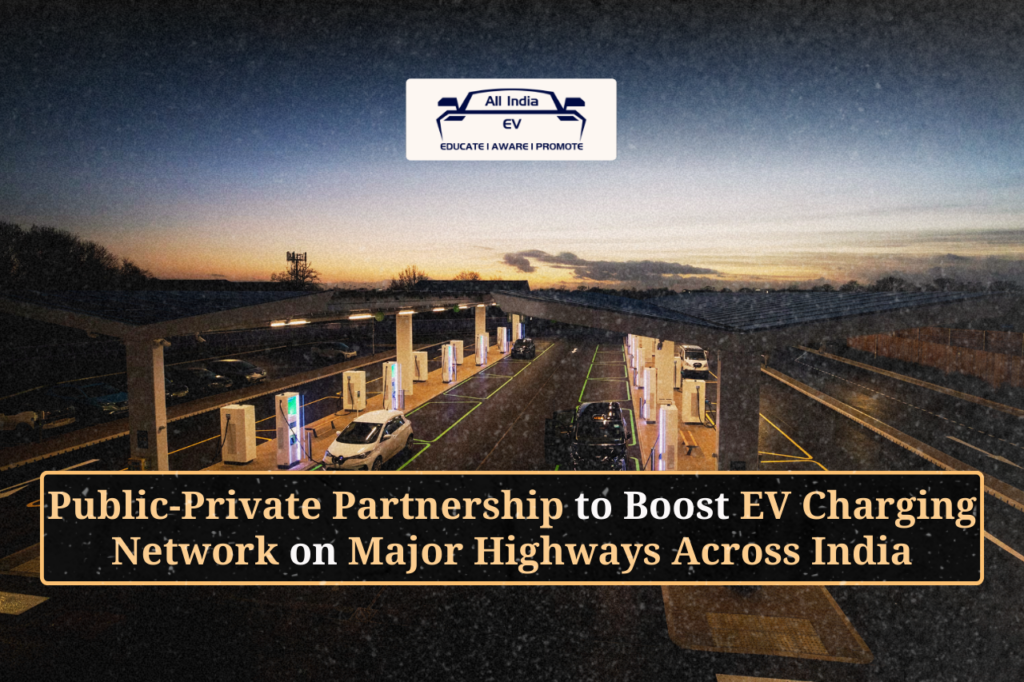
Nearly 5,500 km of key national highways — including the Delhi-Mumbai, Delhi-Kolkata, and Kolkata-Kanyakumari stretches — will be transformed into electric highways under the National Highways for Electric Vehicles (NHEV) programme. The project, implemented on a public-private partnership (PPP) model, aims to build world-class charging and roadside facilities by March 2026.

Abhijeet Sinha, Programme Director at NHEV, said that each e-highway corridor will feature charging hubs every 50 km, equipped with 36 chargers, 3,200 kWh battery capacity, service centres, lounges, clean toilets, food courts, ATMs, and even salons and warehouses. The hubs will also include auto-triggered roadside assistance within 30 minutes, along with dedicated ambulances and service vehicles within a 25 km radius.


“The ‘e’ in e-highways stands not only for electric but also for electronic,” Sinha said. “With IoT devices, cameras, and sensors integrated into a large Vehicle-to-Everything (V2X) ecosystem, we will improve law enforcement, emergency response, and data availability.”

Unlike Germany’s catenary wire system for on-the-go charging, India’s e-highways will rely on plug-in charging stations housed in way-side amenities on national highways and private land.

Eight pilot stations — two each in the north, south, east, and west — are planned by March 2026. The model is designed to be self-sustaining without government subsidies, with stations expected to break even in 40 months on an investment of ₹40–50 crore through multiple revenue streams, including advertising and retail services.


Ownership will be distributed as follows: three stations each by PSUs, private energy companies, and individual investors, and one by state governments. State-owned stations will have space for electric bus and truck depots, with early discussions under way for sites in Manesar (Haryana) and Dadri (Uttar Pradesh). Around 200 land applications are under review.

More EV News
NDMC offers 50% parking discount for EVs, restricts fuel vehicle use in Central Delhi
Growth of Electric Vehicles in Tier 2 & Tier 3 cities
Vidyut Raises $10 Million in Series A to Transform EV Ownership for Indian SMBs
Bridgestone and Tata Power partners to set up EV chargers at tyre outlets
SAIC Motor and JSW Group Forge Strategic Alliance for Advancing Green Mobility Growth

Initially powered by grid electricity, stations will gradually integrate solar, wind, and hydrogen sources to align with India’s 2070 net-zero goal.

Experts believe this approach — “test first, scale later” — reduces risks for public investment while addressing barriers like upfront EV costs. According to Akash Singh of consulting firm Kearney, NHEV’s pilot projects have tested battery subscriptions and vehicle-as-a-service models to boost operator confidence.


EV adoption is central to India’s climate commitments. By 2030, the government targets 30% EV penetration in private cars, 70% in commercial vehicles, 40% in buses, and 80% in two- and three-wheelers. Current EV penetration stands at 7.8% (FY2025), though sales grew 29% year-on-year in June, as per FADA data.

Despite the growth, India still has one public charger for every 235 EVs, compared with one for every 7–15 EVs in China and Europe, according to CareEdge Analytics.

EV users say highway range anxiety is already minimal. Vivek Ahuja, an early EV adopter in Delhi, said he has driven to Shimla, Nainital, and Jaipur without issues, while Nishant Jain said his EV gives a 400 km range per charge. However, experts note that commercial EVs will require a denser and more reliable charging network.

“Once these large-scale stations are operational, single charging points will become obsolete,” Sinha said. “These hubs will also double as logistics centres, supporting last-mile delivery and creating new jobs even outside big cities.”

Join All India EV Community

Click here for more such EV Updates

Kinetic - Lamborghini JV Seeks Middle East Production Hub
Kinetic – Lamborghini JV Seeks Middle East Production Hub
BPCL and Tata Electric Mobility Collaborate to Deploy 7,000 EV Charging Stations Across India
The EV Journey Through Rural Lens: A New Era for India’s Mobility Landscape
Unused E-Rickshaw Subsidies May Be Reallocated to Cargo Electric 3-Wheelers Under PM E-DRIVE
India’s Electric Vehicle Revolution: A Promising Future, But Challenges Remain

Sign Up For Daily Newsletter

Be keep up! Get the latest breaking news delivered straight to your inbox.
Loading
By signing up, you agree to our Terms of Use and acknowledge the data practices in our Privacy Policy. You may unsubscribe at any time.
Share This Article
Facebook Whatsapp Whatsapp LinkedIn Copy Link Print
Leave a Comment

Leave a Reply Cancel reply

Your email address will not be published. Required fields are marked *

Follow US
XFollow
InstagramFollow
YoutubeSubscribe
LinkedInFollow
Govt targets 30% electric vehicles by 2030 to reduce fuel use in Bihar
9 June 2026
8 Electric Cars In India With Assured Buyback Schemes: Maruti Suzuki eVitara To Tata Punch.EV
9 June 2026
Odisha to Set Up EV Charging Stations Across Urban Areas, SOP Issued
9 June 2026
All India EV: Edition 49
What all happened in April 2026?
Click Here
All India EV

Daily EV Industry updates for you…

Categories

  • EV News
  • EV Launch
  • Investments & Funding
  • Market Insights
  • Guest Articles
  • EV Engineering

Quick Links

  • Community
  • Content Services
  • Branding Services
  • My EV Charger
  • Substack

© Developed and Managed by “The Energy Log”

Welcome Back!

Sign in to your account

Username or Email Address
Password

Lost your password?

Not a member? Sign Up