
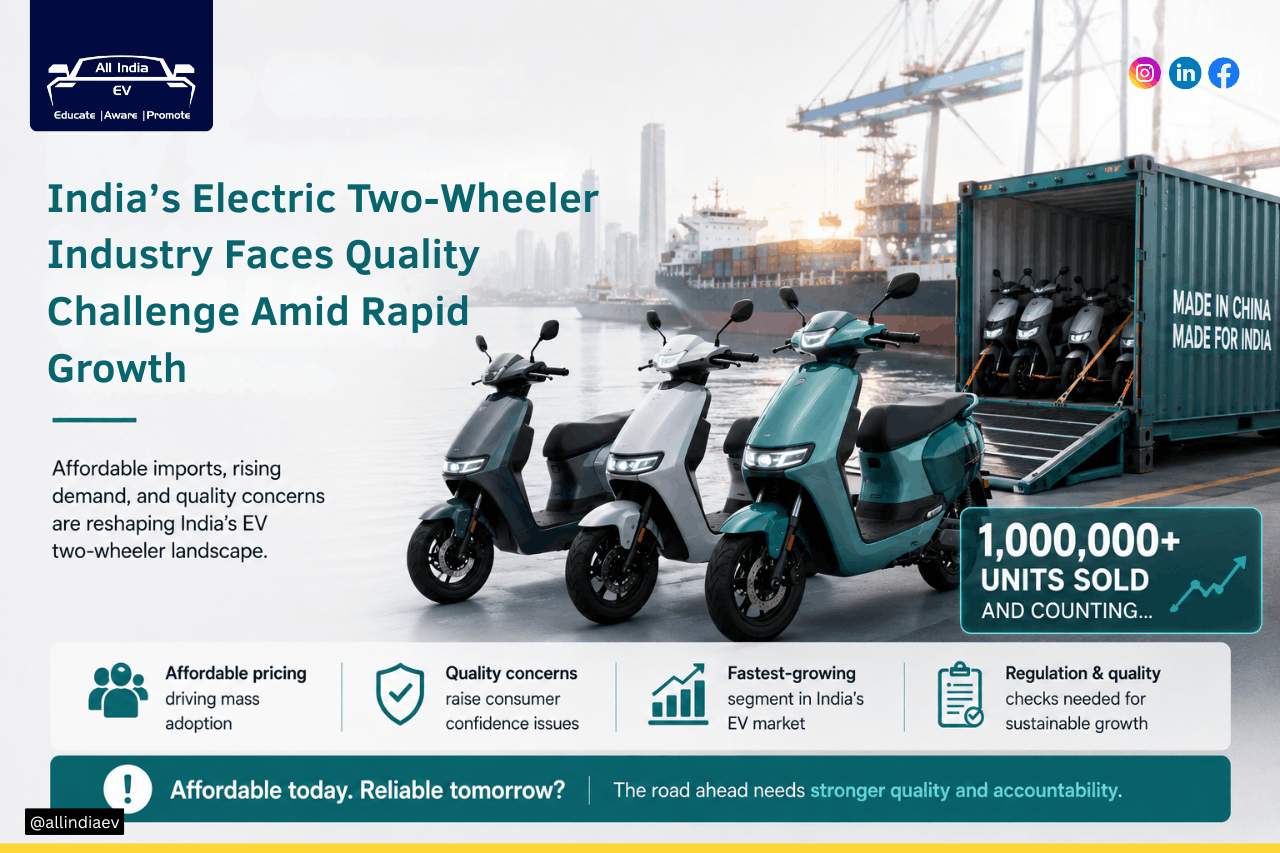

What: India’s electric two-wheeler industry is facing rising concerns over low-cost imported and loosely assembled electric scooters entering the market with weak safety standards, poor quality control, and inadequate after-sales support. Industry stakeholders fear these products could damage long-term consumer trust in the sector.
The Number: Low-speed electric scooters — many operating outside stricter regulatory oversight — have reportedly crossed the million-unit scale in India’s broader electric two-wheeler ecosystem, creating a parallel market driven largely by aggressive pricing.
The Impact: The electric two-wheeler quality issues India market is becoming a critical industry concern as consumer adoption enters the mass-market phase. Safety failures, unreliable battery systems, and weak service networks could slow EV penetration if regulatory enforcement does not tighten.

The Core News
India’s electric two-wheeler market is entering a more sensitive phase where product quality and ownership experience may become more important than headline sales growth. According to industry concerns highlighted in recent reports, the rapid spread of ultra-low-cost electric scooters — many assembled using imported Chinese kits and minimal localisation — is creating pressure on established manufacturers that have invested heavily in compliance, safety engineering, and service infrastructure.
The concern is not purely commercial. Industry executives fear that recurring battery failures, unreliable components, poor build quality, and limited service availability in the low-cost segment could damage overall consumer confidence in EVs. India’s electric mobility transition is still at an early adoption stage, particularly in the two-wheeler category that represents the largest volume opportunity for electrification. Any widespread perception of poor reliability could slow adoption momentum across the broader sector.
The issue also exposes a widening divide inside India’s EV ecosystem. Organised players are investing significantly in battery management systems, thermal safety validation, software integration, homologation, and dealership expansion, while several unorganised operators continue to compete mainly on upfront pricing. This pricing pressure has intensified amid subsidy reductions and rising competition. The market is now shifting from a subsidy-led expansion phase toward one focused on product durability, lifecycle economics, and customer trust retention.
More EV News
Breaking Down the Update
• Low-cost electric scooters are expanding rapidly in India’s price-sensitive two-wheeler market
• Industry players warn poor-quality products may hurt long-term EV adoption confidence
• Many low-speed scooters operate with weaker regulatory scrutiny compared to high-speed certified EVs
• Safety concerns include battery reliability, thermal management, and weak component quality
• After-sales service and spare parts availability remain major issues in the unorganised segment
• Established EV OEMs are increasing focus on localisation, safety validation, and service networks
• Consumer awareness around certified products and warranty support is becoming increasingly important
• Regulatory enforcement and quality compliance may become central policy priorities for the sector
How electric two-wheeler quality issues India market will help Indian EV Market
The electric two-wheeler quality issues India market discussion could ultimately push the industry toward a more mature and sustainable growth model. While the current concerns expose weaknesses in product quality and regulatory enforcement, they are also forcing the ecosystem to prioritise safety, durability, and long-term consumer confidence.
India’s electric two-wheeler sector has largely been driven by affordability and subsidy-led adoption over the last few years. However, as EV penetration expands into mainstream consumers, the market is gradually shifting toward reliability-focused purchasing behaviour. Buyers are becoming more aware of battery safety standards, certified components, service infrastructure, and resale value.
This transition could benefit organised manufacturers that invest in local manufacturing, thermal management systems, software diagnostics, and structured dealer-service networks. It may also accelerate consolidation in the sector, where weaker and non-compliant operators struggle to survive stricter scrutiny.
For policymakers, the electric two-wheeler quality issues India market challenge highlights the need for stronger certification enforcement, battery testing standards, and improved consumer protection mechanisms. Better regulation can improve trust and reduce the risk of isolated safety incidents damaging the reputation of the broader EV industry.
In the long term, higher product quality standards could strengthen India’s EV manufacturing ecosystem and support more sustainable electric mobility adoption.
Way Forward ..
The electric two-wheeler quality issues India market debate reflects a broader transition underway in India’s EV industry — from rapid expansion to quality-led consolidation. The next phase of growth will likely depend less on discount-driven sales and more on reliability, service capability, battery safety, and regulatory compliance. As India pushes for higher EV penetration targets, maintaining consumer trust will become one of the sector’s most important competitive and policy challenges
Read More: Catch up on All India EV’s related coverage on India’s evolving commercial EV subsidies and battery swapping policies at All India EV