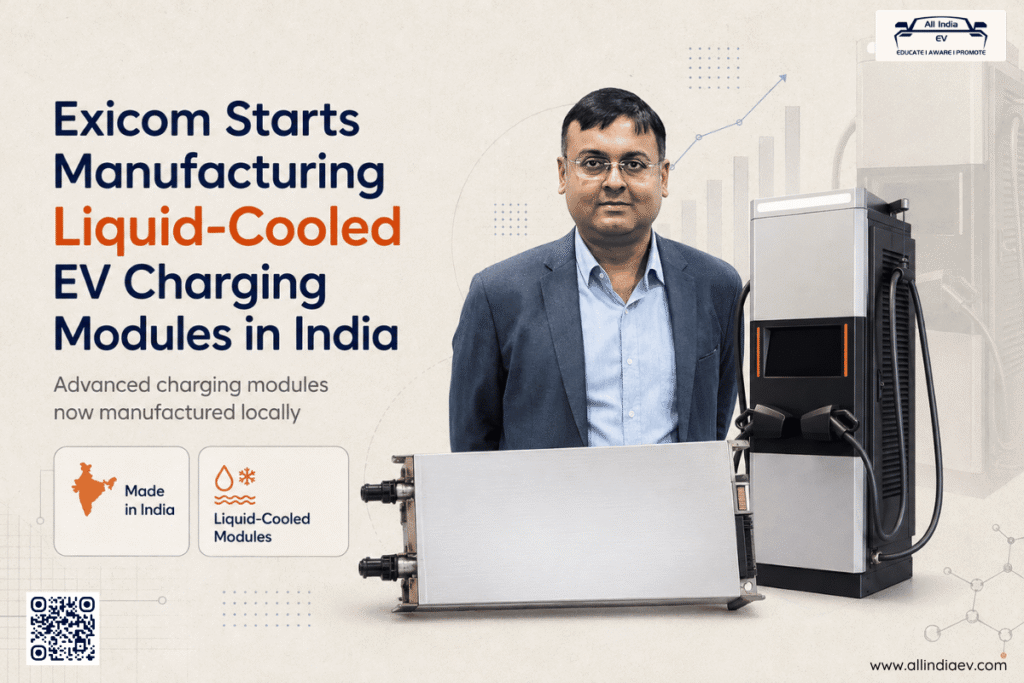

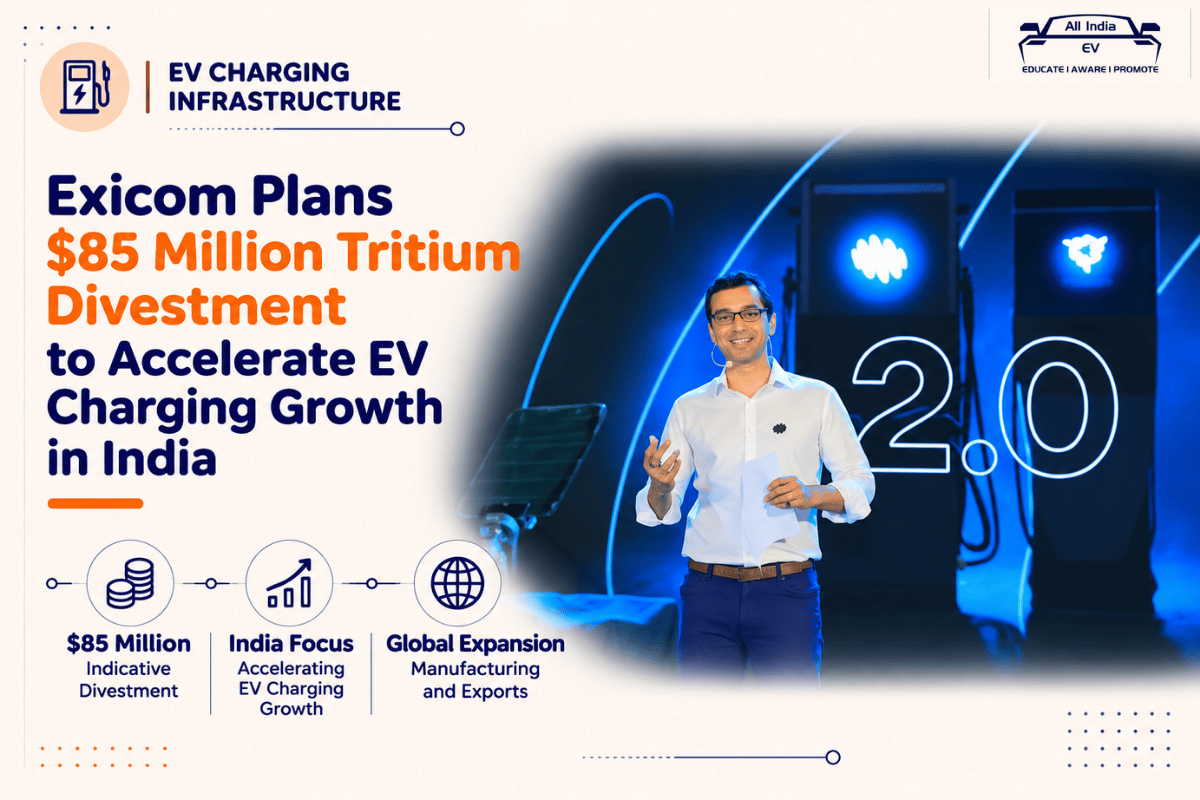
Exicom Tele-Systems, a leading Indian electric vehicle (EV) charging solutions provider, is planning to divest its global EV charging subsidiary Tritium at an indicative enterprise valuation of approximately $85 million. The proposed move is aimed at strengthening the company’s financial position and accelerating investments in India’s rapidly expanding EV charging infrastructure market.
Headquartered in Gurugram, Exicom plans to redirect the capital generated through the proposed divestment towards expanding its domestic EV charging operations, developing new products and strengthening its manufacturing capabilities. The development comes as the company’s EV charging business recorded quarterly revenue exceeding ₹100 crore for the first time.
According to Managing Director and CEO Anant Nahata, Exicom wants to prioritise markets where it already has an established presence and where customer demand is growing faster than its existing supply capabilities. The company believes India offers significant opportunities as electric vehicle adoption continues to increase across passenger vehicles, commercial fleets and public transportation.
Tritium Divestment to Strengthen Financial Position
Exicom acquired Australian EV charger manufacturer Tritium in 2024 to strengthen its international presence, particularly in the United States and European markets. The acquisition provided access to advanced DC fast-charging technologies, product capabilities and an established global customer base.
Under Exicom’s ownership, Tritium has progressed in commercialising its products and expanding its international operations. The business has also secured its highest order book since the acquisition and is moving towards operational breakeven.
However, managing a capital-intensive international business has encouraged Exicom to reassess its investment priorities. The company has entered into a non-binding term sheet with a prospective buyer at an indicative enterprise valuation of $85 million. The final transaction value will depend on due diligence, closing adjustments and the completion of definitive agreements.
The proposed divestment could help Exicom move from its current net debt position to a net cash position, providing additional financial resources for working capital, research and development, and business expansion.
Exicom Targets Stronger Export Growth
Alongside its domestic expansion strategy, Exicom is planning to increase the contribution of exports to its overall revenue.
The company currently expects exports to account for approximately 10% of total revenue in FY2027 and aims to increase this share to 30% over the following three years. Its EV charging division is targeting export revenue of more than ₹100 crore in the next financial year.
During the current financial year, Exicom has received orders from 10 international markets, including Southeast Asia, Central Asia, Europe and Australia. The company is also exploring opportunities in Africa and the Middle East through its critical power solutions business.
FY2028 is expected to be an important period for its international EV charging expansion as the company moves towards larger commercial partnerships and repeat orders.
Manufacturing Capacity and Market Expansion
Exicom commissioned its Hyderabad manufacturing facility in March 2026, strengthening its domestic production capabilities. The company currently does not anticipate significant additional manufacturing capital expenditure over the next couple of years.
During Q2 FY2027, capacity utilisation at the facility reached approximately 95% for AC chargers and 50% for DC chargers. Its critical power products recorded utilisation of nearly 80%.
Exicom supplies charging solutions to seven of India’s top 10 electric passenger vehicle manufacturers. The company estimates its market share at approximately 50% in OEM-supplied home chargers and 25% in DC chargers.
With an annual investment of around ₹50 crore in research and development and engineering, Exicom is also focusing on product innovation and technological improvements.
The company aims to double its overall business over the next three years by strengthening its Indian operations and expanding its international presence. The proposed Tritium divestment is expected to support this strategy by allowing Exicom to concentrate more resources on high-growth markets.
As India’s EV ecosystem continues to develop, Exicom’s renewed focus on domestic manufacturing, charging technology and exports could strengthen its position in the country’s evolving electric mobility infrastructure sector.