
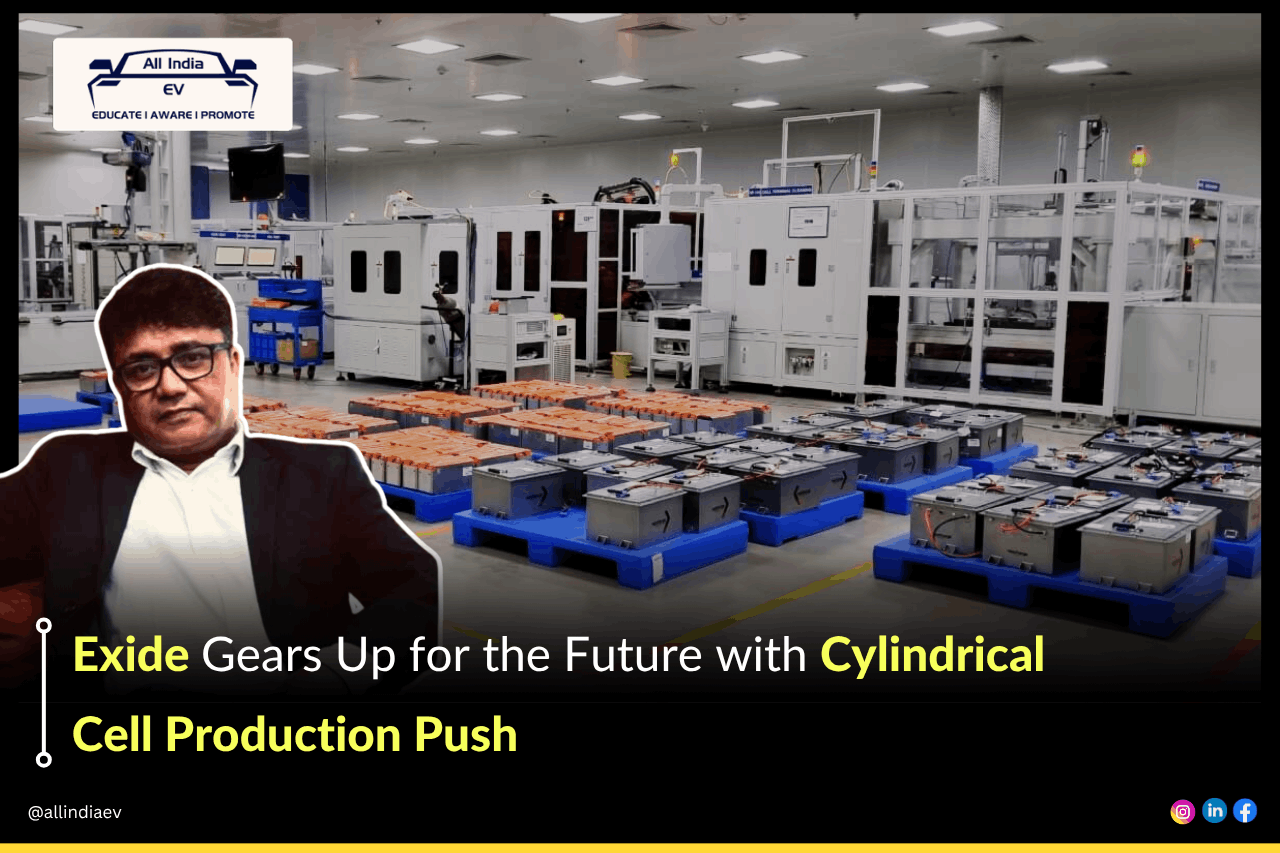

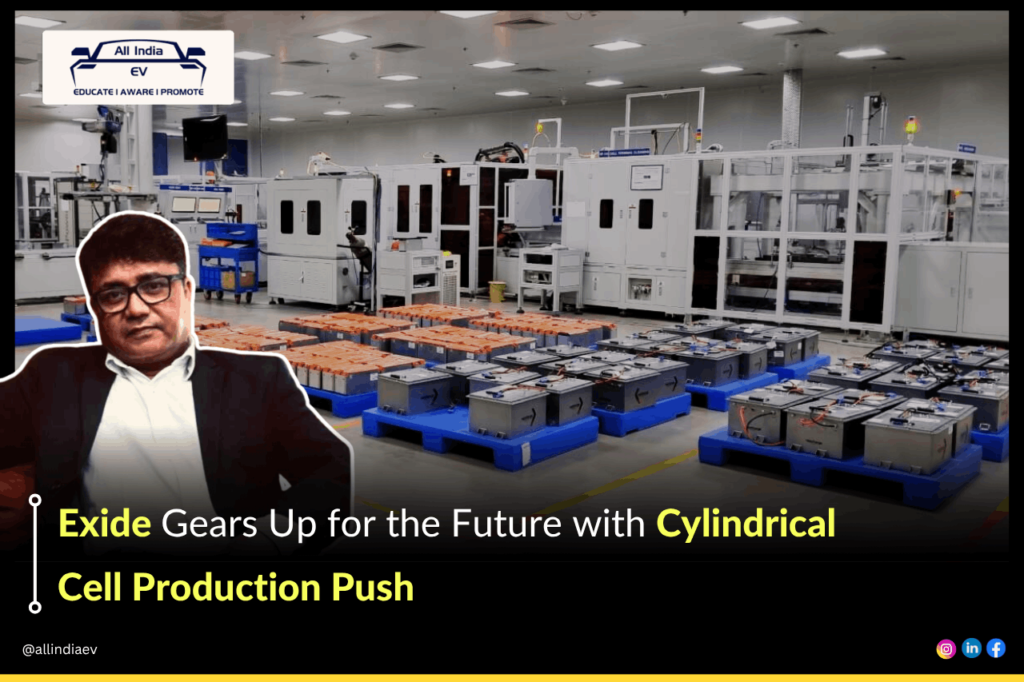
What: Exide Energy Solutions, the lithium-ion battery subsidiary of Exide Industries, is expected to begin customer sample deliveries from its cylindrical cell manufacturing lines by Q1 FY27, marking a key milestone in India’s domestic EV battery manufacturing push.
The Number: Exide is building a 12 GWh lithium-ion cell manufacturing facility in two phases of 6 GWh each, with total investments crossing ₹4,800 crore.
The Impact: The development strengthens India’s local battery cell ecosystem and could reduce dependence on imported lithium-ion cells for EVs and energy storage systems.

The Core News
India’s battery manufacturing landscape is entering a new phase as Exide Energy Solutions moves closer to operationalising domestic lithium-ion cell production. The company’s cylindrical cell production lines are expected to begin customer sample deliveries by the first quarter of FY27, while prismatic cell trials are expected to follow shortly after. This signals a transition from infrastructure buildout toward validation and commercial engagement with OEMs and energy sector customers.
The project is strategically important because battery cells remain one of the most import-dependent components in India’s EV supply chain. Exide’s upcoming facility is designed to manufacture advanced lithium-ion cells for electric vehicles and stationary energy storage applications. The company is also leveraging a technology partnership with China-based SVOLT Energy Technology to access cell manufacturing know-how and industrial-scale battery production capability.
Exide’s progress also reflects the broader race among Indian battery companies to localise advanced chemistry cell production. Domestic automakers are increasingly looking for local battery sourcing partners as EV production volumes rise across passenger vehicles, two-wheelers, commercial fleets, and energy storage systems. Hyundai and Kia had earlier signed agreements with Exide Energy Solutions to explore locally manufactured EV batteries for their India operations, particularly lithium iron phosphate (LFP) cells.
More EV News

Breaking Down the Update
• Exide Energy Solutions plans to begin cylindrical cell customer sample deliveries by Q1 FY27.
• The company’s prismatic lithium-ion cell line will start product trials after cylindrical cell validation.
• Exide Industries invested another ₹600 crore into the subsidiary during Q4 FY26.
• Total investment into Exide Energy Solutions has crossed ₹4,802 crore.
• The Bengaluru facility is being developed with a planned capacity of 12 GWh in two phases.
• Exide’s technology partnership with SVOLT focuses on lithium-ion cell manufacturing capability transfer.
• Hyundai and Kia have already shown interest in sourcing locally produced EV batteries from Exide.
• Rival battery manufacturer Amara Raja is also building a large-scale lithium-ion cell production facility in India.
How Exide cylindrical cell manufacturing will help Indian EV Market
The growth of Exide cylindrical cell manufacturing could become a major catalyst for India’s EV supply chain localisation efforts. Battery cells account for a significant share of EV costs, and India currently relies heavily on imports from China, South Korea, and other global suppliers. Domestic cell production can reduce supply chain vulnerabilities, improve pricing control, and strengthen energy security for India’s mobility sector.
Exide’s upcoming cylindrical cell lines are especially important because cylindrical formats are widely used across electric two-wheelers, power tools, energy storage systems, and select passenger EV platforms. Local manufacturing can support faster procurement cycles for Indian OEMs while reducing logistics and import costs.
The rise of Exide cylindrical cell manufacturing also aligns with India’s Production Linked Incentive (PLI) strategy for Advanced Chemistry Cells (ACC). As domestic EV demand scales, localised battery production could help automakers achieve higher localisation levels and improve long-term competitiveness.
In addition, local cell production can encourage downstream ecosystem development including battery pack assembly, recycling infrastructure, thermal management systems, and battery management software. The expansion of India’s cell manufacturing base may also attract more EV investments from global automakers and battery technology companies over the next few years.
Way Forward …
Exide’s transition from battery pack assembly toward full-scale lithium-ion cell production marks a significant strategic shift for India’s EV manufacturing ecosystem. If execution timelines remain on track, Exide cylindrical cell manufacturing could become one of the country’s most important domestic battery supply projects. The next critical phase will involve customer validation, production ramp-up, localisation depth, and long-term commercial agreements with automakers and energy storage companies
Read More: Catch up on All India EV’s related coverage on India’s evolving commercial EV subsidies and battery swapping policies at All India EV