

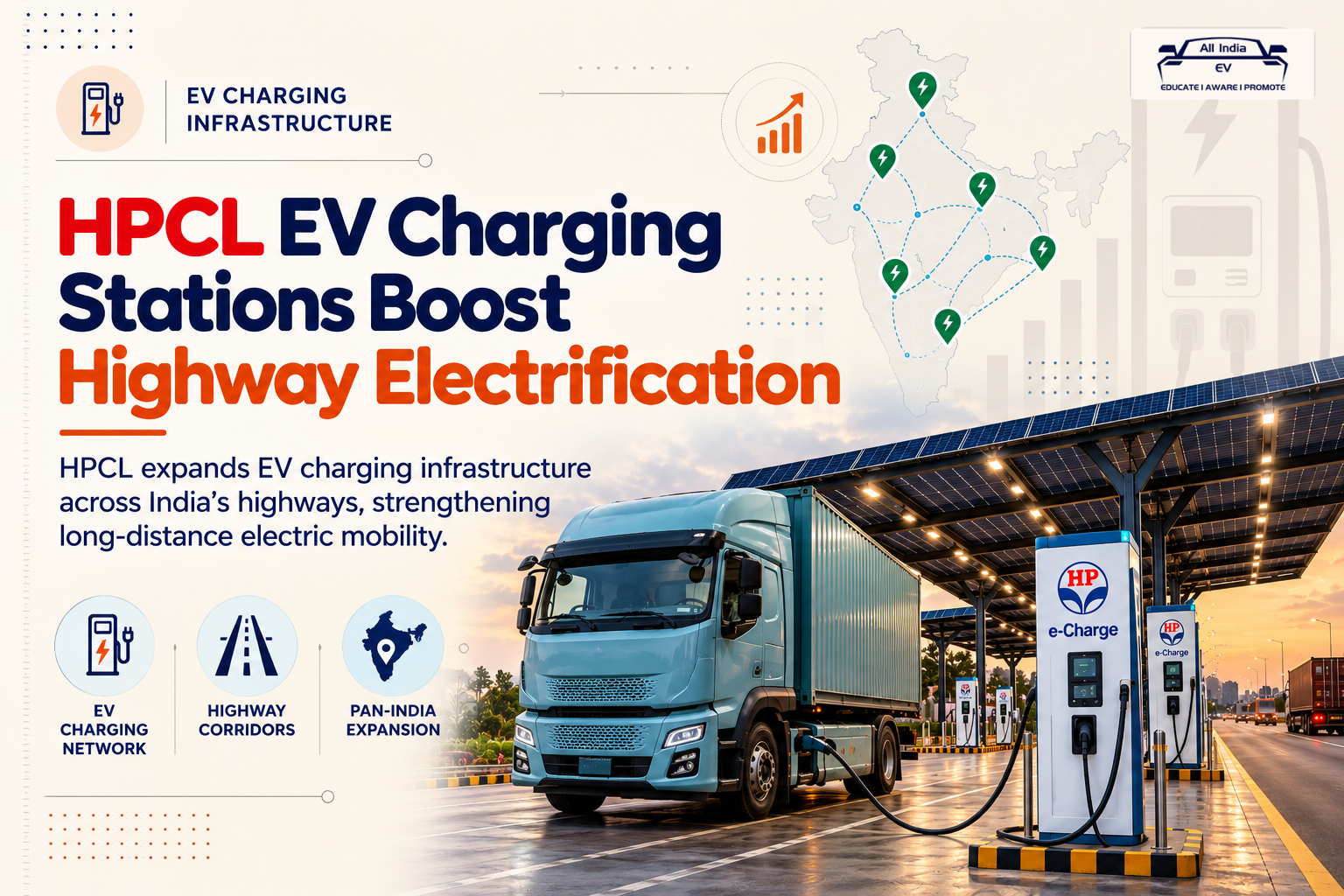
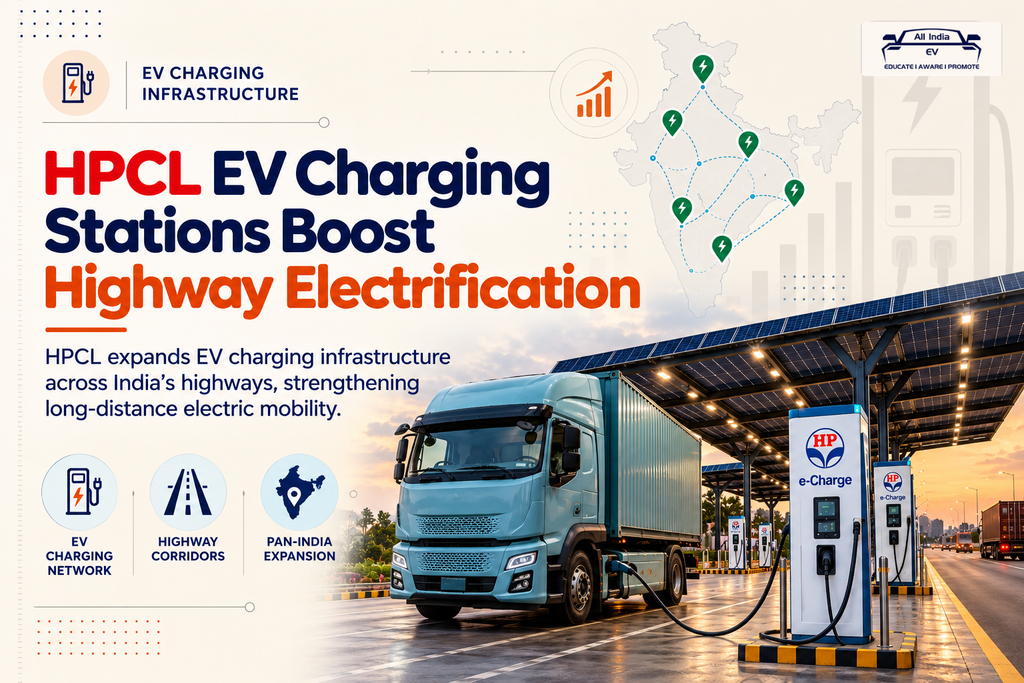
India’s transition to electric mobility is moving beyond cities, with highway charging infrastructure emerging as a critical requirement for the next phase of EV adoption. Hindustan Petroleum Corporation Limited (HPCL) is strengthening its focus on highway-based charging, using its extensive retail outlet network to make long-distance electric travel more practical.
HPCL already operates thousands of electric vehicle charging stations under its HP e-Charge network. Its large footprint across highways and major road corridors gives the company an important role in addressing one of the biggest challenges facing EV users: reliable access to charging outside urban centres.
The scale of the challenge is significant. Government data show that public-sector oil marketing companies, including HPCL, BPCL and IOCL, had installed 236 EV charging stations across four important corridors: Bengaluru–Chennai, Bengaluru–Hyderabad, Bengaluru–Mysuru and Bengaluru–Pune. Of these, 87 had been commissioned at the time of the government assessment.
HPCL’s strategy is increasingly focused on making existing fuel-station infrastructure useful for electric mobility. Highway retail outlets already have grid connections, parking space, safety systems and operating facilities, making them suitable locations for EV charging. This approach could allow charging infrastructure to expand faster without requiring entirely new sites.
The company is also becoming part of a broader ecosystem involving automobile manufacturers and charging operators. In March 2026, Charge_iN by Mahindra announced a collaboration with HPCL to develop EV charging stations at HPCL retail outlets across India. More recently, its first station under the partnership went live on the Mumbai–Pune Expressway.
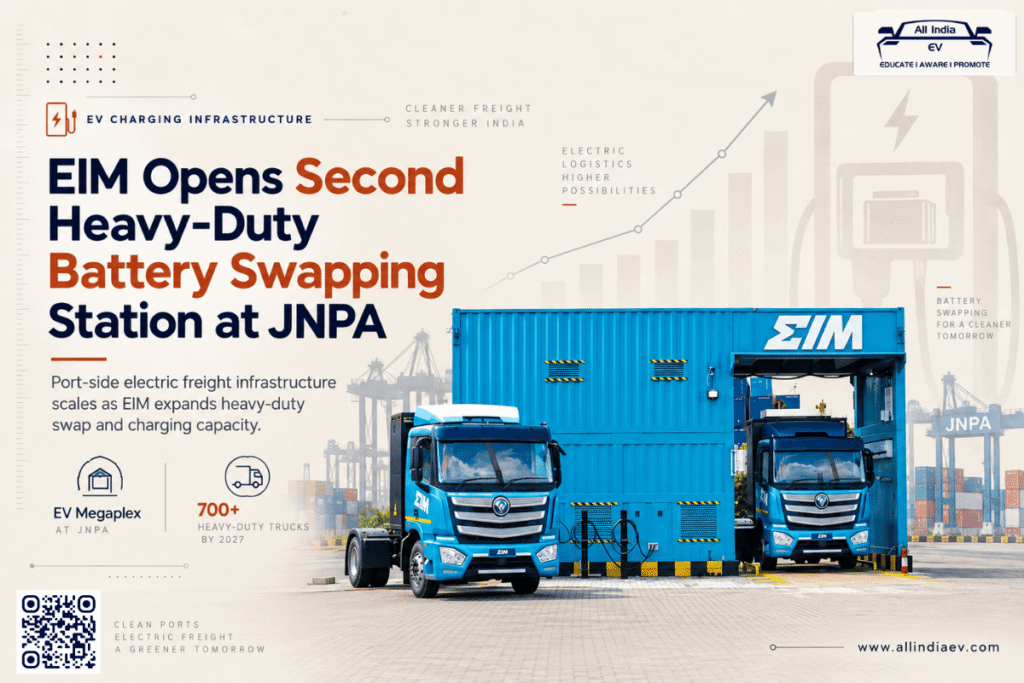
Highway electrification is particularly important for commercial vehicles. Electric trucks and other high-mileage vehicles require dependable charging or battery-swapping facilities to operate over longer distances. A recent partnership involving HPCL and EIM is targeting freight corridors such as Mumbai–Pune, Delhi–Jaipur and Chennai–Bengaluru, combining fast charging and battery swapping at selected HPCL outlets.
As EV sales continue to rise, highway charging will determine how confidently consumers and fleet operators can undertake intercity journeys. HPCL’s expanding role shows that India’s highway network is gradually preparing for an increasingly electric future.