
All India EVAll India EVAll India EV
Notification
Font ResizerAa
  • Home
  • EV News
  • EV Launch
  • Market Insights
  • Investments & Funding
  • Guest Articles
  • EV Engineering
  • Contact
Reading: Hubject’s India–Italy EV Alliance Tests the Limits of Global EV Roaming
Share
All India EVAll India EV
Font ResizerAa
  • Home
  • EV News
  • EV Launch
  • Market Insights
  • Guest Articles
  • EV Engineering
  • Contact
Search
  • Home
    • Home 1
    • Home 2
    • Home 3
    • Home 4
    • Home 5
  • Home
  • Categories
    • Electric
  • Categories
  • Shows
    • Rap
  • More Foxiz
    • Blog Index
    • Contact
  • Bookmarks
    • Customize Interests
    • My Bookmarks
  • More Foxiz
    • Blog Index
    • Sitemap
Have an existing account? Sign In
Follow US
Hubject’s India–Italy EV
Home » Blog » Hubject’s India–Italy EV Alliance Tests the Limits of Global EV Roaming
partnership

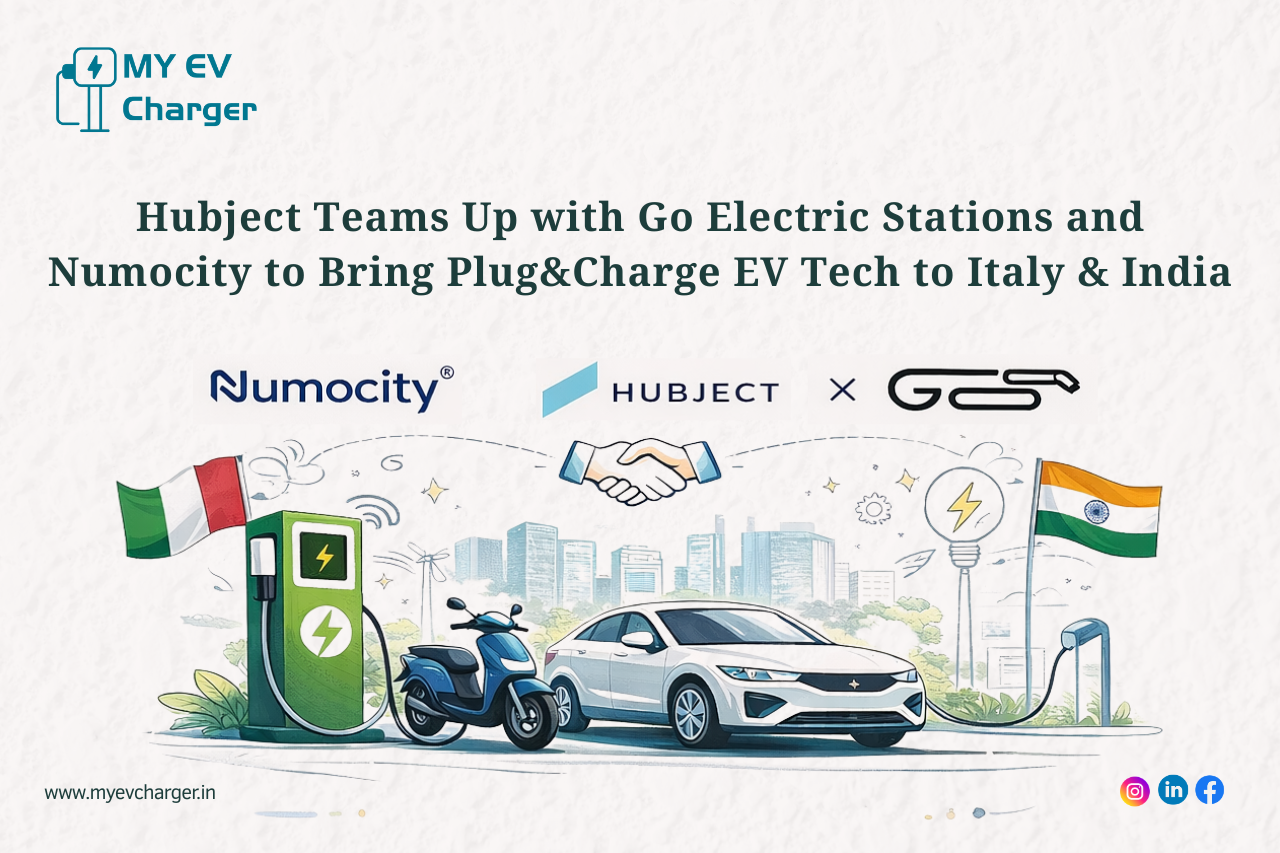
Hubject’s India–Italy EV Alliance Tests the Limits of Global EV Roaming

Sunita
By
Sunita
Last updated: 7 January 2026
Share
4 Min Read
SHARE

Interoperability at scale if India’s charging stack can absorb European roaming discipline

Contents
  • Deal Facts
  • What Each Partner Brings
  • The Operating Model
  • Integration & Execution Risks
  • Who Wins / Who Gets Squeezed
  • Next 90 Days: What to Track
  • Questions for the Ecosystem

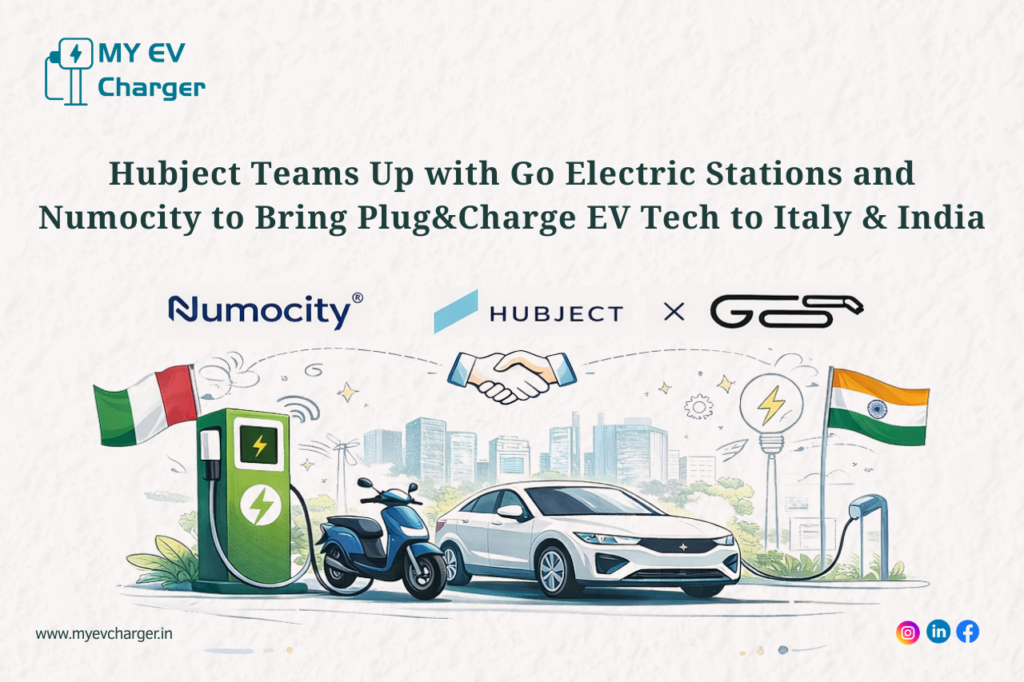
This partnership exists because EV roaming has moved from a “nice-to-have” to a prerequisite for cross-border fleet expansion and OEM credibility.
For Hubject, India is no longer an emerging market experiment it’s a stress test of whether global roaming standards can survive local fragmentation.


Deal Facts

  • Partners: Hubject and multiple Charging Service Providers (CSPs) from Italy and India
  • Scope: EV charging interoperability / roaming enablement
  • Geography: Italy ↔ India (bilateral interoperability corridor)
  • Technology Layer: Roaming and authentication (protocols implied, specifics Not disclosed)
  • Investment Size: Not disclosed (material because capex vs. pure platform integration determines execution risk)
  • Ownership / JV Structure: Not disclosed (unclear whether this is a JV, consortium, or commercial integration)
  • Timeline: Announced January 2026; rollout milestones Not disclosed
  • Commercial Model: Not disclosed (roaming fees, revenue share, or SaaS pricing not clarified)
  • End Users: OEM customers, fleet operators, and roaming EV drivers (explicit beneficiaries Not quantified)

What Each Partner Brings

Hubject

  • A proven global EV roaming backbone and interoperability logic already adopted across mature European markets
  • Institutional credibility with OEMs that require predictable, standards-based charging access across borders

Indian & Italian CSPs

  • Physical charging infrastructure and local regulatory alignment
  • On-ground billing, maintenance, uptime management, and customer service realities

The Operating Model

In theory, this partnership creates a roaming corridor where an EV driver or fleet registered on one network can authenticate, charge, and pay seamlessly on another without renegotiating contracts or switching apps. Hubject sits as the neutral clearing layer, translating identities, tariffs, and session data between CSPs operating in very different regulatory and operational contexts.

In India, however, the operating reality is harsher. Charger uptime variability, inconsistent firmware, fragmented payment flows, and uneven grid quality mean roaming success will depend less on protocol compatibility and more on operational discipline. If Hubject’s integration enforces minimum service-level expectations—rather than simply enabling technical access it could quietly reset benchmarks for Indian CPO performance.


Integration & Execution Risks

  • Uptime Mismatch: European roaming assumes >95% charger availability; many Indian sites do not yet operate at that level
  • Tariff Transparency: Dynamic pricing, taxes, and subsidies differ widely; misaligned tariffs can break user trust
  • Payment Reconciliation: Cross-border settlement complexity remains Not disclosed a critical risk for CSP cash flows
  • Firmware & Protocol Drift: Older Indian chargers may not fully support modern roaming standards
  • Regulatory Ambiguity: Cross-border data handling and payment compliance requirements are still evolving

Who Wins / Who Gets Squeezed

Who Wins

More EV News
Strategic Collaboration Powers India’s EV Future: Atul Greentech Partners with Amara Raja for Battery Tech and Chargers
AP Govt Signs MoU with ThunderPlus–ETO–Roqit Consortium to Build Statewide EV Mobility & Charging Network
Piaggio, RiseWise launch India’s first battery replacement finance plan for electric three-wheelers
JSW to Launch New EV Brand by 2027 with Chery’s Tech Support, No Equity Ties
Tata Power Collaborates with Salesforce to Accelerate India’s Clean Energy Transition
  • OEMs offering international or premium EV models that need credible roaming stories
  • Fleet operators running cross-region pilots who value predictability over lowest-cost charging

Who Gets Squeezed

  • Standalone Indian CPOs without interoperability readiness or uptime discipline
  • Aggregator apps whose value proposition is limited to discovery rather than execution

Next 90 Days: What to Track

  • [OEM] Whether OEMs publicly certify Hubject-enabled roaming for India-bound vehicles
  • [CPO] Actual charger uptime and fault-resolution metrics post-integration
  • [Supplier] Firmware upgrade cycles required to meet roaming standards
  • [Fleet] Pilot fleets testing Italy–India roaming use cases (announcements or silence)
  • [Investor] Any follow-on capital raise or commercial expansion tied to this corridor
  • [Policy] Signals on cross-border payment and data compliance clarity

Questions for the Ecosystem

  1. Is interoperability becoming a minimum entry requirement, not a competitive advantage, for Indian CPOs?
  2. Will global roaming expose Indian charging reliability or force it to improve faster?
  3. Can platform-layer discipline succeed where policy enforcement has struggled?

Join All India EV Community

Click here for more such EV Updates

Loading
Indofast & Motovolt Launch
Indofast & Motovolt Launch MVS7 E-Scooter with Battery Swapping to Accelerate India’s EV Adoption
Delhi, Norway explore collaboration on EV policy, adoption
Axis Bank Becomes Tesla’s Preferred EV Financing Partner in India
Ford–Xiaomi EV Talks Signal a Software-Led Reset, Not a Manufacturing Tie-Up
Kia India and BPCL: Scaling the K-Charge Ecosystem to 15,000 Nodes

Sign Up For Daily Newsletter

Be keep up! Get the latest breaking news delivered straight to your inbox.
Loading
By signing up, you agree to our Terms of Use and acknowledge the data practices in our Privacy Policy. You may unsubscribe at any time.
Share This Article
Facebook Whatsapp Whatsapp LinkedIn Copy Link Print
Leave a Comment

Leave a Reply Cancel reply

Your email address will not be published. Required fields are marked *

Follow US
XFollow
InstagramFollow
YoutubeSubscribe
LinkedInFollow
Haryana cabinet approves new rules: No petrol, diesel vehicles for cab aggregators in NCR
21 May 2026
Ultraviolette and Bolt.Earth Expand Type-6 DC Fast Charging Infrastructure Across India
Ultraviolet and Bolt. Earth Expand Type-6 DC Fast Charging Infrastructure Across India
21 May 2026
What: India’s finance ministry has directed public sector banks, insurers, and financial institutions to reduce operational spending and accelerate adoption of electric vehicles across official fleets. The move is part of a wider austerity push linked to rising global economic uncertainty and fuel-related risks. The Number: The directive impacts major public institutions including State Bank of India, Bank of Baroda, and Life Insurance Corporation of India, covering millions of employees and thousands of operational vehicles nationwide. The Impact: The policy signals a new phase of institutional fleet electrification in India, where EV adoption is now being tied directly to fiscal discipline, fuel import management, and public-sector operational efficiency. The Core News India’s finance ministry has formally instructed state-run financial institutions to implement strict expenditure controls while simultaneously accelerating EV adoption for official transport operations. The directive from the Department of Financial Services asks organisations to replace petrol and diesel vehicles used at head offices and branch operations with electric vehicles “as far as possible.” The order comes amid growing concern over the economic impact of prolonged geopolitical instability in West Asia, which threatens to increase crude oil prices, widen India’s import bill, and pressure the rupee. Alongside the EV transition mandate, the government has also pushed virtual meetings, reduced foreign travel, and tighter administrative spending controls across public-sector institutions. For India’s EV ecosystem, the directive is strategically important because it expands demand visibility beyond state transport undertakings and government departments into the financial sector itself. PSU banks and insurers operate one of the country’s largest distributed office networks, including regional offices, branch fleets, field operations, and administrative mobility services. Even a phased transition could create a sizeable procurement pipeline for electric passenger vehicles, charging infrastructure providers, and fleet management companies. Breaking Down the Update • The Department of Financial Services issued the austerity and EV adoption directive to PSU banks, insurers, and financial institutions. • The government wants petrol and diesel vehicles used in official operations to be progressively replaced by EVs wherever operationally feasible. • The policy push follows Prime Minister Narendra Modi’s appeal for fuel conservation and controlled discretionary spending amid global energy uncertainty. • The directive also mandates greater use of video conferencing to reduce travel-related operational expenditure. • The move could indirectly support domestic EV OEMs, leasing firms, and charging infrastructure operators through institutional procurement demand. • The banking and insurance sector may emerge as a new enterprise fleet electrification category in India’s EV transition roadmap. How PSU banks EV adoption will help Indian EV Market The expansion of PSU banks EV adoption could create a strong institutional demand layer for India’s electric mobility sector. Public sector banks and insurers operate thousands of branch offices across urban, semi-urban, and rural India. Their transition to EV fleets can generate predictable procurement volumes for domestic automakers, especially in the electric sedan, compact SUV, and commercial mobility segments. Beyond vehicle sales, the policy may also accelerate deployment of workplace charging infrastructure at bank headquarters, zonal offices, and regional branches. This can support charger utilisation economics while helping normalise EV infrastructure in tier-2 and tier-3 cities. Another important impact is signalling. When large state-linked financial institutions adopt EVs as operational assets rather than pilot projects, it improves confidence across the broader enterprise mobility market. Private banks, NBFCs, and insurance firms could eventually follow similar fleet transition models to reduce long-term fuel and maintenance costs. PSU banks EV adoption also aligns with India’s larger energy security strategy. Lower petroleum consumption in institutional fleets directly supports efforts to reduce crude import dependence while stabilising operational expenditure during periods of volatile global oil prices. Conclusion & Next Steps The government’s push toward PSU banks EV adoption reflects a broader shift where EV deployment is increasingly being linked with macroeconomic resilience rather than only sustainability targets. Execution, however, will depend on procurement timelines, charging infrastructure readiness, and operational suitability across
India directs state-run banks, insurance firms to cut costs, shift to EVs
21 May 2026
All India EV: Edition 49
What all happened in April 2026?
Click Here
All India EV

Daily EV Industry updates for you…

Categories

  • EV News
  • EV Launch
  • Investments & Funding
  • Market Insights
  • Guest Articles
  • EV Engineering

Quick Links

  • Community
  • Content Services
  • Branding Services
  • My EV Charger
  • Substack

© Developed and Managed by “The Energy Log”

Welcome Back!

Sign in to your account

Username or Email Address
Password

Lost your password?

Not a member? Sign Up