


India’s Battery Waste Management Rules 2022: CPCB’s Big Push for Sustainability Replacing Obsolete E-Waste Rules
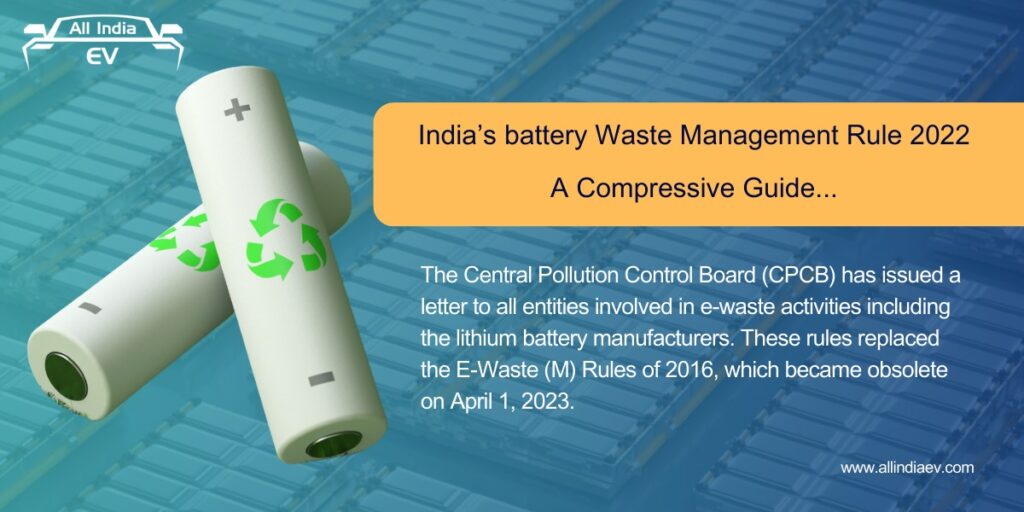
In a move to strengthen India’s commitment to sustainable energy, the Ministry of Environment, Forestry, and Climate Change notified the Battery Waste Management Rules, 2022 on August 24, 2022. These rules are being hailed as a transformative step toward environmentally responsible management of waste batteries, particularly crucial as India sees a sharp rise in electric vehicle (EV) adoption.
Replacing Two-Decade-Old Regulations
The Battery Waste Management Rules, 2022 replace the Batteries (Management and Handling) Rules, 2001. Unlike the older version, the new rules cover all types of batteries—including EV batteries, portable batteries, automotive batteries, and industrial batteries. Their core purpose is to promote a circular economy, reduce dependency on virgin raw materials, and open up new opportunities in collection, recycling, and refurbishment industries.
Extended Producer Responsibility (EPR): The Core Principle
One of the most significant provisions is Extended Producer Responsibility (EPR). Under this framework, producers and importers are directly responsible for collecting used batteries and ensuring their recycling or refurbishment. By making manufacturers accountable, the rules ensure that the entire lifecycle of a battery is managed sustainably, reducing environmental risks associated with hazardous waste.
Key Features of the Rules
- Collection and Recycling/Refurbishment
All waste batteries must be collected and processed through recycling or refurbishment. The rules strictly prohibit disposal in landfills and incineration, aligning India with global best practices. - Material Recovery Targets
The policy mandates minimum material recovery percentages from waste batteries. This is expected to encourage the use of recycled materials in new batteries, conserving natural resources and lowering production costs. - Online Registration and Reporting
Producers must register on a centralised online portal and submit annual returns that detail the number of batteries produced, imported, sold, collected, recycled, and refurbished. This digital-first approach enhances transparency and accountability. - Monitoring and Compliance Mechanism
A dedicated committee will oversee implementation of the rules and address challenges faced by industry players. In cases of non-compliance with EPR obligations, companies will face environmental compensation penalties.
Environmental and Economic Impact
The government expects the new rules to drive innovation in recycling technologies, attract fresh investments in the battery waste sector, and create new green jobs. For a country like India—where the EV ecosystem is expanding rapidly—the regulations will not only reduce environmental risks but also strengthen supply chains by making raw materials available through recycling.
Responsibilities Across the Chain
The rules apply to producers, dealers, consumers, recyclers, and refurbishers. Each stakeholder is expected to comply with protocols for collection, segregation, safe transport, and recycling.
Non-compliance could invite heavy penalties, underscoring the government’s seriousness about strict enforcement.
More EV News

Conclusion: A Step Toward Green Mobility
The Battery Waste Management Rules, 2022 mark a pivotal milestone in India’s clean energy journey. By shifting focus to circularity and accountability, the framework ensures that battery usage in India—especially in EVs—remains sustainable across its entire value chain.With these regulations, India is not only addressing the challenge of waste management but also building an ecosystem of green opportunities for businesses, workers, and the environment alike.