
All India EVAll India EVAll India EV
Notification
Font ResizerAa
  • Home
  • EV News
  • EV Launch
  • Market Insights
  • Investments & Funding
  • Guest Articles
  • EV Engineering
  • Contact
Reading: India’s Electric Vehicle Revolution: A Promising Future, But Challenges Remain
Share
All India EVAll India EV
Font ResizerAa
  • Home
  • EV News
  • EV Launch
  • Market Insights
  • Guest Articles
  • EV Engineering
  • Contact
Search
  • Home
    • Home 1
    • Home 2
    • Home 3
    • Home 4
    • Home 5
  • Home
  • Categories
    • Electric
  • Categories
  • Shows
    • Rap
  • More Foxiz
    • Blog Index
    • Contact
  • Bookmarks
    • Customize Interests
    • My Bookmarks
  • More Foxiz
    • Blog Index
    • Sitemap
Have an existing account? Sign In
Follow US
India's Electric Vehicle Revolution: A Promising Future, But Challenges Remain
Home » Blog » India’s Electric Vehicle Revolution: A Promising Future, But Challenges Remain
EV News

India’s Electric Vehicle Revolution: A Promising Future, But Challenges Remain

Ankit Sharma
By
Ankit Sharma
ByAnkit Sharma
Follow:
Last updated: 14 December 2024
Share
3 Min Read
SHARE
India's Electric Vehicle Revolution: A Promising Future, But Challenges Remain

India’s Electric Vehicle Revolution: A Promising Future, But Challenges Remain

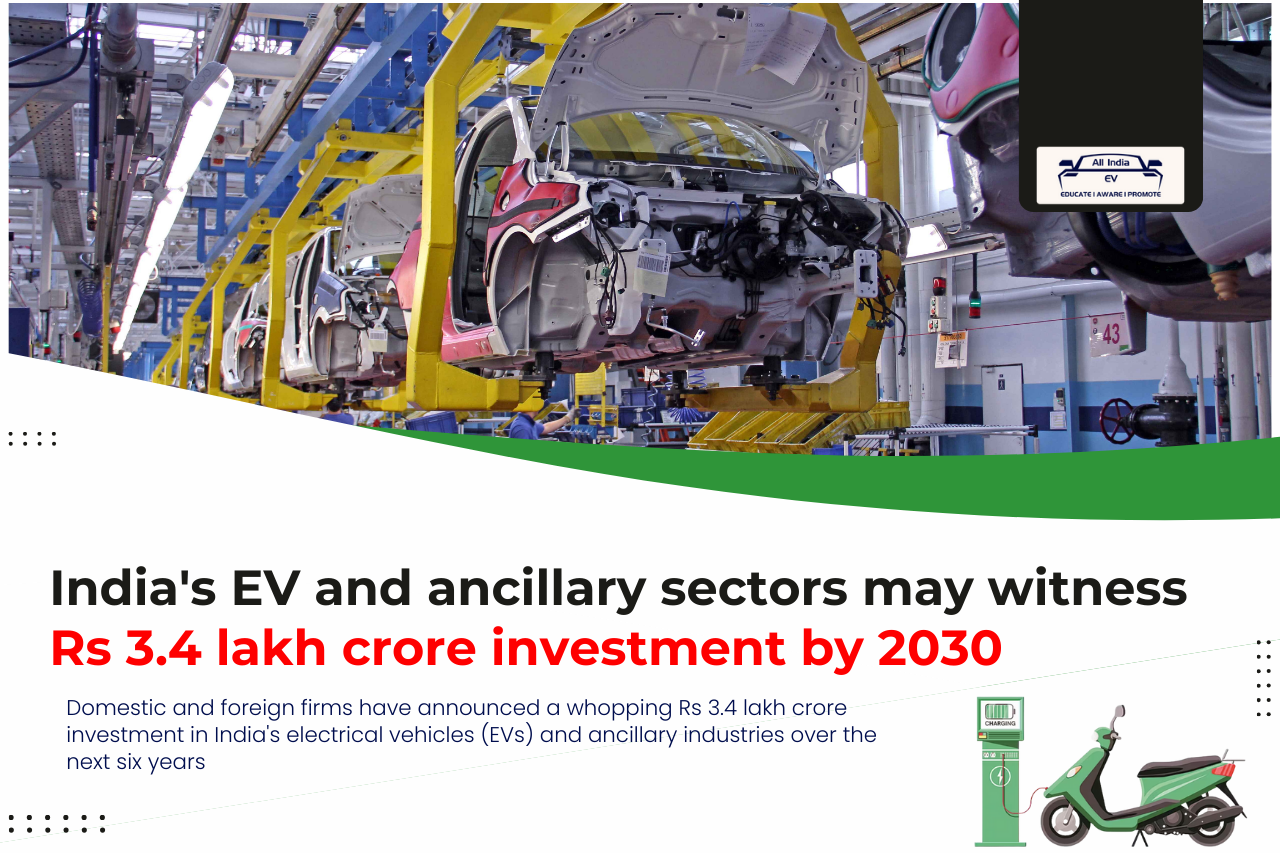
New Delhi: India’s electric vehicle (EV) sector is poised for significant growth, with major players planning to invest billions of dollars in the coming years. However, several challenges, including infrastructure development and cost parity with traditional vehicles, need to be addressed to fully realize the country’s EV ambitions.

Contents
  • India’s Electric Vehicle Revolution: A Promising Future, But Challenges Remain
  • A Wave of Investments
  • Key Challenges and Opportunities
  • A Bright Future

A Wave of Investments

A recent report by Colliers India revealed that various companies in the EV landscape have committed to investing around USD 40 billion (approximately Rs 3.4 lakh crore) in a phased manner by 2030. A substantial portion of this investment, USD 27 billion, is earmarked for lithium-ion battery manufacturing, while the remaining USD 9 billion is allocated to original equipment (OE) and EV manufacturing.

These investments signal a strong commitment to the future of electric mobility in India. However, the country’s current EV adoption rate is still relatively low, with a total EV stock of just over 5 million vehicles. To achieve the ambitious target of 80 million EVs on roads by 2030, a significant acceleration in EV sales is necessary.

Key Challenges and Opportunities

Charging Infrastructure: A robust and accessible charging infrastructure is crucial for widespread EV adoption. While the government has taken steps to promote the installation of charging stations, further expansion is needed, especially in rural and remote areas.

Cost Parity: Currently, EVs are generally more expensive than their traditional counterparts. To bridge this price gap, manufacturers need to reduce production costs and explore innovative financing options.

Domestic Battery Manufacturing: India’s reliance on imported lithium-ion batteries is a major concern. The government’s efforts to promote domestic battery manufacturing are essential to reduce costs and ensure a stable supply chain.

Consumer Awareness and Incentives: Raising awareness about the benefits of EVs and providing attractive incentives can encourage consumers to make the switch.

More EV News
Exploring BYD’s 1000kW Charger: A Leap Toward EV Convenience
Mahindra XEV 9e and BE 6e: Key Details Revealed
Hala Mobility Secures INR 51 Cr Funding to Expand EV Fleet and City Presence
Simple Energy: The Comedy of Errors
Curvv EV to ZS EV: India’s 5 Best EV for Ultimate Mileage under ₹25 lakh

A Bright Future

Despite the challenges, the future of electric mobility in India appears promising. With increasing investments, technological advancements, and supportive government policies, the country can accelerate its transition to a cleaner and more sustainable transportation system. Key factors that can drive faster EV adoption include:

  • Focused government policies: Continued support through subsidies, tax incentives, and favorable regulations.
  • Technological advancements: Innovations in battery technology, charging infrastructure, and vehicle design.
  • Improved consumer awareness: Effective campaigns to educate consumers about the benefits of EVs.
  • Enhanced charging infrastructure: A widespread and reliable network of charging stations.
  • Reduced price differentials: Lowering the cost gap between EVs and traditional vehicles.

By addressing these factors and leveraging the potential of its growing EV ecosystem, India can position itself as a global leader in electric mobility.

Join All India EV Community

Click here for more such EV Updates

Technical Analysis: Hub Motors vs. Mid-Drive Motors in Electric Vehicles
BATX Energies: Leading the Charge in Climate Consciousness
Pure EV Gears Up for INR 3,000 Cr IPO, Aiming for Second Listing
India’s KABIL Begins Lithium Exploration in Argentina to Strengthen EV Supply Chain
Erisha E Mobility Inks Deal INR 6,900 Crore for Green Hydrogen and Mega EV Park in Gujarat
TAGGED:EVEV India

Sign Up For Daily Newsletter

Be keep up! Get the latest breaking news delivered straight to your inbox.
Loading
By signing up, you agree to our Terms of Use and acknowledge the data practices in our Privacy Policy. You may unsubscribe at any time.
Share This Article
Facebook Whatsapp Whatsapp LinkedIn Copy Link Print
Leave a Comment

Leave a Reply Cancel reply

Your email address will not be published. Required fields are marked *

Follow US
XFollow
InstagramFollow
YoutubeSubscribe
LinkedInFollow
What Happened: JBM Auto’s arm has secured ₹750 crore in funding from Motilal Oswal to support the expansion of its electric bus rollout. The capital is expected to strengthen fleet deployment and execution capacity as India’s e-bus market scales up. The Key Number: ₹750 crore. Why It Matters: This is a strong financing signal for India’s electric bus ecosystem, where large upfront costs often slow deployment. Fresh funding can accelerate production, procurement, and route expansion for clean public transport.
JBM Auto arm gets ₹750 crore funding from Motilal Oswal to expand e-bus rollout
25 June 2026
Tata Motors secures 3,400 ECV orders signals scale-up of electric commercial mobility in India
25 June 2026
Himadri raises IBC stake
25 June 2026
All India EV: Edition 50
What all happened in May 2026?
Click Here
All India EV

Daily EV Industry updates for you…

Categories

  • EV News
  • EV Launch
  • Investments & Funding
  • Market Insights
  • Guest Articles
  • EV Engineering

Quick Links

  • Community
  • Content Services
  • Branding Services
  • My EV Charger
  • Substack

© Developed and Managed by “The Energy Log”

Welcome Back!

Sign in to your account

Username or Email Address
Password

Lost your password?

Not a member? Sign Up