
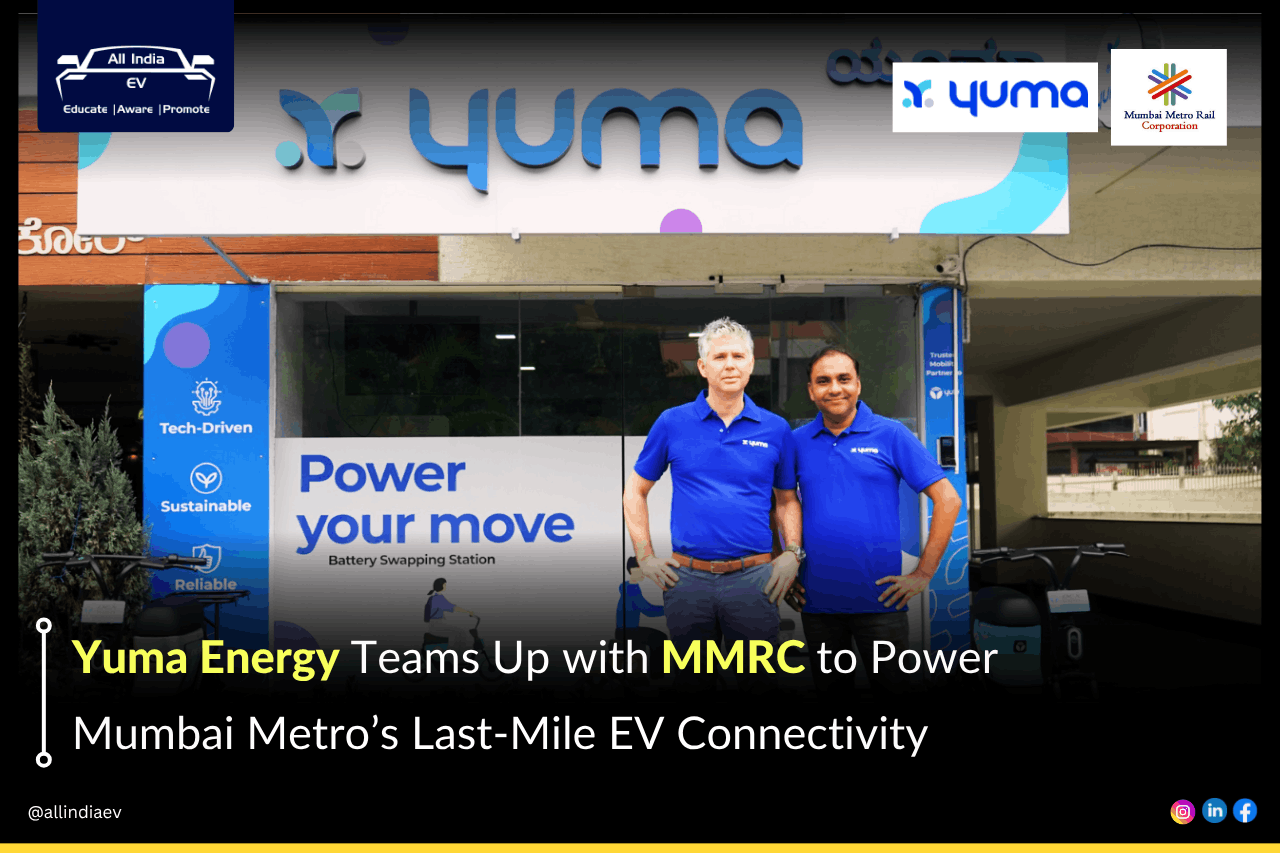

What: Yuma Energy partners with MMRC for battery swapping stations on Mumbai Metro Line 3 to deploy battery-swapping infrastructure across metro locations in Mumbai, targeting electric two-wheeler users and urban mobility operators.
The Number: Yuma Energy currently operates one of India’s larger battery-swapping ecosystems with stations across Bengaluru, Mumbai, and Delhi-NCR, supporting millions of battery swaps and large-scale urban EV operations.
The Impact: The partnership strengthens the integration of public transport and last-mile electric mobility, while expanding battery-swapping accessibility in one of India’s most congested urban transport corridors.

The Core News
Yuma Energy partners with MMRC for battery swapping stations on Mumbai Metro Line 3 as India’s battery-swapping sector pushes toward high-density urban deployment models. The collaboration with Mumbai Metro Rail Corporation (MMRC) aims to establish battery-swapping infrastructure along the Metro Line 3 corridor, improving energy access for electric two-wheelers operating in the city’s daily commuting ecosystem.
The move reflects a broader industry shift toward integrating EV energy infrastructure directly into mass transit systems. Metro stations are increasingly being viewed as strategic locations for charging and swapping services because of predictable commuter traffic, high vehicle turnover, and existing urban connectivity. For battery-swapping operators, metro-linked deployments can significantly improve station utilisation and reduce idle infrastructure costs.
Yuma Energy, backed by Magna and Yulu, has been expanding its Battery-as-a-Service (BaaS) network across major Indian cities with a focus on commercial mobility, delivery fleets, and shared electric transportation. The MMRC partnership could help accelerate adoption among gig workers and daily commuters who require faster turnaround times compared to traditional charging models. The development also supports Mumbai’s broader clean mobility and urban decarbonisation objectives.
More EV News
Breaking Down the Update
• Yuma Energy will deploy battery-swapping stations across Mumbai Metro Line 3 locations
• The partnership has been signed with Mumbai Metro Rail Corporation (MMRC)
• The infrastructure is expected to support electric two-wheelers and urban mobility users
• Metro-based deployment can improve swap station accessibility and utilisation
• Battery swapping reduces vehicle downtime compared to conventional charging
• The project aligns with Mumbai’s larger sustainable urban mobility strategy
• Yuma Energy continues expanding its Battery-as-a-Service network across Indian cities
• Public transport-linked EV infrastructure is emerging as a major urban deployment trend
How Yuma Energy partners with MMRC for battery swapping stations on Mumbai Metro Line 3 will help Indian EV Market
The development where Yuma Energy partners with MMRC for battery swapping stations on Mumbai Metro Line 3 could become an important model for future EV infrastructure planning in India’s metro cities.
One of the key challenges in electric two-wheeler adoption remains charging convenience in dense urban regions. Many users, especially apartment residents and gig economy riders, lack reliable access to dedicated charging facilities. Battery swapping addresses this problem by enabling rapid energy replacement without long charging wait times.
Deploying swapping stations inside or around metro infrastructure creates a multi-modal clean mobility ecosystem. Commuters can combine public transport with electric two-wheelers for first-mile and last-mile connectivity, reducing dependence on petrol-based transport.
The partnership may also improve commercial EV economics. Delivery riders and fleet operators depend heavily on vehicle uptime, and swapping infrastructure can significantly reduce operational interruptions. Higher utilisation rates improve productivity while lowering turnaround delays.
From a policy perspective, integrating EV infrastructure into public transport assets can help cities optimise urban space usage while accelerating clean transportation goals. If successful, similar deployment models may expand to metro networks in Delhi, Bengaluru, Hyderabad, Pune, and Chennai over the coming years.
Way Forward …
As Yuma Energy partners with MMRC for battery swapping stations on Mumbai Metro Line 3, the focus will now shift toward execution speed, interoperability, user adoption, and station scalability. The long-term success of battery swapping in India will depend on standardisation, network density, and the ability to support high-frequency urban mobility use cases at commercial scale
Read More: Catch up on All India EV’s related coverage on India’s evolving commercial EV subsidies and battery swapping policies at All India EV