
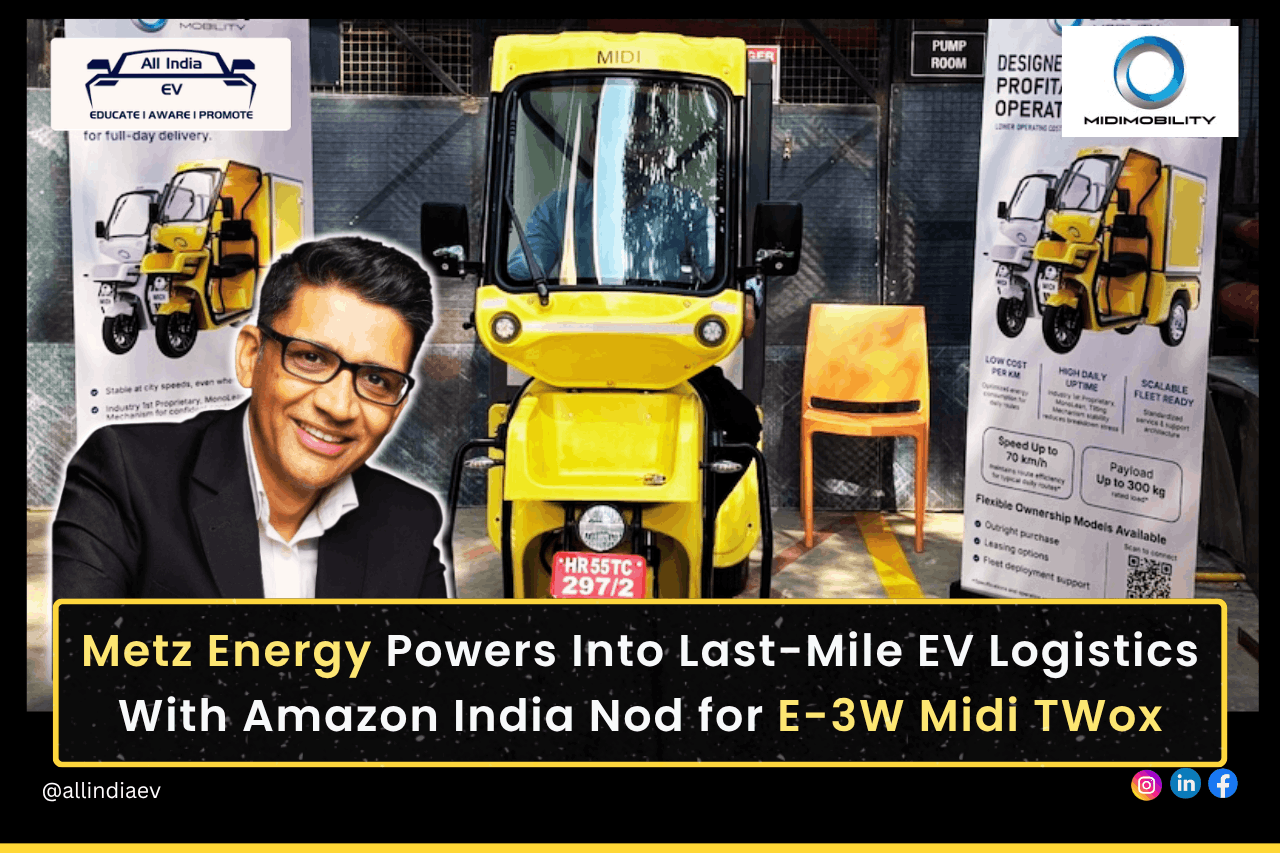

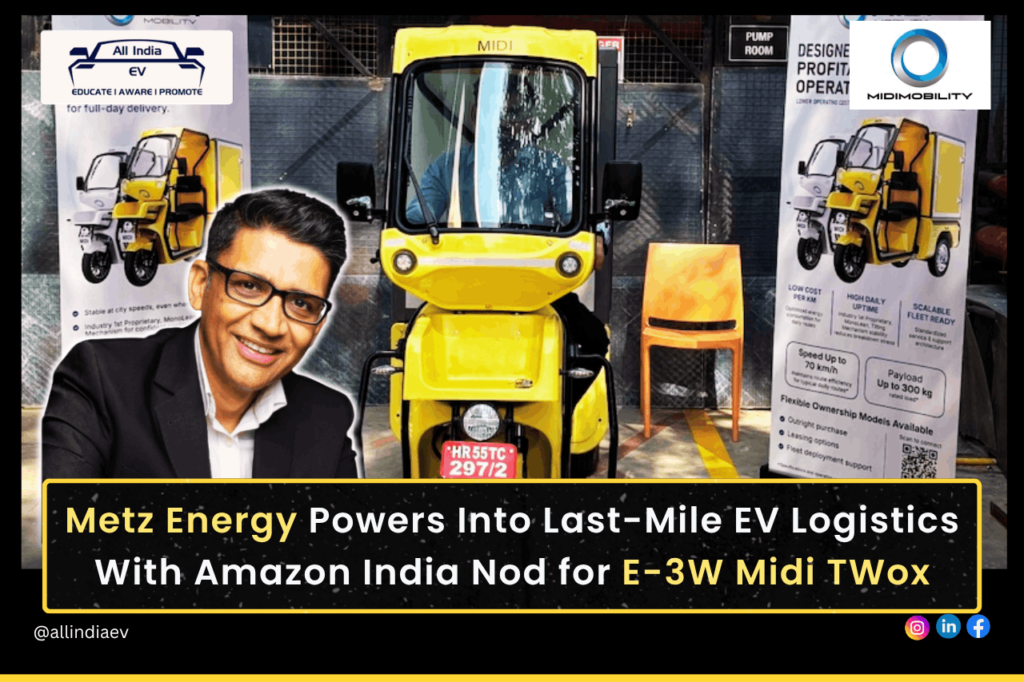
What: MidiMobility is positioning its purpose-built electric cargo platform “TwoX” as a high-speed alternative to conventional e-rickshaw-based delivery vehicles for India’s quick commerce and urban logistics sector. The company highlighted the platform’s focus on productivity, reliability, and long-term fleet economics.
The Number: 70 km/h claimed top speed, 29 patents under development, and a dedicated focus on compact urban cargo mobility.
The Impact: The development reflects a broader shift in India’s EV cargo segment where startups are moving away from passenger-auto derivatives and toward purpose-engineered commercial EV platforms optimized for quick commerce operations.

The Core News
India’s last-mile logistics sector is entering a new phase where vehicle architecture is becoming as important as electrification itself. Gurugram-based MidiMobility is now pushing that narrative through its cargo-focused electric platform “TwoX,” aimed at urban delivery fleets operating in increasingly congested city environments.
In a recent company update, the startup argued that many existing electric cargo vehicles in India are still based on modified passenger e-rickshaw platforms, leading to operational inefficiencies over long-term fleet cycles. According to the company, this affects durability, replenishment cycles, and uptime after 18 to 36 months of commercial use. MidiMobility claims its platform has been engineered specifically for cargo movement rather than adapted from passenger mobility designs.
The company’s positioning comes at a time when India’s quick commerce ecosystem is aggressively scaling dark-store deliveries and hyperlocal logistics. Fleet operators are now prioritizing payload optimization, faster turnaround times, driver comfort, and predictable maintenance costs alongside battery efficiency. MidiMobility says its “TwoX” platform combines higher-speed operation with compact urban maneuverability and larger cargo utility, targeting delivery-intensive operations in dense cities.
More EV News

Breaking Down the Update
• MidiMobility is targeting India’s growing quick commerce and urban logistics EV segment.
• The company claims conventional cargo EVs suffer from long-term reliability issues due to passenger-vehicle-based designs.
• “TwoX” is positioned as a purpose-built cargo EV platform rather than a modified e-rickshaw derivative.
• The startup highlights a claimed top speed of 70 km/h for urban logistics operations.
• The company says it has filed or developed 29 patents linked to vehicle engineering and mobility systems.
• Focus areas include compact city navigation, delivery productivity, fleet uptime, and operational efficiency.
How purpose-built EV cargo platform will help Indian EV Market
India’s rapid quick commerce expansion is creating a new demand category inside the EV industry — vehicles designed specifically for cargo movement rather than passenger transportation. A purpose-built EV cargo platform can help solve several structural issues currently affecting last-mile delivery fleets.
First, purpose-engineered cargo EVs improve operational efficiency by optimizing payload balance, vehicle durability, and urban maneuverability. This directly impacts delivery turnaround time, especially in congested metro environments where compact mobility is critical.
Second, fleet operators are increasingly focused on lifecycle economics rather than just upfront acquisition cost. Platforms designed exclusively for cargo operations can reduce maintenance frequency, downtime, and component stress compared to retrofitted passenger vehicles. That improves fleet utilization rates and overall profitability.
Third, the rise of dark-store-led commerce requires vehicles capable of handling continuous daily cycles with predictable performance. A dedicated cargo EV architecture also allows better battery placement, improved load distribution, and scalable telematics integration.
Finally, India’s commercial EV market still lacks strong product differentiation in the three-wheeler cargo segment. A successful purpose-built EV cargo platform could accelerate technology innovation, improve safety standards, and push the market toward more specialized commercial electric mobility solutions.
Way Forward ..
The emergence of the purpose-built EV cargo platform category signals a deeper transition inside India’s commercial EV ecosystem. Instead of simply electrifying existing vehicle formats, startups are beginning to redesign vehicles around logistics-specific operational needs. The next phase will depend on fleet adoption, vehicle durability under commercial stress, charging ecosystem compatibility, and the ability to scale manufacturing without compromising cost economics.
Read More: Catch up on All India EV’s related coverage on India’s evolving commercial EV subsidies and battery swapping policies at All India EV