

The Quick Update
What Happened
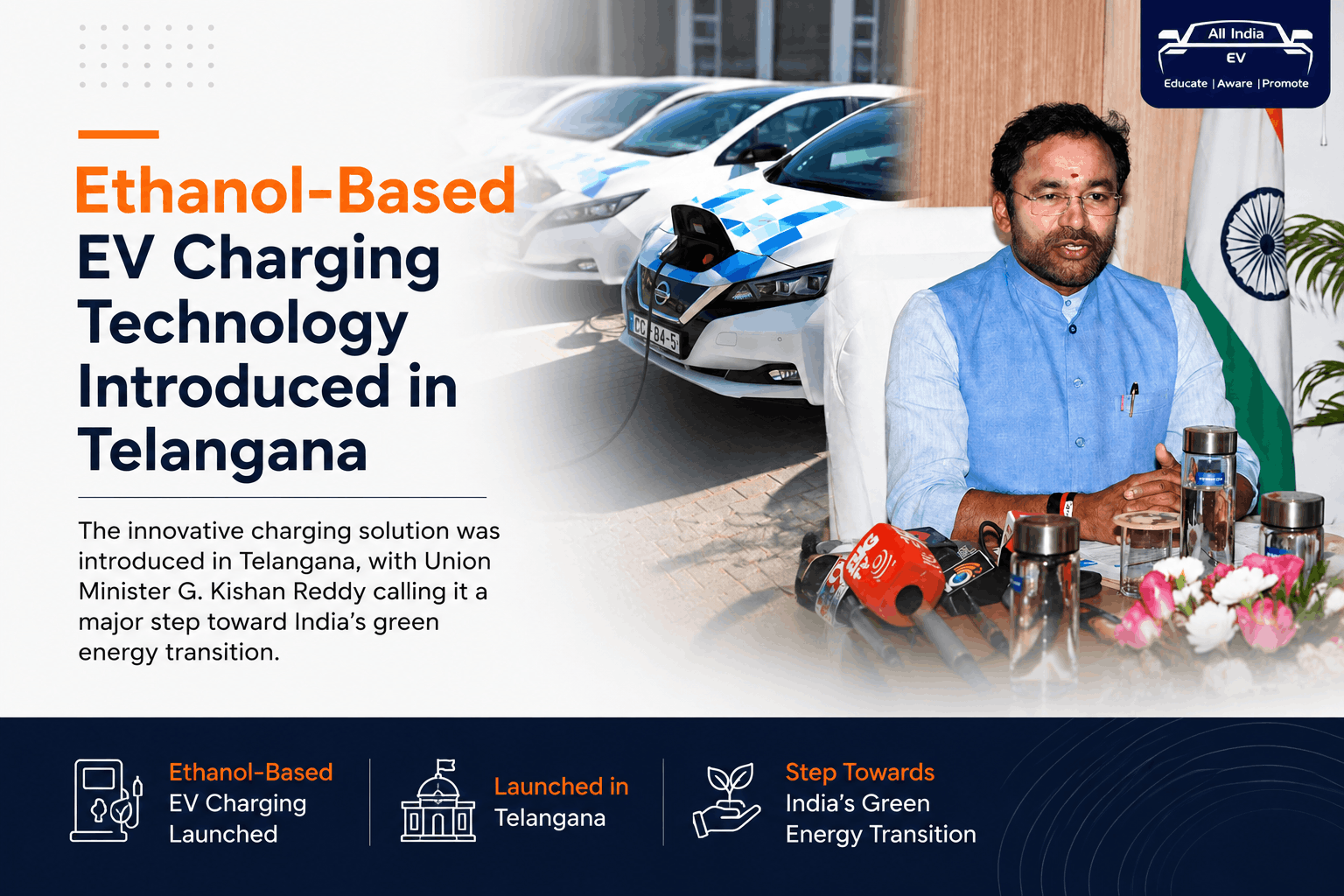
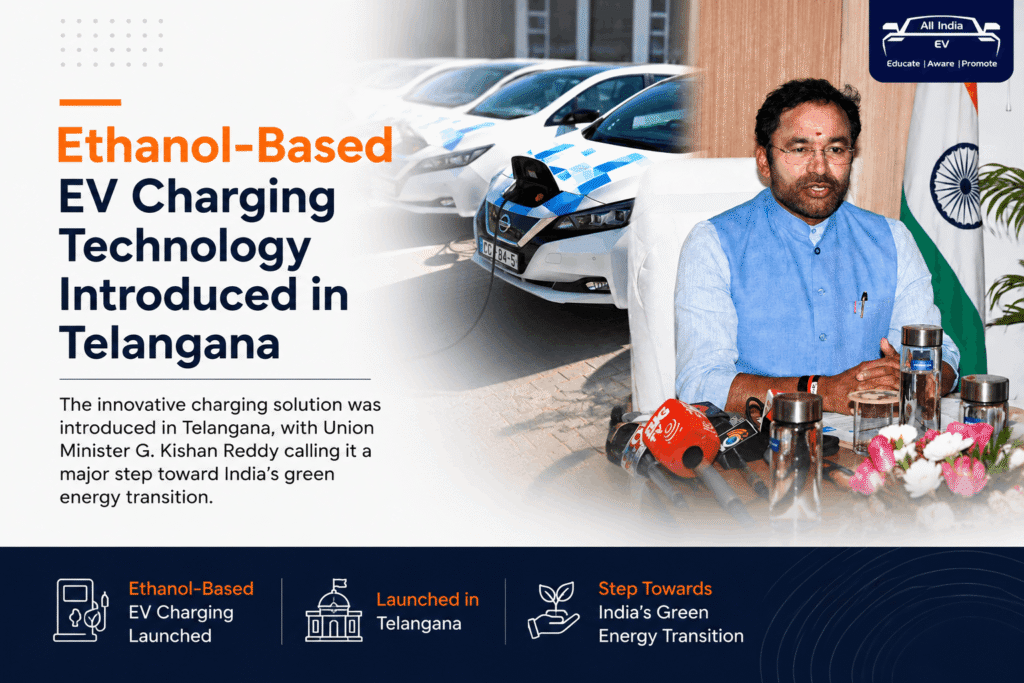
Telangana has witnessed the introduction of an ethanol-based mobile EV charging technology, unveiled by KETO Motors during the launch of its Urbanova KE9 electric bus in Hyderabad. Union Minister for Coal and Mines G. Kishan Reddy described the innovation as a significant step towards green mobility and sustainable energy.
The Key Number
One of the world’s first ethanol-powered mobile EV charging solutions, designed to provide off-grid charging wherever temporary charging infrastructure is required.
Why It Matters
The technology introduces an alternative approach to EV charging by generating electricity from ethanol instead of relying solely on the power grid. It has the potential to support rural mobility, emergency charging, and temporary charging deployments while promoting cleaner energy and creating additional demand for domestically produced ethanol.
The Core News
Ethanol-based EV charging technology has been introduced in Telangana by KETO Motors alongside the launch of its first 9-metre commercial electric bus. Speaking at the inauguration in Hyderabad, Union Minister G. Kishan Reddy said the company has developed a mobile charging system that enables electric vehicles to be charged using ethanol rather than conventional grid electricity. According to the minister, the portable charging solution can be deployed wherever temporary EV charging infrastructure is needed.
India has been actively expanding both its electric mobility ecosystem and ethanol-blending programme to reduce dependence on imported fossil fuels. While conventional EV charging depends on access to grid infrastructure, mobile charging technologies offer greater operational flexibility for remote locations, construction sites, events, fleet operations, and emergency situations. Integrating ethanol into such systems also aligns with the government’s objective of promoting alternative fuels alongside vehicle electrification.
The development represents an emerging approach to addressing charging accessibility challenges in India. If successfully commercialised and deployed at scale, Ethanol-based EV charging technology could complement fixed charging infrastructure by providing decentralized charging solutions where permanent charging stations are unavailable. However, the technology’s commercial viability, operating costs, efficiency and large-scale deployment strategy will ultimately determine its role within India’s evolving EV ecosystem.
Breaking Down the Update
- Technology: Mobile EV charging system powered by ethanol.
- Developer: KETO Motors Limited.
- Launch Location: Hyderabad, Telangana.
- Announced By: Union Minister G. Kishan Reddy.
- Purpose: Provide EV charging without depending entirely on conventional grid electricity.
- Deployment: Suitable for temporary, remote and mobile charging requirements.
- Green Energy Focus: Supports cleaner energy adoption and promotes ethanol utilisation.
- Agriculture Link: Increased ethanol demand could benefit India’s agricultural value chain.
- Additional Launch: KETO Motors also unveiled its Urbanova KE9 electric bus during the event.
How Ethanol-based EV charging technology Will Help the Indian EV Market
India’s EV transition requires not only more electric vehicles but also diverse charging solutions capable of serving different operating environments. Ethanol-based EV charging technology offers an alternative by enabling electricity generation for EV charging without relying exclusively on the electrical grid. This could prove valuable in rural regions, highways, disaster-response situations and temporary fleet operations where permanent charging infrastructure is either unavailable or economically unviable.
The innovation also complements India’s ethanol economy, which has been expanding through the government’s biofuel initiatives. Increased utilisation of domestically produced ethanol can create additional market opportunities for farmers while reducing dependence on imported petroleum products.
For commercial fleet operators, mobile charging units may improve operational flexibility by bringing charging capability directly to vehicles rather than requiring vehicles to travel to fixed charging stations. If the technology demonstrates competitive economics and operational reliability, it could become an additional component of India’s charging ecosystem rather than a replacement for conventional charging infrastructure.
As India continues to diversify its clean mobility solutions, innovations combining renewable fuels with electric mobility could strengthen energy security while supporting the country’s long-term decarbonisation objectives.
Way Forward …
The introduction of Ethanol-based EV charging technology highlights ongoing innovation in India’s clean mobility sector beyond conventional charging infrastructure. The next phase will depend on pilot deployments, commercial adoption, performance validation and regulatory support. If proven commercially viable, the technology could expand charging accessibility while complementing India’s broader goals of energy diversification, ethanol utilisation and accelerated EV adoption.