
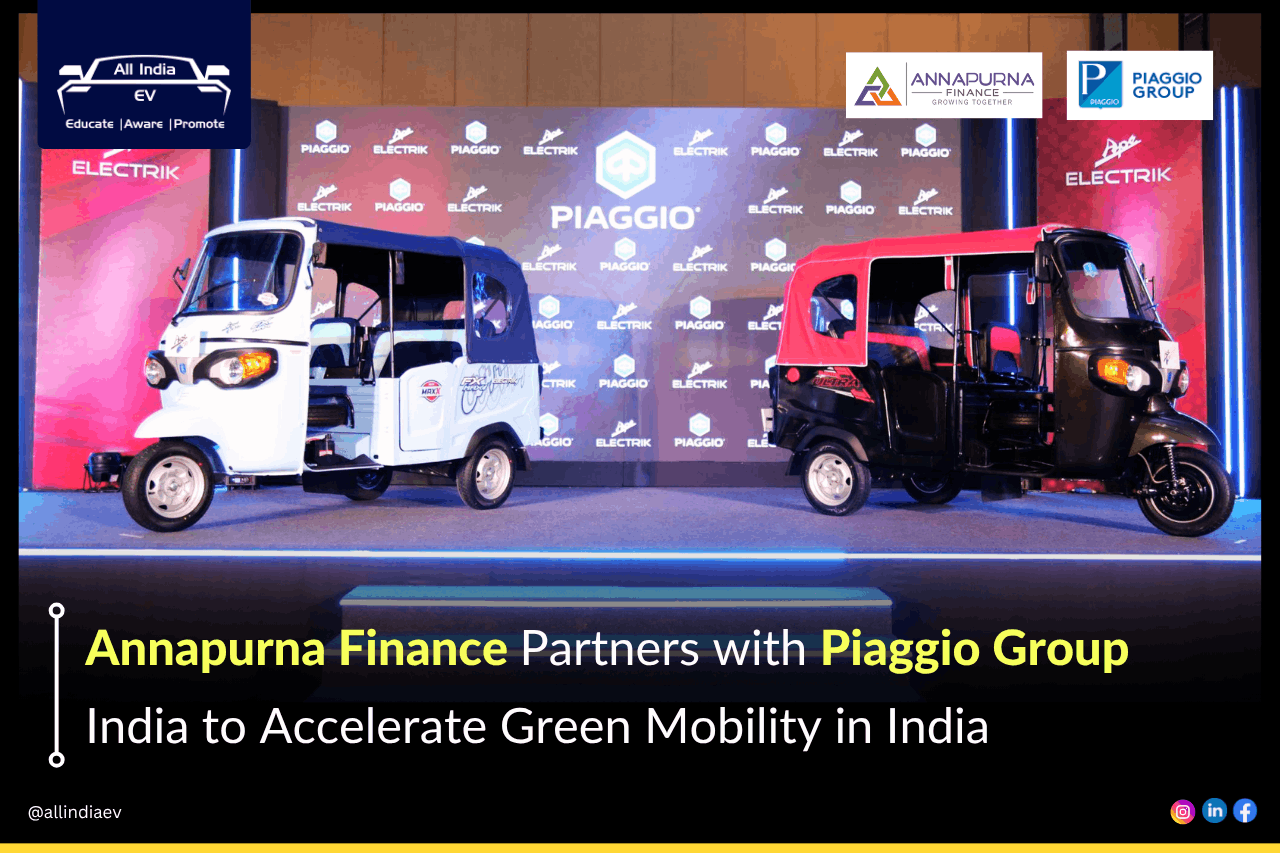

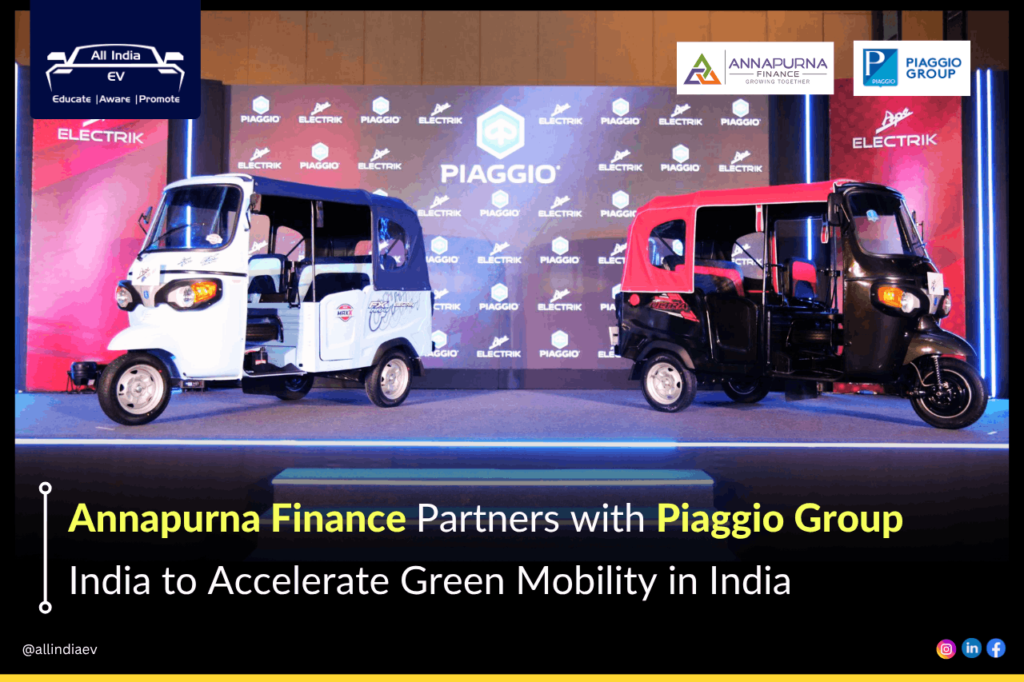
What: Annapurna Finance has entered into a strategic partnership with Piaggio Group India to expand EV financing access and strengthen sustainable mobility adoption across semi-urban and rural India. The collaboration is focused on enabling cleaner transportation and improving access to credit for small mobility entrepreneurs.
The Number: Annapurna Finance currently serves over 2.9 million customers and has been expanding its green finance portfolio, including electric mobility financing and climate-focused lending solutions.
The Impact: The Annapurna Finance Piaggio Group India partnership highlights how NBFC-led financing is becoming a key enabler for EV penetration beyond metro cities. The move could improve vehicle affordability for fleet operators, small businesses, and last-mile mobility users.

The Core News
The Annapurna Finance Piaggio Group India partnership comes at a time when EV adoption in India is increasingly dependent on financing accessibility rather than just vehicle availability. While OEMs continue launching electric three-wheelers and commercial EVs, financing remains one of the biggest barriers for operators in tier-2, tier-3, and rural markets. Annapurna Finance’s growing focus on green lending indicates that NBFCs are positioning themselves as critical infrastructure players in India’s EV transition.
Piaggio Group India has already established a significant presence in India’s commercial three-wheeler market, including electric cargo and passenger mobility segments. By partnering with a microfinance-focused lender like Annapurna Finance, the company can potentially deepen EV penetration among first-time commercial vehicle buyers and self-employed drivers who traditionally struggle to access formal lending channels. The partnership also aligns with India’s broader push toward sustainable last-mile transportation and low-emission urban mobility.
The development also reflects a wider trend in India’s EV ecosystem where financial institutions are aggressively expanding green mobility portfolios. Annapurna Finance has recently signed multiple EV-focused partnerships, including collaborations linked to electric commercial vehicle financing and electric three-wheeler deployment. This suggests that lenders are now viewing EV financing not only as a sustainability initiative but also as a long-term asset growth opportunity tied to logistics, gig mobility, and small business transportation demand.
More EV News

Breaking Down the Update
• Annapurna Finance has partnered with Piaggio Group India for sustainable mobility financing
• The collaboration focuses on EV financing and inclusive growth
• Semi-urban and rural mobility users are expected to be key beneficiaries
• The partnership strengthens financing access for electric three-wheelers and small commercial operators
• Annapurna Finance is expanding its green finance and EV lending portfolio
• The move reflects rising NBFC participation in India’s EV financing ecosystem
• EV financing is emerging as a major growth driver for commercial electric mobility adoption
How Annapurna Finance Piaggio Group India partnership will help Indian EV Market
The Annapurna Finance Piaggio Group India partnership could directly address one of India’s biggest EV adoption bottlenecks: access to affordable financing. While vehicle technology and charging infrastructure continue improving, a large section of India’s commercial mobility ecosystem still lacks formal credit access. This is especially visible in electric three-wheelers, where small operators and first-time buyers dominate demand.
By combining Piaggio’s commercial EV portfolio with Annapurna Finance’s rural and semi-urban lending reach, the partnership could improve EV penetration in regions where traditional banks remain cautious about financing electric assets. Faster loan approvals, customized repayment structures, and local-level financial penetration can significantly improve EV affordability for drivers and fleet owners.
The partnership may also accelerate the transition away from ICE-powered last-mile vehicles in logistics and passenger mobility. Commercial EVs typically deliver lower running costs and better operating economics over time, but high upfront acquisition costs remain a challenge. Financing support helps bridge that gap.
Additionally, such collaborations strengthen confidence across the EV ecosystem by improving lender participation, vehicle utilization, and asset financing maturity. As more NBFCs enter the sector, EV ownership could become more accessible for India’s underserved mobility workforce.
Way Forward …
The Annapurna Finance Piaggio Group India partnership signals how EV financing is becoming central to India’s clean mobility expansion strategy. The next phase will depend on execution speed, loan penetration in non-metro markets, asset performance, and how effectively the partnership can scale commercial EV ownership among small operators. If financing adoption improves at scale, similar NBFC-OEM collaborations could become a defining force in India’s next EV growth cycle.
Read More: Catch up on All India EV’s related coverage on India’s evolving commercial EV subsidies and battery swapping policies at All India EV