
All India EVAll India EVAll India EV
Notification
Font ResizerAa
  • Home
  • EV News
  • EV Launch
  • Market Insights
  • Investments & Funding
  • Guest Articles
  • EV Engineering
  • Contact
Reading: Beyond China: RE‑Free and Electromagnetic EV Motors Step into the Spotlight
Share
All India EVAll India EV
Font ResizerAa
  • Home
  • EV News
  • EV Launch
  • Market Insights
  • Guest Articles
  • EV Engineering
  • Contact
Search
  • Home
    • Home 1
    • Home 2
    • Home 3
    • Home 4
    • Home 5
  • Home
  • Categories
    • Electric
  • Categories
  • Shows
    • Rap
  • More Foxiz
    • Blog Index
    • Contact
  • Bookmarks
    • Customize Interests
    • My Bookmarks
  • More Foxiz
    • Blog Index
    • Sitemap
Have an existing account? Sign In
Follow US
EV Motors
Home » Blog » Beyond China: RE‑Free and Electromagnetic EV Motors Step into the Spotlight
others

Beyond China: RE‑Free and Electromagnetic EV Motors Step into the Spotlight

Sunita
By
Sunita
Last updated: 24 August 2025
Share
2 Min Read
SHARE

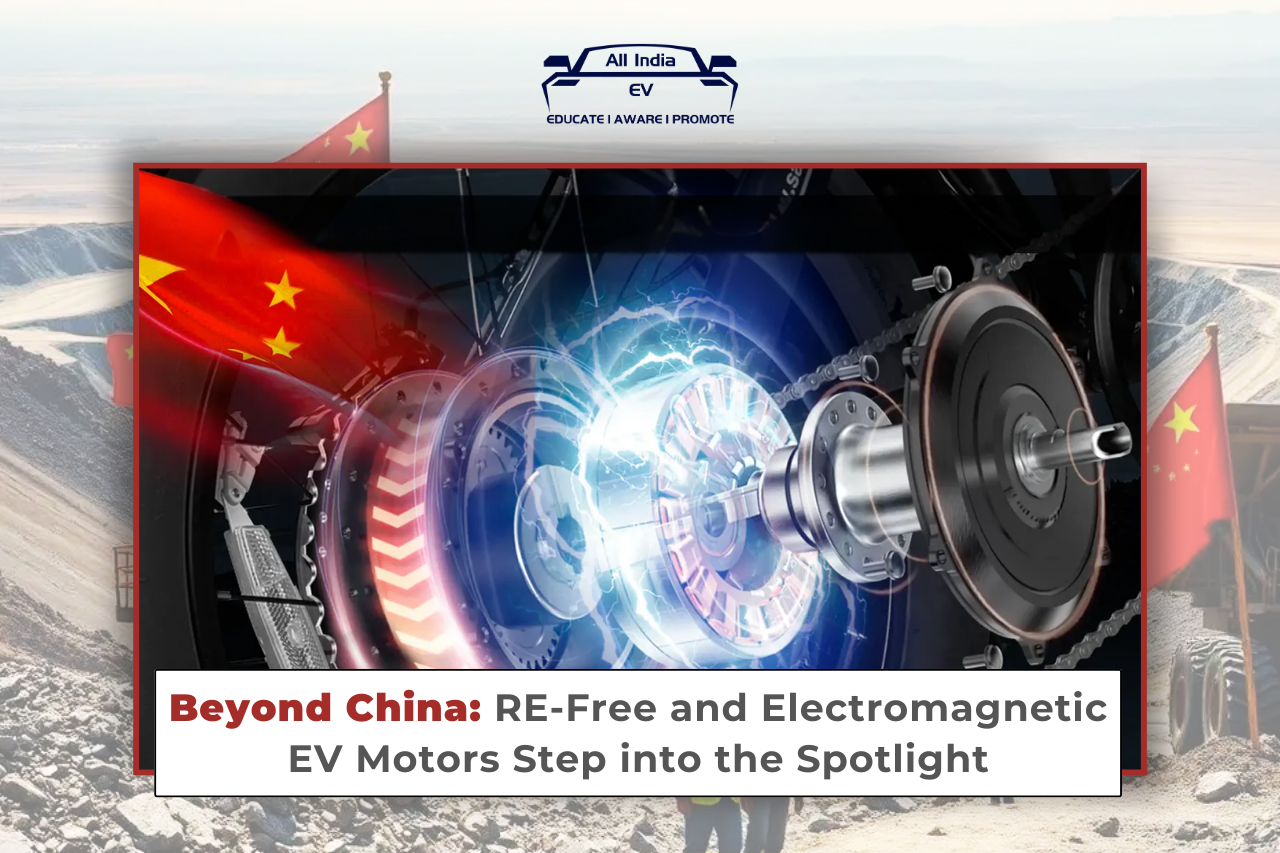
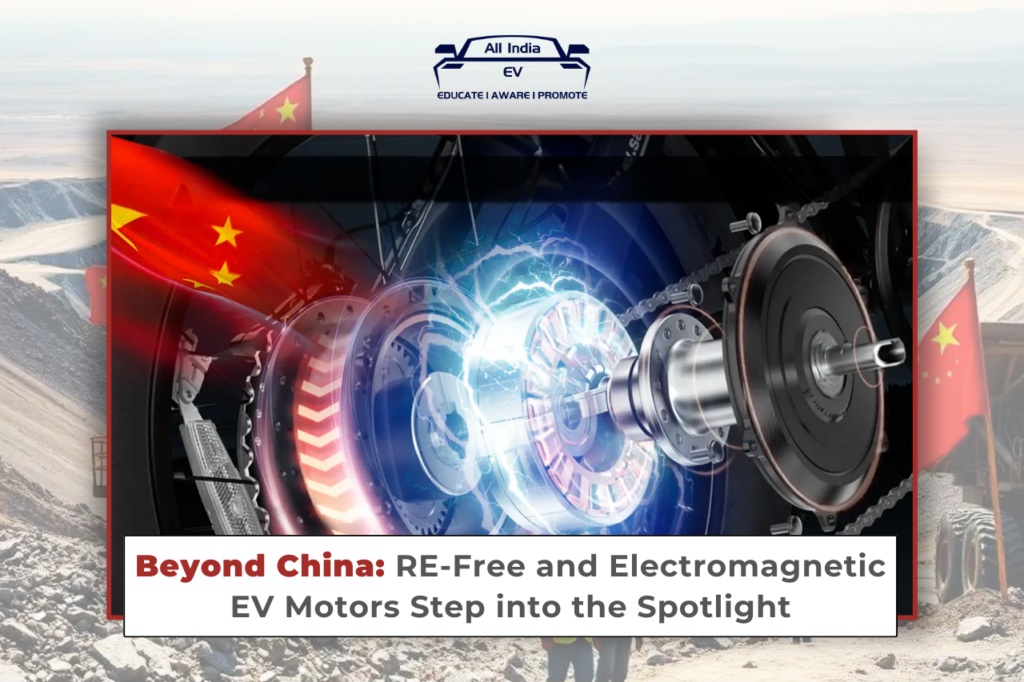
Beyond China: RE-Free, Electromagnetic EV Motors Rise as Sustainable Alternative to RE Mining Impact

India’s electric vehicle (EV) industry is watching closely as China eases curbs on the export of rare-earth (RE) magnets—a critical component in most EV motors. While this decision offers short-term relief, it also underscores a deeper issue: the sustainability and security of global RE supply chains.

Permanent magnets containing RE elements have long powered EV motors due to their high efficiency. However, mining these minerals causes significant environmental degradation. China’s dominance in RE production stems largely from other nations stepping back from environmentally damaging extraction practices.


Now, with supply chains exposed to geopolitical risks, global research is accelerating to develop alternatives. Two main approaches are taking shape:

  1. Rare-earth–free permanent magnets – These magnets are less powerful, requiring more sophisticated engineering to deliver the same motor output. While this can make motors bulkier and more complex, advances in materials science and motor design are helping close the performance gap. Another variation removes heavy rare-earth elements, reducing scarcity concerns without a complete redesign.
  2. Electromagnetic motors without permanent magnets – This more radical solution replaces permanent magnets entirely with electromagnets. Such motors need a continuous power supply to sustain their magnetic field but are now entering the market with performance comparable to traditional designs.

The technology to build RE-free EV motors already exists. The real challenge lies in scaling production and aligning economic incentives. Just as current EV adoption has been supported by government subsidies, the transition to alternative motor technologies may require additional policy support to become commercially viable.

For India, this is both a risk and an opportunity: diversifying EV motor technologies could reduce reliance on China while fostering local innovation in next-generation propulsion systems.
Join All India EV Community

More EV News

Battery Swapping
BIS Developing Standards for Battery Swapping in E-Mobility Sector: DG Tiwari
FADA data reveals 81% surge in EV passenger vehicle retail
Delhi CM Flags Off Electric School Buses, Calls Green Shift Key to Curbing Pollution
Govt targets 30% electric vehicles by 2030 to reduce fuel use in Bihar
Copper: The ‘Holy Grail’ Powering India’s EV Future

Click here for more such EV Updates

Vaidyuthi Mobility Unveils Gully 100: Electric 3-Wheeler for Mid-Load Deliveries, Operable with 2W Licence
Delhi govt to spend ₹170 crore to modernize ITIs with focus on AI, robotics, EVs
Chandigarh to Pilot Solar-Powered EV Charging Stations, Eyes Policy Overhaul for Greener Mobility
Why China Has Stopped Building NMC Battery Capacity — and What It Means for India
Delhi’s Move to Let Private Electric Vehicles Operate as Shared Taxis

Sign Up For Daily Newsletter

Be keep up! Get the latest breaking news delivered straight to your inbox.
Loading
By signing up, you agree to our Terms of Use and acknowledge the data practices in our Privacy Policy. You may unsubscribe at any time.
Share This Article
Facebook Whatsapp Whatsapp LinkedIn Copy Link Print
Leave a Comment

Leave a Reply Cancel reply

Your email address will not be published. Required fields are marked *

Follow US
XFollow
InstagramFollow
YoutubeSubscribe
LinkedInFollow
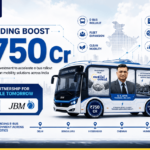
What Happened: JBM Auto’s arm has secured ₹750 crore in funding from Motilal Oswal to support the expansion of its electric bus rollout. The capital is expected to strengthen fleet deployment and execution capacity as India’s e-bus market scales up. The Key Number: ₹750 crore. Why It Matters: This is a strong financing signal for India’s electric bus ecosystem, where large upfront costs often slow deployment. Fresh funding can accelerate production, procurement, and route expansion for clean public transport.
JBM Auto arm gets ₹750 crore funding from Motilal Oswal to expand e-bus rollout
25 June 2026
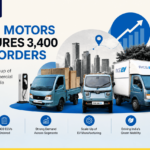
Tata Motors secures 3,400 ECV orders signals scale-up of electric commercial mobility in India
25 June 2026
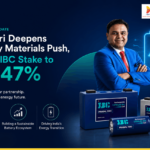
Himadri raises IBC stake
25 June 2026
All India EV: Edition 50
What all happened in May 2026?
Click Here
All India EV

Daily EV Industry updates for you…

Categories

  • EV News
  • EV Launch
  • Investments & Funding
  • Market Insights
  • Guest Articles
  • EV Engineering

Quick Links

  • Community
  • Content Services
  • Branding Services
  • My EV Charger
  • Substack

© Developed and Managed by “The Energy Log”

Welcome Back!

Sign in to your account

Username or Email Address
Password

Lost your password?

Not a member? Sign Up