

What:
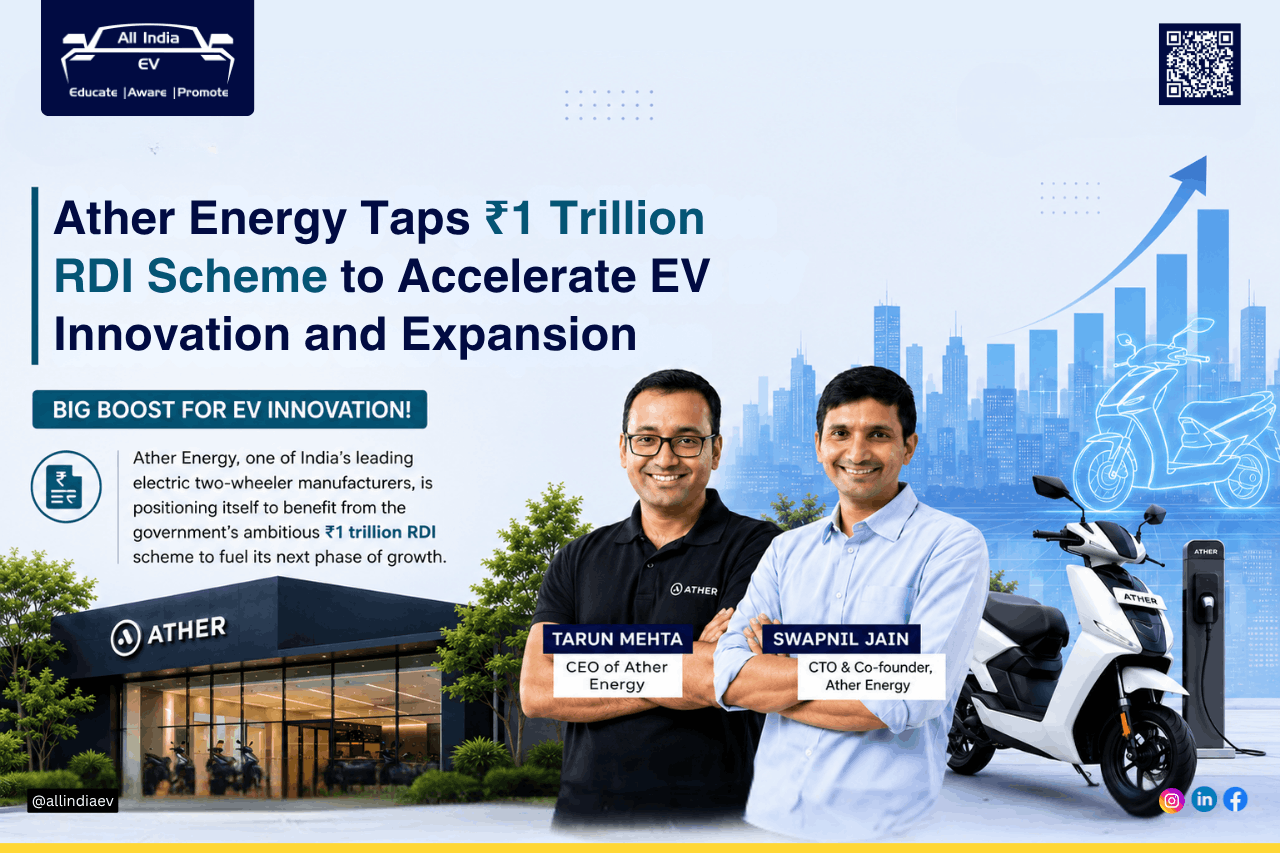
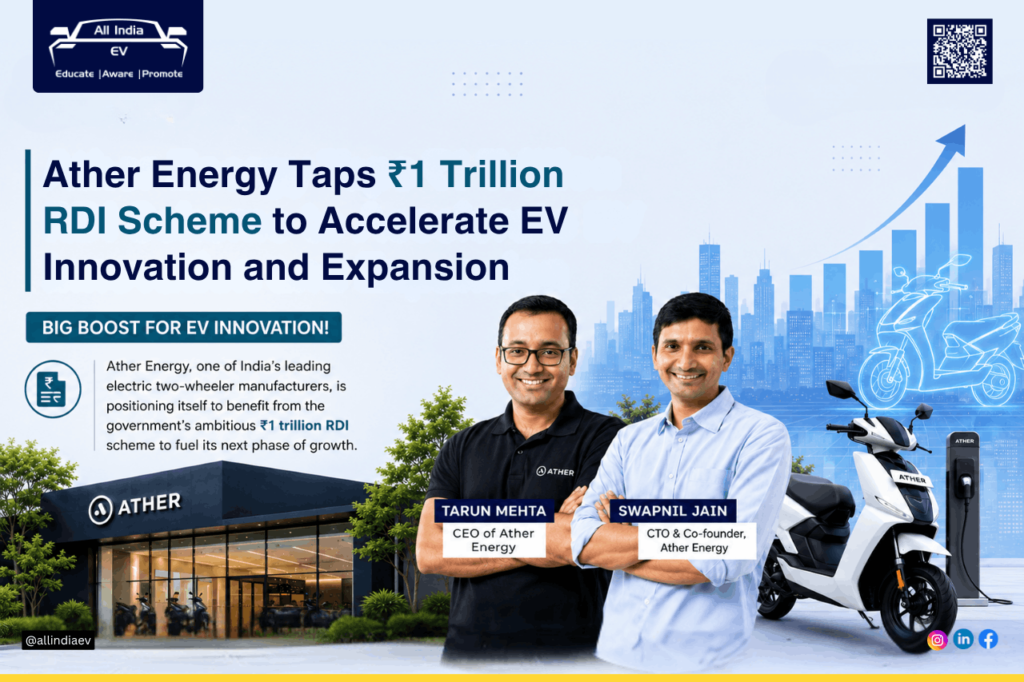
Ather Energy RDI Scheme funding is emerging as a key growth lever for the Bengaluru-based EV manufacturer as it seeks access to low-cost, long-term financing under the Government of India’s ₹1 lakh crore Research, Development and Innovation (RDI) Scheme. The funding is expected to support the company’s upcoming electric motorcycle platform and future vehicle development programs.
The Number:
₹1 lakh crore (₹1 trillion) government-backed RDI fund aimed at supporting private-sector innovation through concessional financing and long-term capital.
The Impact:
The move could strengthen Ather’s ability to invest in next-generation EV technologies while reducing dependence on expensive commercial borrowing. It also signals growing government support for innovation-led EV manufacturers.

The Core News
Ather Energy RDI Scheme funding has become a significant development for India’s electric mobility sector as the company reportedly moves closer to securing support under the Centre’s Research, Development and Innovation (RDI) Scheme. The programme was created to encourage private-sector innovation through affordable financing and is designed to bridge funding gaps for technology-intensive industries.
According to reports, Ather is evaluating concessional loans with interest rates in the range of 2–3%, providing access to capital that is substantially cheaper than conventional borrowing. The funding is expected to be directed toward future product development, including the company’s upcoming electric motorcycle platform and new-generation EV architectures. Such investments are critical as competition intensifies across India’s electric two-wheeler market.
The development is particularly important because Ather has not fully benefited from the automotive Production Linked Incentive (PLI) framework in the same way as some larger automotive players. Access to RDI-backed financing could therefore provide an alternative route for supporting innovation, localisation, battery technology development and advanced vehicle engineering. For policymakers, the case will also serve as an early test of whether the RDI programme can effectively accelerate private-sector EV innovation at scale.
More EV News
Breaking Down the Update
• Ather is reportedly finalising participation under the government’s ₹1 lakh crore RDI Scheme.
• The scheme is designed to provide long-term, low-cost financing for innovation-driven projects.
• Expected loan rates could be significantly lower than conventional market borrowing costs.
• Funding may support Ather’s upcoming electric motorcycle and future EV platforms.
• The RDI programme focuses on strategic sectors including EVs, clean energy, advanced materials and deep-tech innovation.
• Ather recorded strong growth in FY26, with sales volumes increasing significantly year-on-year, strengthening its position in the electric two-wheeler market.
• The development highlights a shift toward innovation-focused policy support rather than production-linked incentives alone.
How Ather Energy RDI Scheme funding will help the Indian EV Market
The Ather Energy RDI Scheme funding initiative could create broader benefits beyond a single manufacturer. India’s EV industry is entering a phase where product differentiation increasingly depends on software, battery technology, power electronics and vehicle platforms rather than assembly alone. Access to affordable research-focused capital can help manufacturers invest in these areas without placing excessive pressure on balance sheets.
For the Indian EV ecosystem, this means faster development of indigenous technologies, stronger localisation and reduced dependence on imported components. Funding support can also accelerate work on advanced battery systems, energy management software, charging technologies and new vehicle architectures.
The RDI framework may be particularly valuable for EV startups and technology-led manufacturers that often struggle to access long-term capital for research-intensive projects. If deployed effectively, the scheme could help create a stronger pipeline of homegrown EV innovation while improving India’s competitiveness in global electric mobility markets.
In the long term, successful implementation could encourage more private-sector investment into EV R&D, supporting the country’s ambitions around clean mobility, manufacturing leadership and technology self-reliance.
Conclusion & Next Steps
The success of the Ather Energy RDI Scheme funding will depend on how quickly funds are deployed and how effectively companies convert concessional capital into commercially viable technologies. Industry stakeholders will now watch for formal approvals, project allocations and the pace of implementation. If executed well, the programme could become one of the most influential policy tools supporting India’s next phase of EV innovation and manufacturing growth.
Read More: Catch up on All India EV’s related coverage on India’s evolving commercial EV subsidies and battery swapping policies at All India EV