
All India EVAll India EVAll India EV
Notification
Font ResizerAa
  • Home
  • EV News
  • EV Launch
  • Market Insights
  • Investments & Funding
  • Guest Articles
  • EV Engineering
  • Contact
Reading: India Considers Relaxing EV Localisation Norms Amid Rare Earth Supply Crisis
Share
All India EVAll India EV
Font ResizerAa
  • Home
  • EV News
  • EV Launch
  • Market Insights
  • Guest Articles
  • EV Engineering
  • Contact
Search
  • Home
    • Home 1
    • Home 2
    • Home 3
    • Home 4
    • Home 5
  • Home
  • Categories
    • Electric
  • Categories
  • Shows
    • Rap
  • More Foxiz
    • Blog Index
    • Contact
  • Bookmarks
    • Customize Interests
    • My Bookmarks
  • More Foxiz
    • Blog Index
    • Sitemap
Have an existing account? Sign In
Follow US
Home » Blog » India Considers Relaxing EV Localisation Norms Amid Rare Earth Supply Crisis
EV News

India Considers Relaxing EV Localisation Norms Amid Rare Earth Supply Crisis

Sunita
By
Sunita
Last updated: 16 June 2025
Share
4 Min Read
SHARE

India may relax EV localisation rules as China’s rare earth export curbs disrupt supply chains, aiming to boost domestic manufacturing.

Contents
  • Rare Earth Curbs Rattle India’s EV Strategy
  • Impact on Domestic Suppliers and PLI Eligibility
  • Rising Import Costs May Affect EV Affordability
  • A Temporary Trade-off for Long-Term Gains?

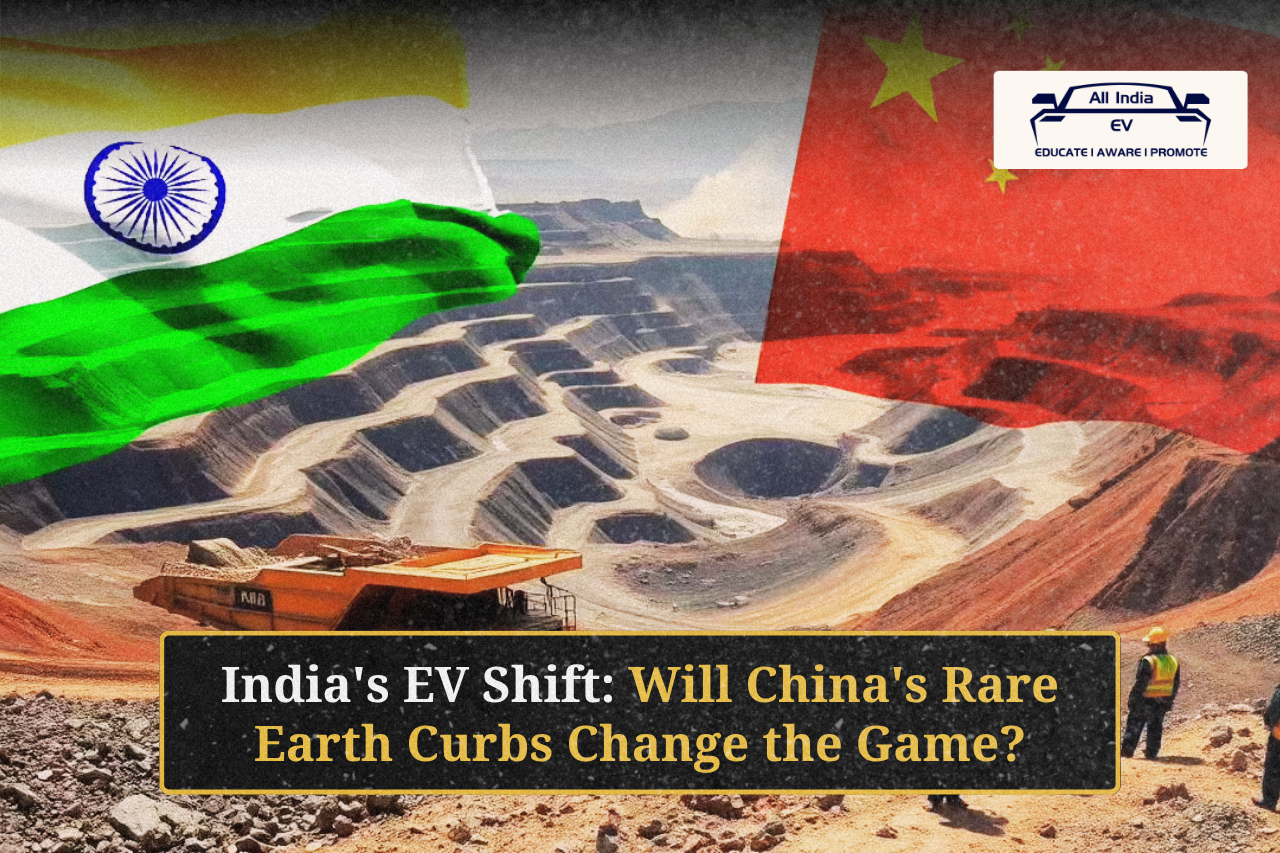
India may soon ease its 50% localisation mandate for electric vehicle (EV) components, as a global supply chain shock triggered by China’s rare earth export restrictions disrupts access to critical raw materials used in EV motors. The potential move is being considered to ensure continuity in EV manufacturing, even as local suppliers struggle to meet localisation thresholds due to shortages.

According to sources cited in a recent Bloomberg report, while the Society of Indian Automobile Manufacturers (SIAM) has not officially sought a policy change, multiple stakeholders have raised concerns in recent high-level meetings with government officials.


Rare Earth Curbs Rattle India’s EV Strategy

China’s clampdown in April 2025 on the export of rare earth elements—used to make permanent magnets in electric motors—has emerged as a key bottleneck for India’s EV ambitions. These materials are essential for Permanent Magnet Synchronous Motors (PMSMs) and Synchronous Reluctance Motors (PMSRMs), which power most modern EVs.

India’s EV growth blueprint relies heavily on the Production-Linked Incentive (PLI) scheme, designed to reward domestic manufacturing. However, with local companies unable to source rare earths, the government is said to have informally advised OEMs to temporarily import fully built motors or semi-knocked down (SKD) parts to keep production on track.


Impact on Domestic Suppliers and PLI Eligibility

The shift poses a serious challenge to Indian component manufacturers, many of whom have invested heavily in building domestic capacity for advanced EV motor technologies. With their production pipelines hit by raw material shortages, several suppliers may now struggle to meet PLI eligibility criteria, despite being close to achieving key milestones.

“It’s a double blow for local suppliers—on one hand, they face delays due to material scarcity, and on the other, they risk missing out on incentive benefits,” said an executive from an Indian Tier-1 supplier on condition of anonymity.

More EV News
Revfin and Shoffr: Innovating in Urban Transportation and Financial Services
Chinese Carmaker Changan Unveils 932-Mile Solid-State EV Battery — A Wake-Up Call for Global Auto Giants
Good News for EV Owners: Charging Your Electric Vehicle Across India Just Became Easier
Battery Prices Hit Record Low, Fueling EV Adoption
Finayo Raises ₹160 Million to Expand Its EV Financing Software Services

Rising Import Costs May Affect EV Affordability

Industry sources warn that importing motors from China or alternative markets will likely lead to a noticeable cost escalation, especially in the two-wheeler and small EV segments. Shipping a motor by sea can add roughly ₹2,000 per unit, while air freight could drive up costs by ₹5,000 or more—making EVs less affordable in an already price-sensitive Indian market.

The higher costs could also deter prospective buyers and slow down EV adoption, especially in the mass-market segments, which are crucial for India’s transport decarbonization goals.


A Temporary Trade-off for Long-Term Gains?

Policy experts suggest that relaxing localisation norms could be a temporary but necessary trade-off to keep the EV sector’s momentum intact. “Until India develops alternative rare earth supply chains or materials, some policy flexibility is essential,” said a senior government official involved in EV policy planning.

India has already begun scouting for rare earth partnerships with countries like Australia and Vietnam, and public sector enterprises like IREL (India) Ltd. are exploring domestic extraction and processing options. However, those efforts will take time to mature.
Join All India EV Community

Click here for more such EV Updates

Foxconn to Establish Battery Energy Storage Hub in India
A New Era for Electric Vehicles: Breakthrough in Battery Technology
NLC India in Advanced Talks with Russian Firm; to Source Lithium from African Mines
Tirex Chargers Partners with Gujarat Government to Establish Major EV DC Charger Manufacturing Plants in India
Recyclekaro Joins India’s EPR Portal for Battery Recycling

Sign Up For Daily Newsletter

Be keep up! Get the latest breaking news delivered straight to your inbox.
Loading
By signing up, you agree to our Terms of Use and acknowledge the data practices in our Privacy Policy. You may unsubscribe at any time.
Share This Article
Facebook Whatsapp Whatsapp LinkedIn Copy Link Print
Leave a Comment

Leave a Reply Cancel reply

Your email address will not be published. Required fields are marked *

Follow US
XFollow
InstagramFollow
YoutubeSubscribe
LinkedInFollow
4 EV Infrastructure Stocks Powering India's Electric Mobility Growth
4 EV Infrastructure Stocks Powering India’s Electric Mobility Growth
23 April 2026
India's longest range electric scooter: Simple Ultra launched with 400 km range!
India’s longest range electric scooter: Simple Ultra launched with 400 km range!
22 April 2026
Cathode Material Plant in AP: Rs 2,550 Cr Investment
22 April 2026
All India EV: Edition 48
What all happened in March 2026?
Click Here
All India EV

Daily EV Industry updates for you…

Categories

  • EV News
  • EV Launch
  • Investments & Funding
  • Market Insights
  • Guest Articles
  • EV Engineering

Quick Links

  • Community
  • Content Services
  • Branding Services
  • My EV Charger
  • Substack

© Developed and Managed by “The Energy Log”

Welcome Back!

Sign in to your account

Username or Email Address
Password

Lost your password?

Not a member? Sign Up