
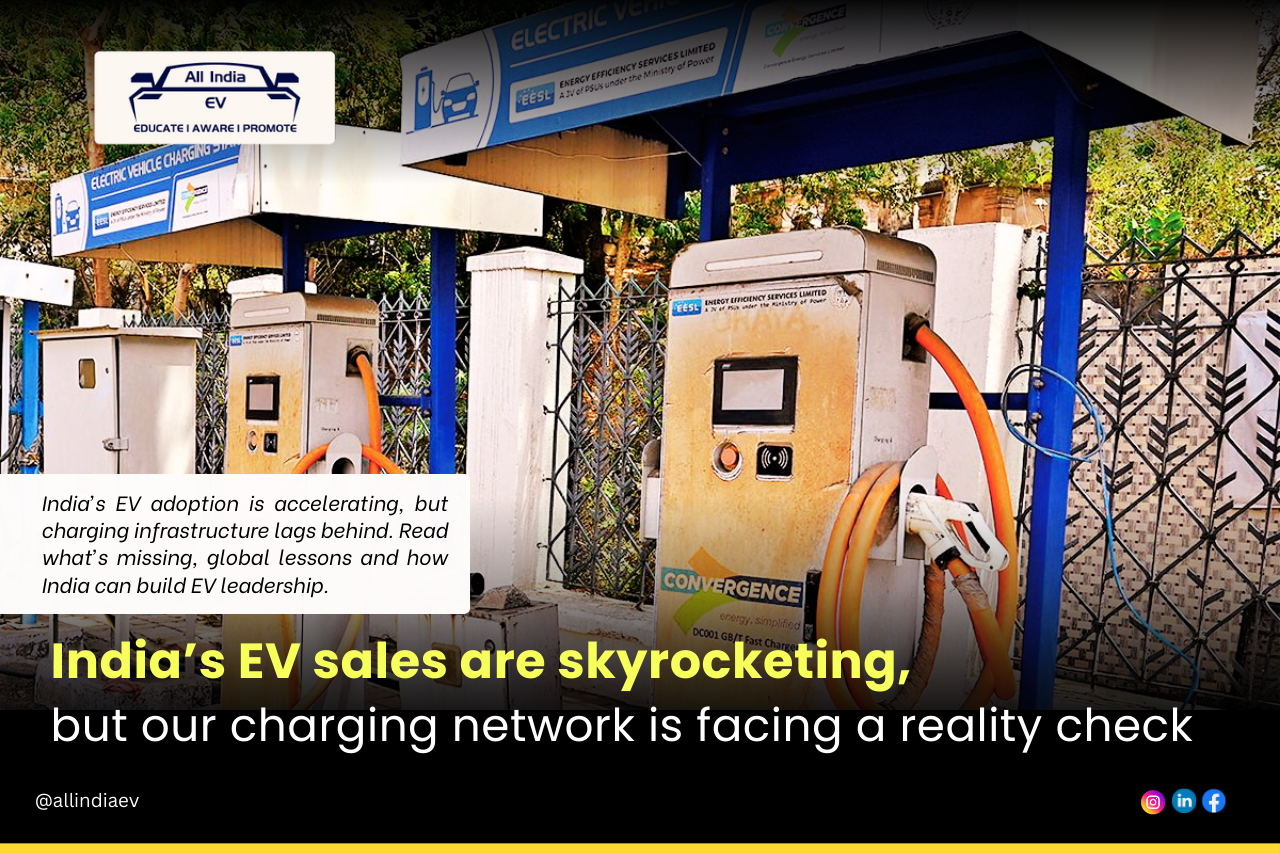

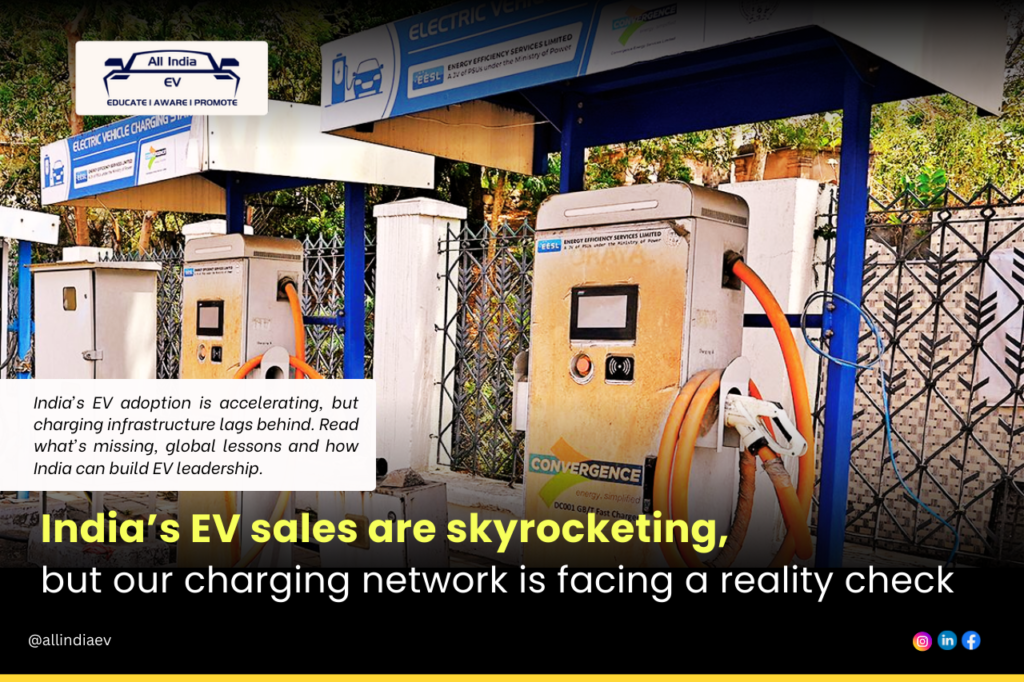
As electric vehicle (EV) adoption surges across India, the nation’s charging infrastructure is struggling to keep pace, posing a significant threat to the country’s ambition to lead in sustainable mobility by 2030, warns India EV, a pan-India news platform covering the electric mobility transition.
Despite encouraging growth in EV sales especially in two-wheelers, three-wheelers and fleet segments India’s charging network remains patchy, underdeveloped and largely urban-centric, making everyday charging a challenge for users nationwide.
Rapid EV Growth, But Infrastructure Lags
According to industry insights, electric vehicle registrations in India reached approximately 2.02 million in 2025, reflecting strong market momentum and increasing consumer interest in electrified transport solutions.
Yet, the deployment of charging infrastructure has not matched this pace. Public charging stations are heavily concentrated in metropolitan areas, while smaller towns, highways and intercity corridors remain inadequately served. This imbalance continues to fuel range anxiety and deter potential EV buyers from switching from internal-combustion vehicles.
A broader industry report indicates that India currently has only one public charging station for every 235 EVs, a ratio that underscores long waiting times and limited access to quick charging solutions.
Infrastructure Bottlenecks: Practical and Policy Challenges
Several critical obstacles continue to slow infrastructure rollout:
1. Uneven Distribution and Urban Focus
Most charging points are confined to urban centers, leaving rural and intercity routes with few options. This skewed distribution undermines EV usage for long-distance travel and logistics operations.
More EV News

2. Land and Regulatory Delays
Developers face hurdles securing land for charging stations, as multiple agencies control potential sites. Slow approval processes and unclear responsibilities among central and state bodies further complicate deployment.
3. Financial and Grid Challenges
Installation costs, grid readiness and grid connection approvals pose significant barriers for Charge Point Operators (CPOs). Public charging infrastructure requires substantial capital investments, while inconsistent grid support can lead to delays or technical issues.
4. Reliability and Fragmentation
Even where stations exist, reliability issues persist. Some reports show up to 50% downtime at public chargers due to hardware failures, fragmented payment systems and unstable power supply, undermining user confidence.
5. Interoperability Hurdles
Different manufacturers use varying plug standards and software systems, creating complexity for users who must navigate multiple apps and memberships to charge their vehicles.
What Needs to Change
EV believes that India must shift from reactive infrastructure development to strategic, future-ready planning. Key recommendations include:
- Treat charging as core infrastructure: Charging networks should be integrated with national transport and energy plans just like roads, telecom and power distribution to ensure smooth EV adoption.
- Corridor and Cluster Planning: Deploy chargers strategically along highways, logistics hubs and residential clusters to support long-distance travel and daily commuting needs.
- Standardisation and Interoperability: Adopt unified charging standards and interoperable software platforms to simplify operations and improve user experience.
- Grid and Policy Synchronisation: Upgrade grid infrastructure in anticipation of growing EV charging demand and introduce predictable policy frameworks that apply consistently across states.
- Private Sector and Business Models: Encourage public-private partnerships that bring in capital, technology and operational expertise viewing charging stations as services and businesses rather than fixed assets.
Looking Ahead
While India has scaled the number of charging stations significantly in recent years, infrastructure gaps remain a key constraint to widespread EV adoption. With the government’s push toward achieving 30% EV penetration in new vehicle sales by 2030, industry stakeholders argue that strengthening the charging ecosystem is now more critical than ever.