
All India EVAll India EVAll India EV
Notification
Font ResizerAa
  • Home
  • EV News
  • EV Launch
  • Market Insights
  • Investments & Funding
  • Guest Articles
  • EV Engineering
  • Contact
Reading: Interoperability, Demand and Grid Readiness to Shape India’s Next Phase of EV Charging Growth
Share
All India EVAll India EV
Font ResizerAa
  • Home
  • EV News
  • EV Launch
  • Market Insights
  • Guest Articles
  • EV Engineering
  • Contact
Search
  • Home
    • Home 1
    • Home 2
    • Home 3
    • Home 4
    • Home 5
  • Home
  • Categories
    • Electric
  • Categories
  • Shows
    • Rap
  • More Foxiz
    • Blog Index
    • Contact
  • Bookmarks
    • Customize Interests
    • My Bookmarks
  • More Foxiz
    • Blog Index
    • Sitemap
Have an existing account? Sign In
Follow US
EV Charging
Home » Blog » Interoperability, Demand and Grid Readiness to Shape India’s Next Phase of EV Charging Growth
EV News

Interoperability, Demand and Grid Readiness to Shape India’s Next Phase of EV Charging Growth

Sunita
By
Sunita
Last updated: 12 December 2025
Share
5 Min Read
SHARE

ETAuto EV Conclave 2025: Experts Call for Reliable, Interoperable, and Financially Viable EV Infrastructure as India Moves Beyond Rapid Installations

Contents
  • Fragmentation Still a Roadblock
  • Two-Wheeler Charging Leading the Way
  • Oil & Gas Players to Play a Critical Role
  • Demand Generation Holds the Key to Commercial Viability
  • Interoperability Gains Momentum
  • Grid Readiness and Smart Charging Rising in Importance
  • Next Two Years to Bring Innovation and Wider Expansion

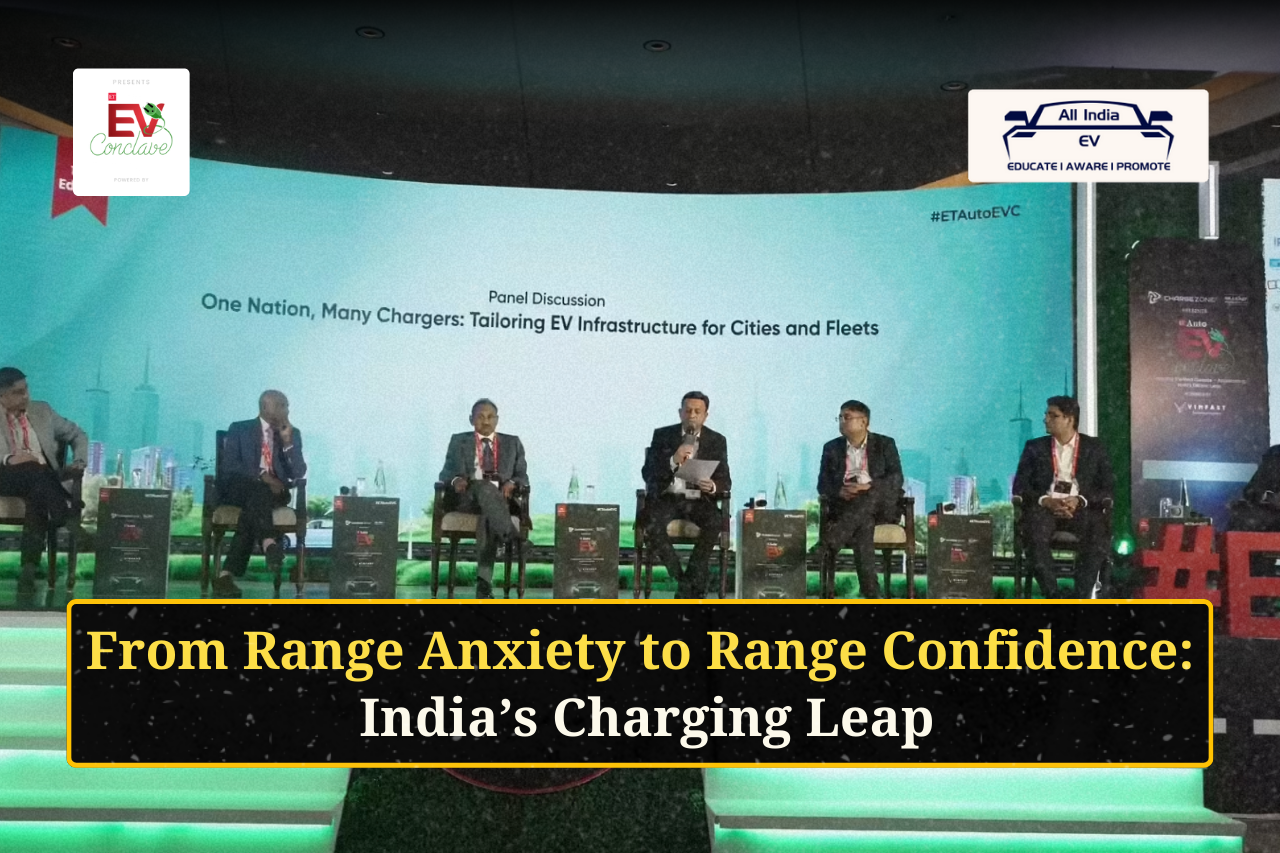
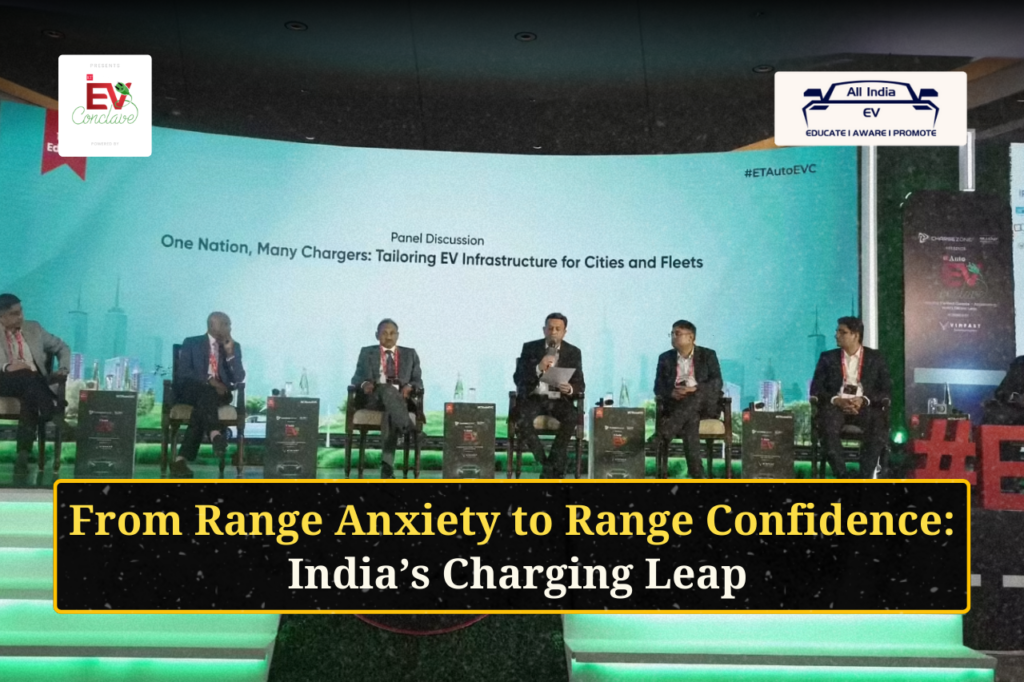
India’s public EV charging network has grown nearly eightfold in just two years, but industry leaders caution that the next phase of expansion must prioritise interoperability, user experience, demand generation and grid preparedness over rapid installation. Speaking at the session “One Nation, Many Chargers: Tailoring EV Infrastructure for Cities and Fleets” during the ETAuto EV Conclave 2025, experts emphasised that India now needs to shift from quantity to quality. The discussion was moderated by Ajay Agarwal, President, Spark Minda.


Fragmentation Still a Roadblock

Despite impressive growth, the sector continues to struggle with multiple CPO apps, inconsistent payment systems, scattered charging networks and frequent downtime of chargers. This fragmentation is now one of the biggest friction points for EV users across cities.

Speakers agreed that India must move from “rapid deployment to reliable, seamless charging experience” to support deeper EV penetration, especially as the country enters a decade of fast adoption across both personal and fleet segments.


Two-Wheeler Charging Leading the Way

From the two-wheeler perspective, Aravind Prasad, Head – Charging Infrastructure, Ather Energy, said India has emerged as a global benchmark in e-scooter and motorcycle charging. He noted that charging behaviour in this segment is unique.

“Range and charge anxiety are pre-purchase concerns. Once customers buy, they quickly learn their charging patterns,” he explained.

Fast charging for two-wheelers, he added, is primarily used for quick top-ups, not full charging cycles, making it critical to design infrastructure tailored for high-frequency, short-duration stops.

More EV News
Mahindra to Sell EVs Through Existing Retail Network
NTU Singapore and Durapower’s cloud-based AI solution for enhancing battery durability and security
Sun Mobility and Revfin Collaborate to Propel EV Adoption with Battery-as-a-Service Model
DevvStream Partners with E-Fill to Generate Carbon Credits from India’s EV Charging Network
Speedways Electric Emerges as a Pioneer in Electric Vehicle Innovation at Startup Mahakumbh

Oil & Gas Players to Play a Critical Role

Oil and gas companies are positioning themselves as essential partners in the EV transition. Representing Jio-bp, COO Rubin Pather said energy conglomerates bring strong capital capacity, extensive fuel station networks and deep fleet relationships, making them well suited to support large-scale EV adoption.

“We shouldn’t be sceptical of oil and gas companies… India cannot transition overnight, but we cannot ignore our responsibility to change,” he said. Legacy fuel retailers, he added, are strategically placed to guide the migration from fossil fuels to electric mobility.


Demand Generation Holds the Key to Commercial Viability

From an economic standpoint, Rohan Rao, Partner, KPMG India, highlighted that the biggest challenge today is not policy but low utilisation rates. India may have a “reasonable installed base,” but chargers are significantly underused.

He noted that “If utilisation moves from 5–6% to even 15%, most CPOs will break even.” Rao said stronger commitment from mainstream automakers on EV volumes is essential to push demand and improve viability.

With most new EVs offering 300 km or more range, he added, range anxiety is no longer the main barrier.


Interoperability Gains Momentum

Interoperability was a recurring theme throughout the session. Ravindra Mohan, Director, ChargeZone, revealed that nine CPOs have already enabled roaming across 13,500+ charging points via a single app, marking a strong early step toward unified charging access nationwide.


Grid Readiness and Smart Charging Rising in Importance

For emerging companies like EVamp, smart charging and energy management have become critical as clusters of high-power chargers increasingly strain local grids.

Experts noted that high-capacity charging for buses and trucks will scale only if chargers, depots and power distribution systems are synchronised and grid upgrades happen in parallel.


Next Two Years to Bring Innovation and Wider Expansion

Looking ahead, Anshuman Divyanshu, CEO–EV, Exicom, said India is poised for “a wave of new product innovations.”

Key enablers identified include:

  • Peer-to-peer sharing of private chargers
  • Better incentives for home and apartment charging
  • Streamlined single-window clearances with DISCOMs and municipal bodies

These measures, he said, will be crucial in pushing the charging ecosystem beyond metros into Tier-2 and Tier-3 cities and national highways, ensuring India’s EV charging network becomes scalable, dependable, and future-ready.


Author’s Comment:

India’s EV charging ecosystem is entering a decisive phase where reliability, interoperability and grid readiness matter far more than rapid expansion.

As industry leaders highlight, the next wave of growth will depend on solving real user pain points, boosting charger utilisation and strengthening power infrastructure. If these priorities align, India could build one of the world’s most efficient, user-centric and future-ready EV charging networks.

Join All India EV Community

Click here for more such EV Updates

Loading


BikeWo Opens Multi-Brand EV Dealership Stores in Andhra Pradesh and Telangana
Mahindra Hits Big Electric Charger Milestone: 100 Charge-In Fast Chargers Live On Indian Highways
Log9 and BluWheelz Join Forces for a Sustainable Logistics Revolution
Bounce Infinity Teams Up With BaaYu To Boost EV Adoption In Assam
Bolt.Earth Achieves ARAI Certification for Level 1 and 2 EV Charging Solutions

Sign Up For Daily Newsletter

Be keep up! Get the latest breaking news delivered straight to your inbox.
Loading
By signing up, you agree to our Terms of Use and acknowledge the data practices in our Privacy Policy. You may unsubscribe at any time.
Share This Article
Facebook Whatsapp Whatsapp LinkedIn Copy Link Print
Leave a Comment

Leave a Reply Cancel reply

Your email address will not be published. Required fields are marked *

Follow US
XFollow
InstagramFollow
YoutubeSubscribe
LinkedInFollow
Haryana cabinet approves new rules: No petrol, diesel vehicles for cab aggregators in NCR
21 May 2026
Ultraviolette and Bolt.Earth Expand Type-6 DC Fast Charging Infrastructure Across India
Ultraviolet and Bolt. Earth Expand Type-6 DC Fast Charging Infrastructure Across India
21 May 2026
What: India’s finance ministry has directed public sector banks, insurers, and financial institutions to reduce operational spending and accelerate adoption of electric vehicles across official fleets. The move is part of a wider austerity push linked to rising global economic uncertainty and fuel-related risks. The Number: The directive impacts major public institutions including State Bank of India, Bank of Baroda, and Life Insurance Corporation of India, covering millions of employees and thousands of operational vehicles nationwide. The Impact: The policy signals a new phase of institutional fleet electrification in India, where EV adoption is now being tied directly to fiscal discipline, fuel import management, and public-sector operational efficiency. The Core News India’s finance ministry has formally instructed state-run financial institutions to implement strict expenditure controls while simultaneously accelerating EV adoption for official transport operations. The directive from the Department of Financial Services asks organisations to replace petrol and diesel vehicles used at head offices and branch operations with electric vehicles “as far as possible.” The order comes amid growing concern over the economic impact of prolonged geopolitical instability in West Asia, which threatens to increase crude oil prices, widen India’s import bill, and pressure the rupee. Alongside the EV transition mandate, the government has also pushed virtual meetings, reduced foreign travel, and tighter administrative spending controls across public-sector institutions. For India’s EV ecosystem, the directive is strategically important because it expands demand visibility beyond state transport undertakings and government departments into the financial sector itself. PSU banks and insurers operate one of the country’s largest distributed office networks, including regional offices, branch fleets, field operations, and administrative mobility services. Even a phased transition could create a sizeable procurement pipeline for electric passenger vehicles, charging infrastructure providers, and fleet management companies. Breaking Down the Update • The Department of Financial Services issued the austerity and EV adoption directive to PSU banks, insurers, and financial institutions. • The government wants petrol and diesel vehicles used in official operations to be progressively replaced by EVs wherever operationally feasible. • The policy push follows Prime Minister Narendra Modi’s appeal for fuel conservation and controlled discretionary spending amid global energy uncertainty. • The directive also mandates greater use of video conferencing to reduce travel-related operational expenditure. • The move could indirectly support domestic EV OEMs, leasing firms, and charging infrastructure operators through institutional procurement demand. • The banking and insurance sector may emerge as a new enterprise fleet electrification category in India’s EV transition roadmap. How PSU banks EV adoption will help Indian EV Market The expansion of PSU banks EV adoption could create a strong institutional demand layer for India’s electric mobility sector. Public sector banks and insurers operate thousands of branch offices across urban, semi-urban, and rural India. Their transition to EV fleets can generate predictable procurement volumes for domestic automakers, especially in the electric sedan, compact SUV, and commercial mobility segments. Beyond vehicle sales, the policy may also accelerate deployment of workplace charging infrastructure at bank headquarters, zonal offices, and regional branches. This can support charger utilisation economics while helping normalise EV infrastructure in tier-2 and tier-3 cities. Another important impact is signalling. When large state-linked financial institutions adopt EVs as operational assets rather than pilot projects, it improves confidence across the broader enterprise mobility market. Private banks, NBFCs, and insurance firms could eventually follow similar fleet transition models to reduce long-term fuel and maintenance costs. PSU banks EV adoption also aligns with India’s larger energy security strategy. Lower petroleum consumption in institutional fleets directly supports efforts to reduce crude import dependence while stabilising operational expenditure during periods of volatile global oil prices. Conclusion & Next Steps The government’s push toward PSU banks EV adoption reflects a broader shift where EV deployment is increasingly being linked with macroeconomic resilience rather than only sustainability targets. Execution, however, will depend on procurement timelines, charging infrastructure readiness, and operational suitability across
India directs state-run banks, insurance firms to cut costs, shift to EVs
21 May 2026
All India EV: Edition 49
What all happened in April 2026?
Click Here
All India EV

Daily EV Industry updates for you…

Categories

  • EV News
  • EV Launch
  • Investments & Funding
  • Market Insights
  • Guest Articles
  • EV Engineering

Quick Links

  • Community
  • Content Services
  • Branding Services
  • My EV Charger
  • Substack

© Developed and Managed by “The Energy Log”

Welcome Back!

Sign in to your account

Username or Email Address
Password

Lost your password?

Not a member? Sign Up