
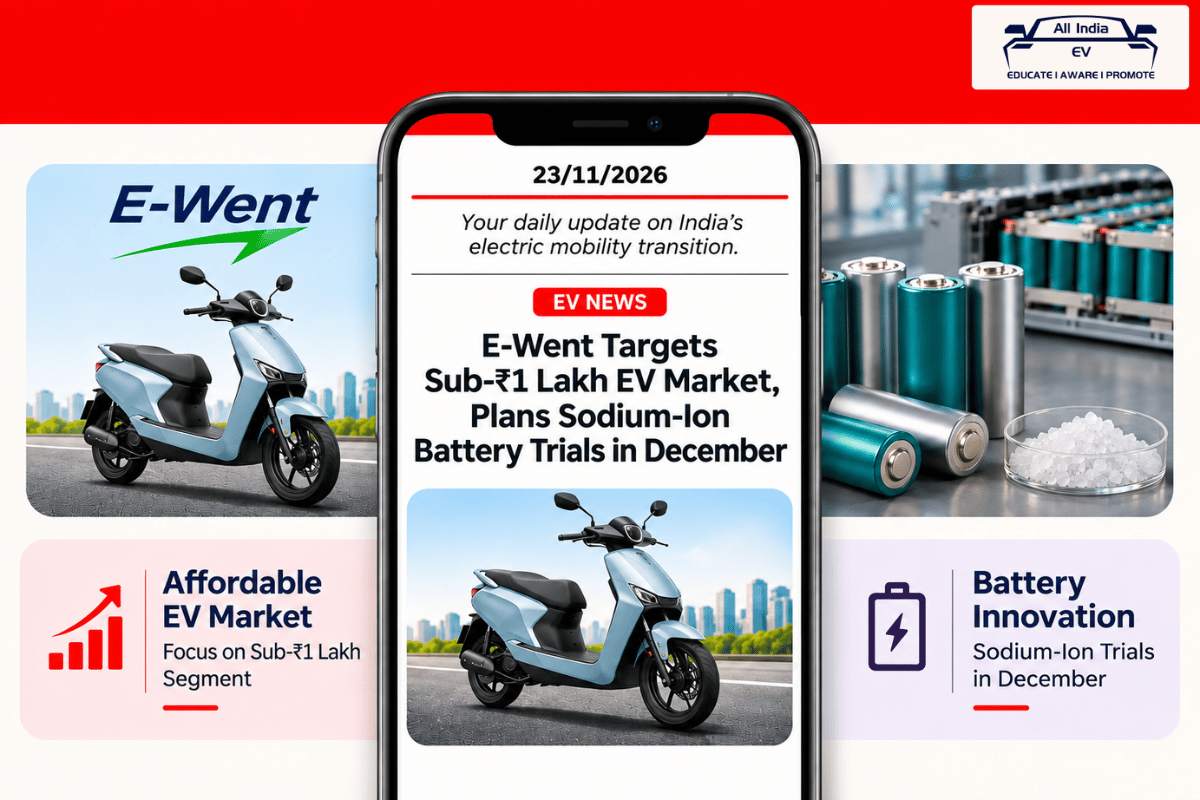
E-Went Targets Sub-₹1 Lakh EV Market, Plans Sodium-Ion Battery Trials in December
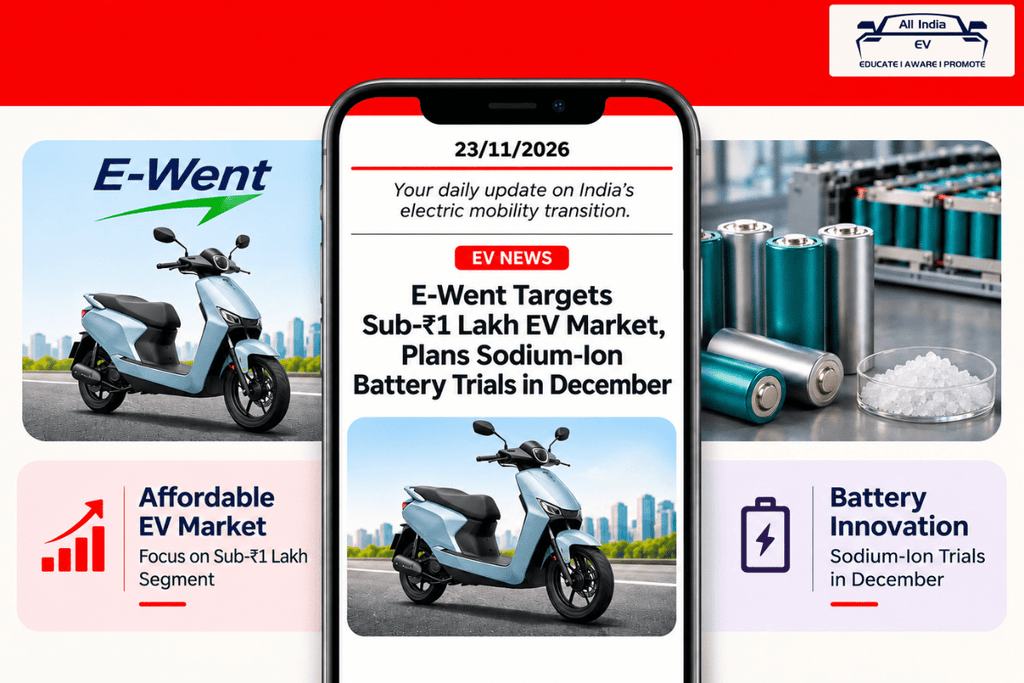
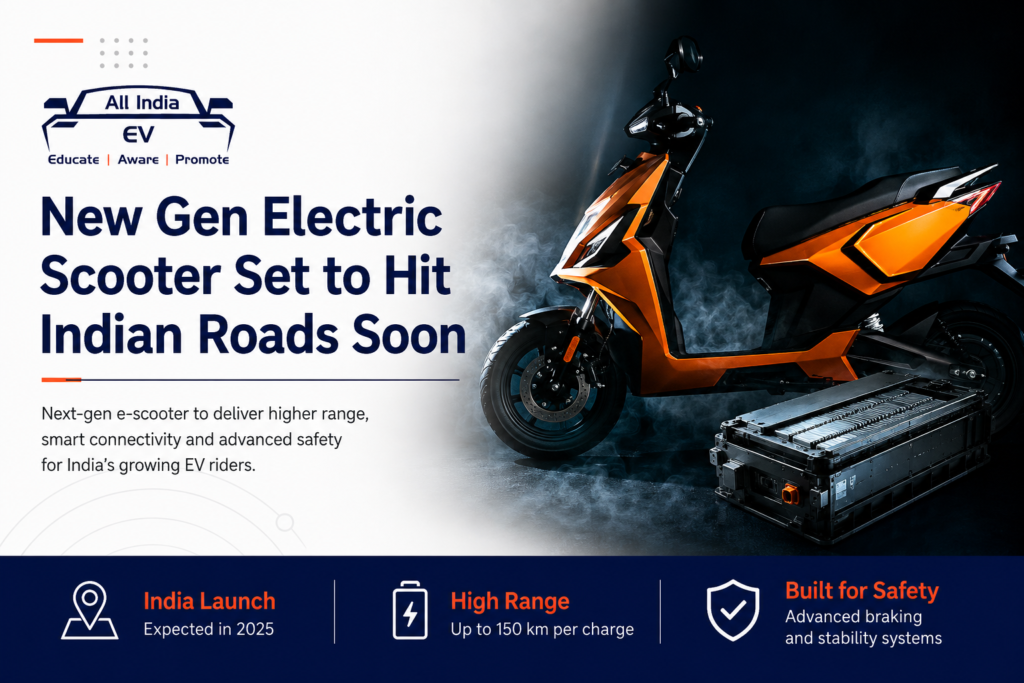
Kolkata-based electric two-wheeler manufacturer Saraogi E-Ventures, which operates under the E-Went brand, is looking to strengthen its position in India’s affordable electric vehicle market. The company sees significant growth opportunities in the sub-₹1 lakh electric scooter segment and is preparing to explore sodium-ion battery technology through vehicle trials scheduled to begin in December 2026.
The company’s strategy focuses on making electric mobility more accessible to price-sensitive consumers, particularly in smaller cities, rural markets and Tier-III locations. While several established electric two-wheeler manufacturers are concentrating on premium products and larger urban markets, E-Went believes affordable electric scooters can attract a wider customer base across underserved regions.
E-Went to Begin Sodium-Ion Battery Trials in December
As part of its product development strategy, E-Went plans to introduce sodium-ion battery-powered scooters for initial testing around December. The company intends to deploy a limited number of vehicles to evaluate the technology’s performance, safety, practicality and commercial viability.
According to founder and CEO Umang Kumar Saraogi, sodium-ion batteries are being considered as an alternative to conventional lithium-ion battery technology because of their potential safety advantages. However, the technology also has certain limitations, including comparatively lower energy density, which can result in larger and heavier battery packs.
The company will assess the overall economics, convenience and suitability of sodium-ion batteries before considering their integration into upcoming electric scooter models. Currently, most of E-Went’s electric two-wheelers use lithium-ion battery technology.
If successfully commercialised, sodium-ion batteries could also support India’s efforts to strengthen domestic battery manufacturing. Sodium is more widely available than lithium, potentially creating opportunities to reduce dependence on imported battery materials and components.
Affordable Electric Scooters Remain a Key Growth Opportunity
E-Went believes the electric two-wheeler market priced below ₹1 lakh has considerable untapped potential. According to Saraogi, many consumers earning between ₹30,000 and ₹50,000 per month find expensive electric scooters difficult to afford.
These buyers generally prioritise affordable purchase prices, reliable performance, low maintenance expenses and long-term ownership savings. The company believes electric mobility manufacturers need to address these requirements to accelerate EV adoption among middle-income households.
The sub-₹1 lakh segment could become particularly important in smaller towns and rural markets, where affordability remains a major factor influencing vehicle purchases.
E-Went Focuses on Regional Expansion
Rather than pursuing an aggressive nationwide expansion, Saraogi E-Ventures plans to strengthen its existing distribution network and increase its presence in the states where it already operates.
The company currently has a presence in West Bengal, Jharkhand, Bihar, Chhattisgarh, Odisha, Assam, Telangana and Andhra Pradesh.
E-Went has increased its monthly electric two-wheeler sales from approximately 100 units four years ago to around 1,000–1,100 units currently. The company attributes much of this growth to local dealer networks, customer recommendations and word-of-mouth marketing.
Revenue Target and Profitability Roadmap
Alongside its product and market expansion plans, Saraogi E-Ventures is targeting continued financial growth. The company reported revenue exceeding ₹50 crore in FY2025-26 and aims to increase this figure to ₹65 crore in the current financial year.
It has also set a target of achieving profitability by 2028.
With its focus on affordable electric scooters, regional distribution and potential sodium-ion battery adoption, E-Went aims to strengthen its position in India’s growing electric two-wheeler industry. Its upcoming battery trials could provide valuable insights into whether alternative battery technologies can make electric mobility safer and more accessible for budget-conscious Indian consumers.