

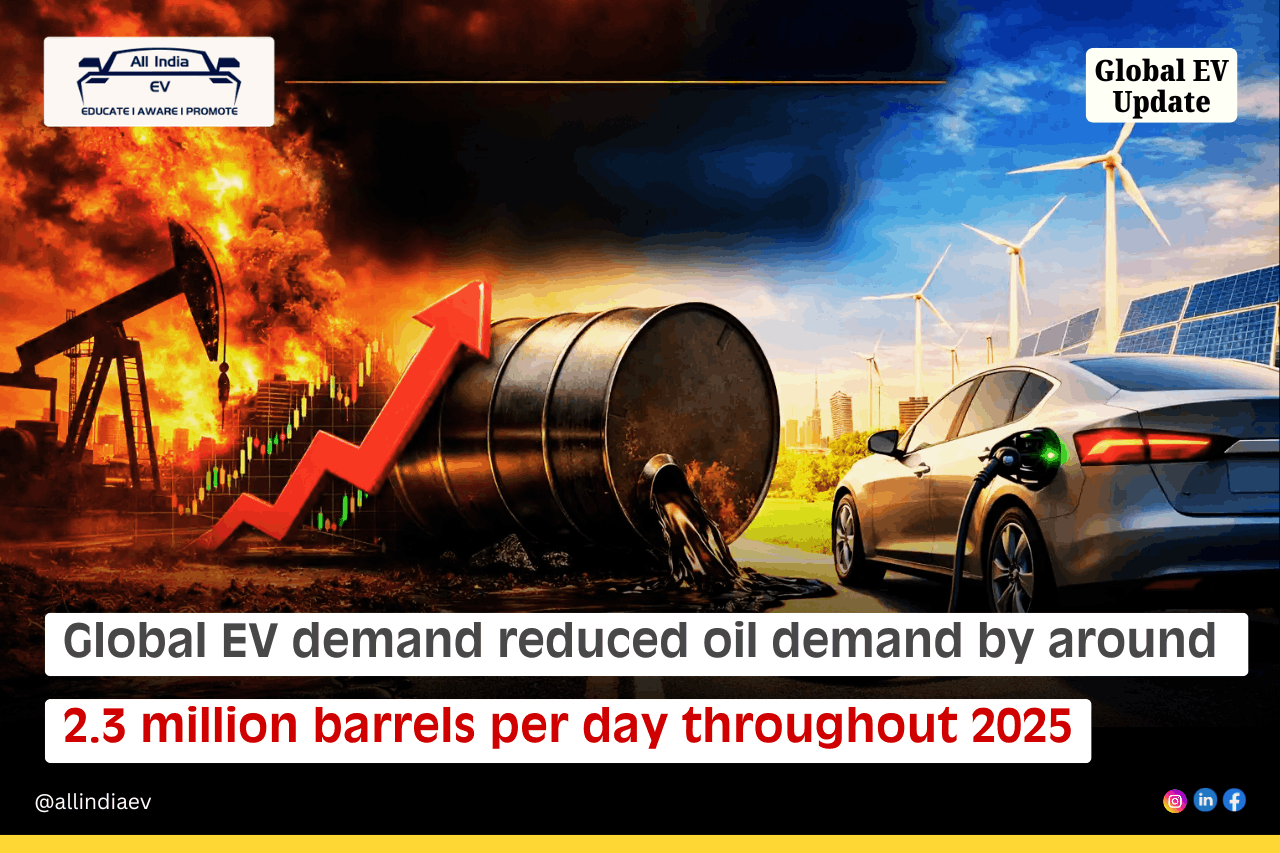

What: Electric vehicles and plug-in hybrids reduced global oil consumption by nearly 2.3 million barrels per day during 2025, according to BloombergNEF research, highlighting the growing energy impact of global EV adoption.
The Number: Global plug-in vehicle sales reached 20.7 million units in 2025, recording nearly 20% year-on-year growth.
The Impact: The findings indicate that EV adoption is no longer only an automotive transition story. It is now directly influencing global fuel demand, oil import economics, and long-term energy security strategies.

The Core News
The rapid expansion of electric mobility is beginning to create measurable structural pressure on global oil demand. According to BloombergNEF estimates, electric vehicles and plug-in hybrids displaced approximately 2.3 million barrels of oil consumption per day during 2025. The figure reflects the combined impact of battery electric vehicles, plug-in hybrids, and electrified two- and three-wheelers operating across global markets.
One of the most important trends behind the fuel displacement is the accelerating electrification of two- and three-wheelers in Asian economies. Bloembergen estimates these smaller EV segments alone reduced oil demand by around 1.1 million barrels per day, exceeding the contribution from passenger electric cars, which accounted for roughly 741,000 barrels per day. The trend highlights how emerging markets are becoming increasingly important in the global energy transition, particularly where scooters, motorcycles, and small commercial vehicles dominate urban transport systems.
The broader implication extends beyond transportation. Reduced oil consumption directly impacts fuel import bills, trade balances, and energy price vulnerability for oil-importing nations. BloombergNEF projects EV-driven oil displacement could rise to over 5.3 million barrels per day by 2030 as EV penetration continues to expand globally. Despite policy uncertainties in some regions, strong EV growth in China, Europe, India, and Southeast Asia continues to support the long-term electrification trajectory.
More EV News

Breaking Down the Update
• EVs and plug-in hybrids displaced around 2.3 million barrels of oil per day globally in 2025.
• Global plug-in vehicle sales reached 20.7 million units last year.
• Electric two- and three-wheelers contributed the highest oil displacement globally at nearly 1.1 million barrels per day.
• Passenger electric cars reduced oil consumption by roughly 741,000 barrels daily.
• BloombergNEF expects EV-driven oil displacement to exceed 5.3 million barrels per day by 2030.
• Ember estimates a slightly lower 2025 displacement figure of 1.7 million barrels per day under more conservative assumptions.
• China, Europe, and India remain among the strongest EV growth markets globally.
• Rising fuel price volatility is further strengthening the economic case for EV adoption worldwide.
Way Forward …
The scale of oil demand reduction caused by EV adoption is beginning to reshape long-term energy market assumptions. As global EV penetration rises across passenger vehicles, commercial fleets, and two-wheelers, global fuel consumption by EVs will increasingly influence oil demand forecasting, refining economics, and national energy security planning. The next phase to watch will involve battery affordability, charging infrastructure expansion, and how emerging markets sustain EV adoption momentum amid changing policy environments.
Read More: Catch up on All India EV’s related coverage on India’s evolving commercial EV subsidies and battery swapping policies at All India EV